New Treatment May Eliminate Gum Disease Bacteria While Preserving Beneficial Oral Microbes.
 |
| Image source: Near infrared photo-bacterial flora modulation technology realized controlling periodontitis: modulation of disease-associated dysbiosis in oral microbiota using near infrared photo-antibacterial targeting therapy (NIR-PAT2) |
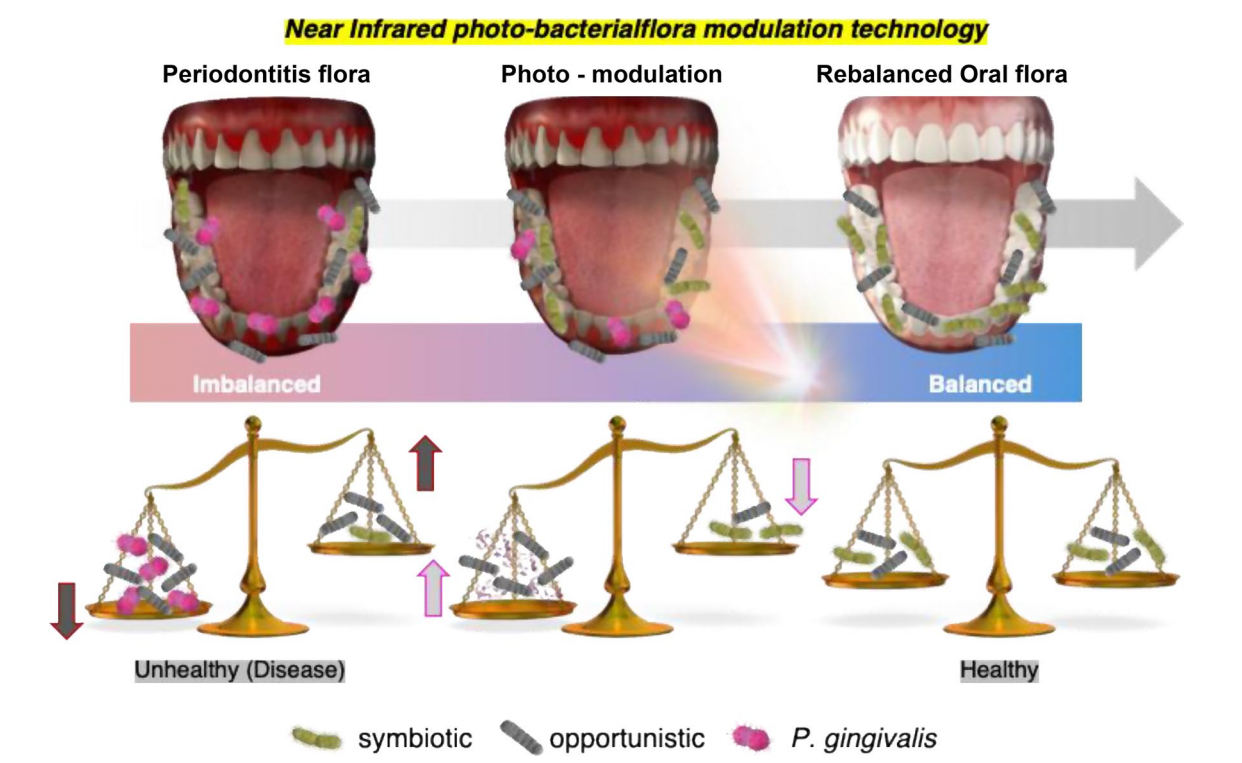
DentalGoodNews|Recently, a laboratory and animal study (in vitro + mouse model) published in the "Journal of Translational Medicine" showed that a near-infrared light-targeted antibacterial therapy (NIR-PAT²) developed by a research team at Nagoya University can selectively eliminate Porphyromonas gingivalis under experimental conditions, with microbiome analysis revealing a trend in oral flora shifting toward a health-associated composition.
The NIR-PAT² technology is adapted from near-infrared photoimmunotherapy originally developed for cancer treatment. The therapy utilizes IgY antibodies extracted from egg yolks of hens vaccinated against Porphyromonas gingivalis, conjugated with the photosensitizing dye IR700, forming a specific conjugate targeting P. gingivalis. Porphyromonas gingivalis is considered a key pathogen that triggers periodontal inflammation and tissue destruction.
In terms of mechanism of action, when the conjugate binds to target bacteria and is exposed to near-infrared light, the dye undergoes photochemical reactions and aggregates, exerting physical pressure on the bacterial cell membrane. Scanning electron microscopy (SEM) observations revealed lethal perforations on the surface of treated P. gingivalis, while maintaining overall structural integrity—a mechanism distinct from aPDT, which causes complete bacterial disintegration.
 |
| Image source: Near infrared photo-bacterial flora modulation technology realized controlling periodontitis: modulation of disease-associated dysbiosis in oral microbiota using near infrared photo-antibacterial targeting therapy (NIR-PAT2) |
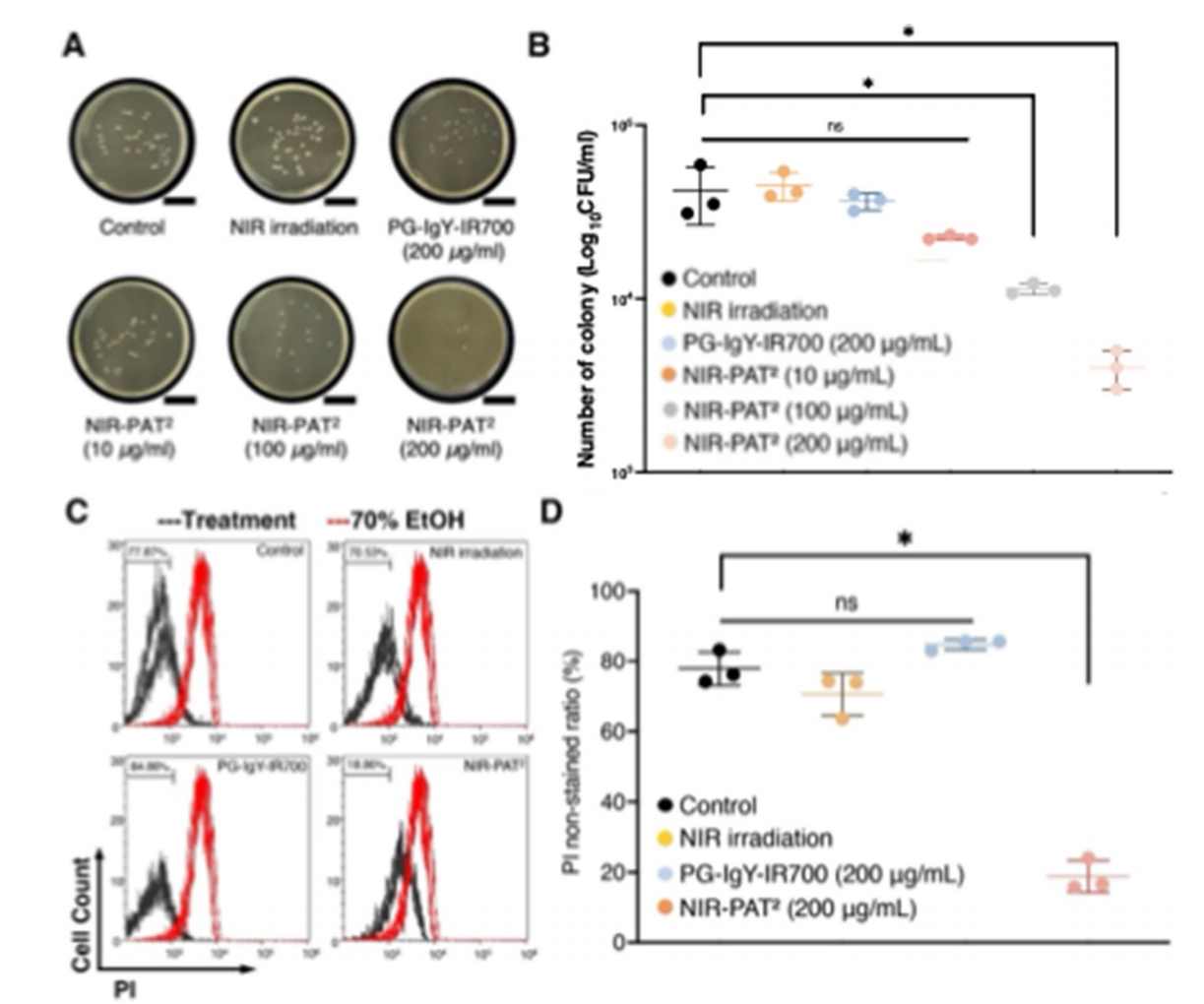
Compared with conventional antimicrobial photodynamic therapy (aPDT), study data indicate that NIR-PAT² exhibits stronger targeting specificity: in in vitro experiments, the IgY-IR700 conjugate selectively bound to P. gingivalis without showing damage to human gingival cells; endotoxin (LPS) detection showed that, compared with aPDT, LPS release was suppressed after NIR-PAT² treatment, which the researchers believe may help reduce the potential risk of inducing secondary inflammation.
In a mouse periodontitis model, data from the NIR-PAT² treatment group showed inhibition of alveolar bone resorption; salivary microbiome analysis suggested that while reducing P. gingivalis abundance, commensal genera such as Streptococcus were partially preserved or restored, with the microbial composition trending toward a health-associated direction.
The researchers noted that IgY antibodies can be produced at low cost on a large scale, which may help reduce the preparation costs of such approaches and support subsequent translational research. Given the associations between periodontitis and the risk of diseases such as diabetes and rheumatoid arthritis, the research team believes that targeted intervention strategies represented by near-infrared photobiotic antimicrobial modulation (NIR-PBAM) hold certain potential, and plans to incorporate AI analysis of oral microbiome data to identify additional potential targets.
Currently, this research remains at the experimental stage, and conclusions from animal studies cannot be directly extrapolated to human clinical application. Its efficacy and safety in humans require further clinical trial validation.
| About DGN:DentalGoodNews (DGN) is a trusted professional media platform dedicated to the global dental industry. We deliver in-depth coverage of corporate news, policy & regulation, investment & funding, and clinical frontiers — serving dental institutions, device manufacturers, investors, and industry researchers worldwide. Contact us: haodeya@dongxizixun.com |

;)