New Data: Female Application, Enrollment, and Graduation Rates at U.S. Dental Schools Have Surpassed Males
 |
| Source: "Longitudinal sex representation in US dental schools from 2011 through 2025" |
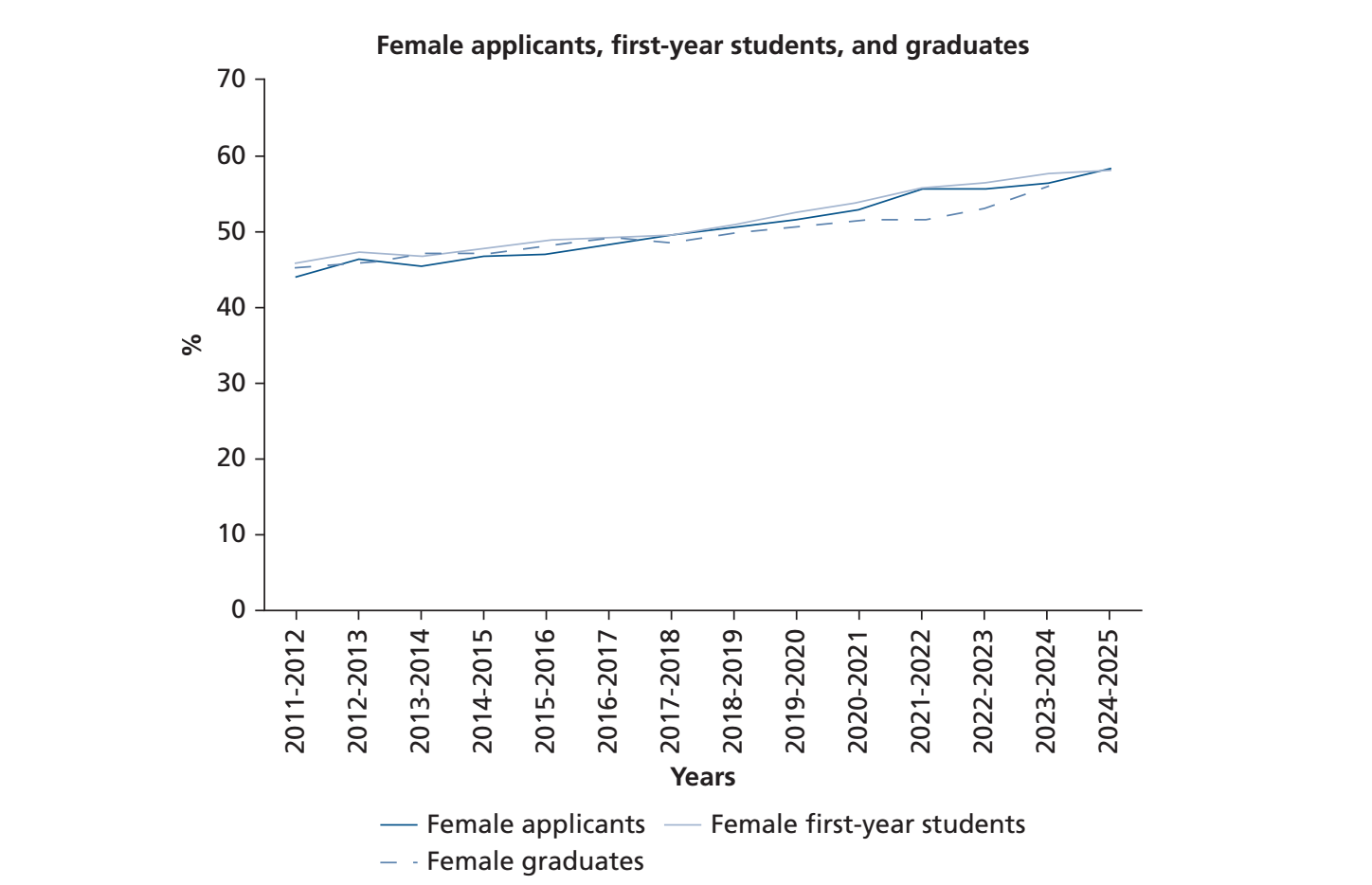
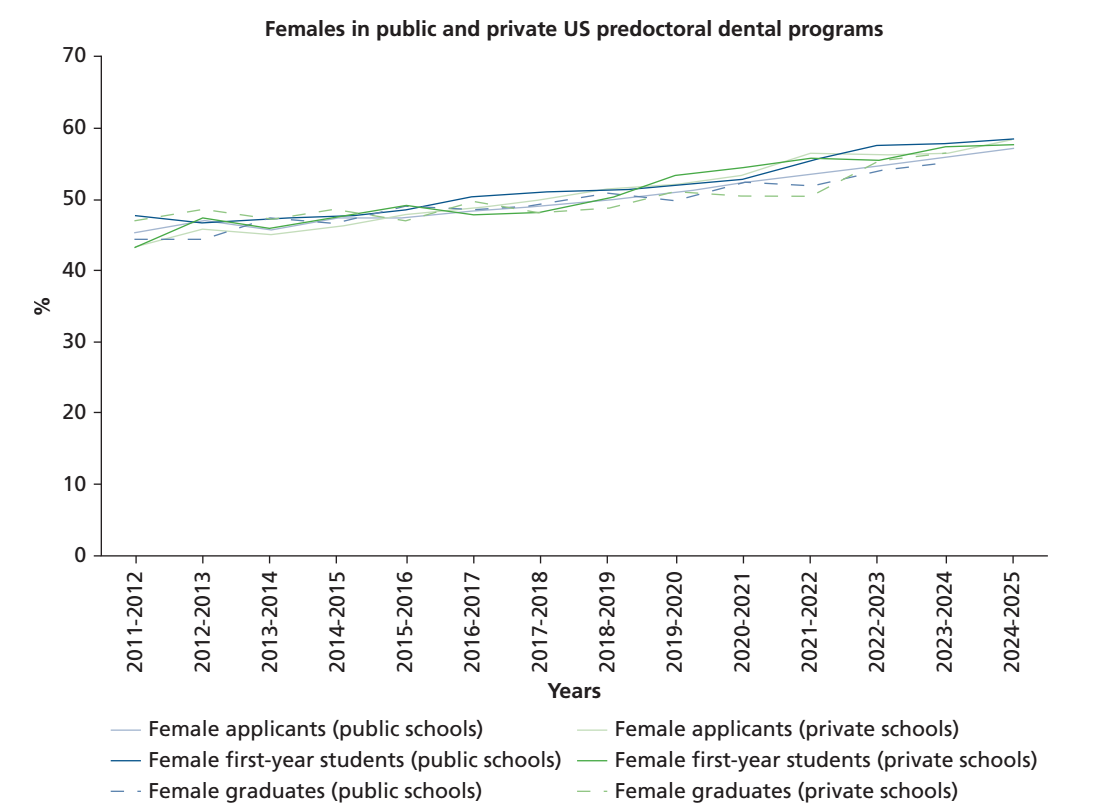
DentalGoodNews|On July 10, 2026, local time, a longitudinal study published in the Journal of the American Dental Association (JADA) revealed significant changes in the gender composition of U.S. predoctoral dental education programs over the past 14 years. By the end of the study period, women had surpassed men in proportions among applicants, first-year students, and graduates, with more pronounced increases in female applicants and first-year students at private institutions.
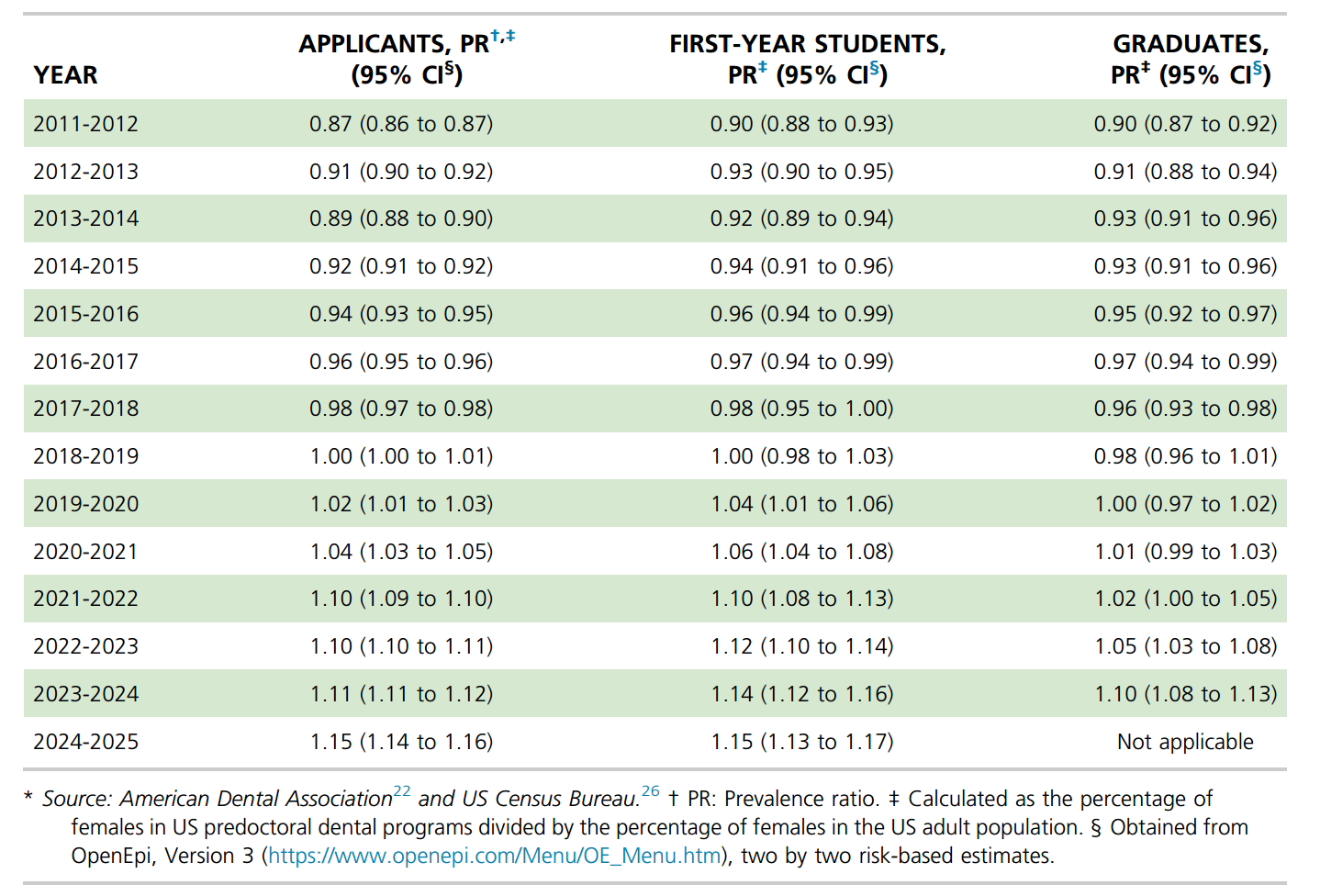
Researchers analyzed public data from the American Dental Association's Dental Education Survey, covering the 2011–2012 to 2024–2025 academic years, with the number of included institutions rising from 61 at the study's outset to 75 at its conclusion. Results showed that in the 2011–2012 academic year, women accounted for 44.0% of applicants, 45.8% of first-year students, and 45.5% of graduates. Relative to the U.S. adult population composition, the prevalence ratio (PR, used to measure representation differences between groups relative to a reference population) for female applicants was 0.87 (95% CI: 0.86–0.87), while PRs for first-year students and graduates were both 0.90, indicating slight underrepresentation of women across all three stages.
 |
| Source: "Longitudinal sex representation in US dental schools from 2011 through 2025" |
Thereafter, female representation steadily increased. In the 2018–2019 academic year, the PR for female applicants and first-year students reached approximately 1.00; in the 2019–2020 academic year, female graduates also achieved a level roughly equivalent to the U.S. adult population composition. In the 2024–2025 academic year, women comprised 58.1% of applicants and 58.0% of first-year students, with PRs for both rising to 1.15; among the most recent available graduate data for the 2023–2024 academic year, women accounted for 55.8%, with a PR of 1.10. This indicates that female representation in U.S. predoctoral dental education has shifted from underrepresentation at the study's start to a slight overrepresentation relative to the U.S. adult population composition.
From the beginning to the end of the study period, the increase in female applicants at private institutions was 34.6%, higher than the 26.0% at public institutions; the increase in female first-year students at private institutions was 33.3%, compared to 23.5% at public institutions. Regarding graduates, from the 2011–2012 to the 2023–2024 academic year, the increase in female graduates at public institutions was 24.1%, slightly higher than the 20.2% at private institutions; however, the gender composition of graduates across both types of institutions was generally similar over the study period.
 |
| Source: "Longitudinal sex representation in US dental schools from 2011 through 2025" |
Citing previous research, the study authors noted that female dentists are more likely to serve children and populations of lower socioeconomic status, and to practice in community health and public health settings. Therefore, an increased proportion of female dentists may help improve oral healthcare accessibility for certain minority and underserved populations.
The researchers also cautioned that this study is descriptive in design and did not analyze causal factors driving the changes in gender composition; applicants, first-year students, and graduates are not the same cohort. The study only analyzed self-reported biological sex as male and female, without incorporating intersecting factors such as race, socioeconomic status, geography, and age. The educational experiences and their long-term impact on the dental workforce and healthcare delivery require further investigation.
| About DGN:DentalGoodNews (DGN) is a trusted professional media platform dedicated to the global dental industry. We deliver in-depth coverage of corporate news, policy & regulation, investment & funding, and clinical frontiers — serving dental institutions, device manufacturers, investors, and industry researchers worldwide. Contact us: haodeya@dongxizixun.com |

;)