Sichuan University Team Uses AI to Screen Periodontitis Treatment Hydrogel, Mouse Model Performance Comparable to Minocycline
 |
| Source: "Machine learning-driven discovery of therapeutic nucleoside hydrogels for periodontitis" |
DentalGoodNews|Recently, an experimental study published in the "International Journal of Oral Science" revealed that a research team from Sichuan University utilized a machine learning-guided strategy to screen and validate two nucleoside hydrogels for periodontitis treatment: guanosine-5'-monophosphate (GMP) and 2'-deoxyguanosine-5'-phosphate (dGMP).
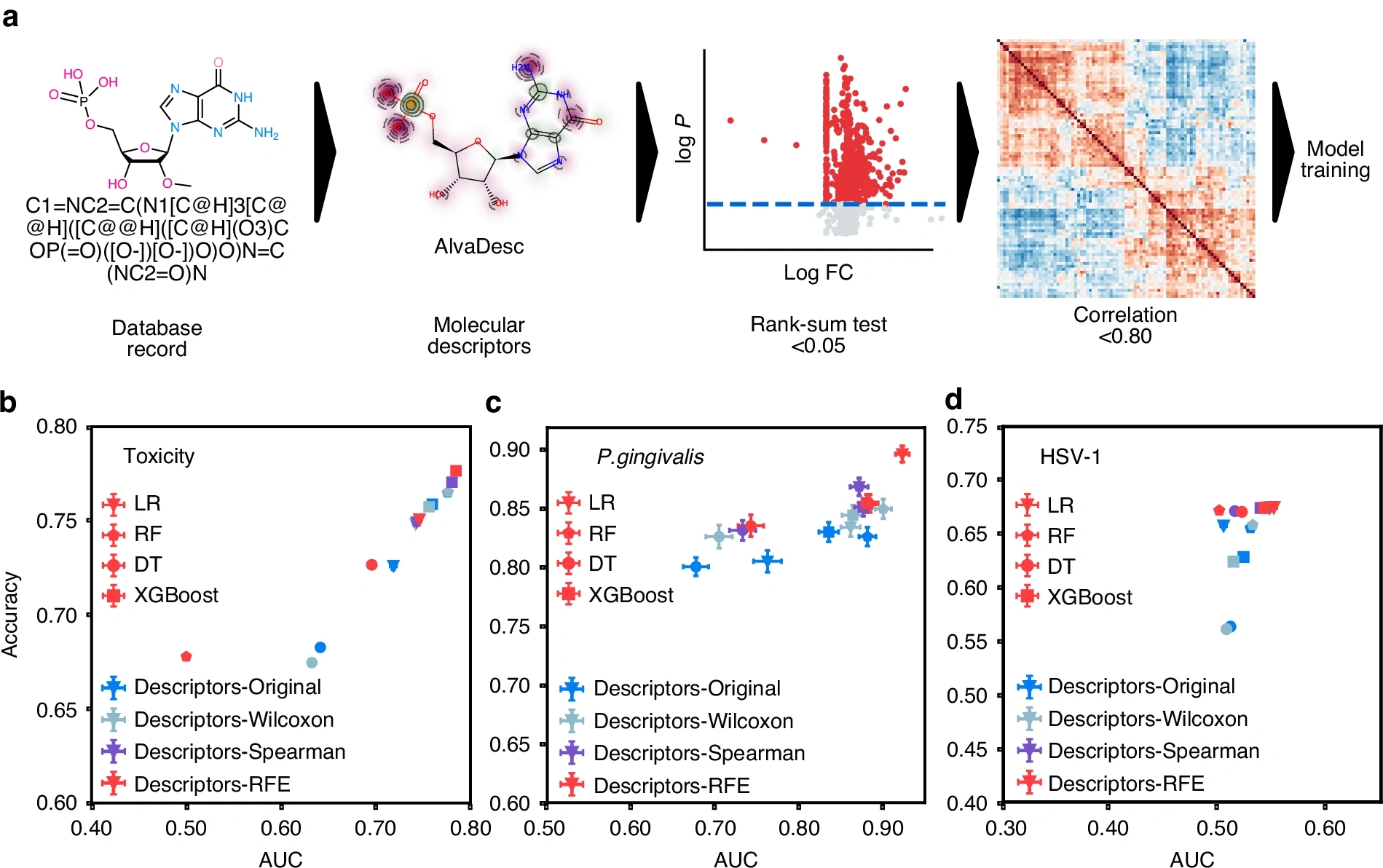
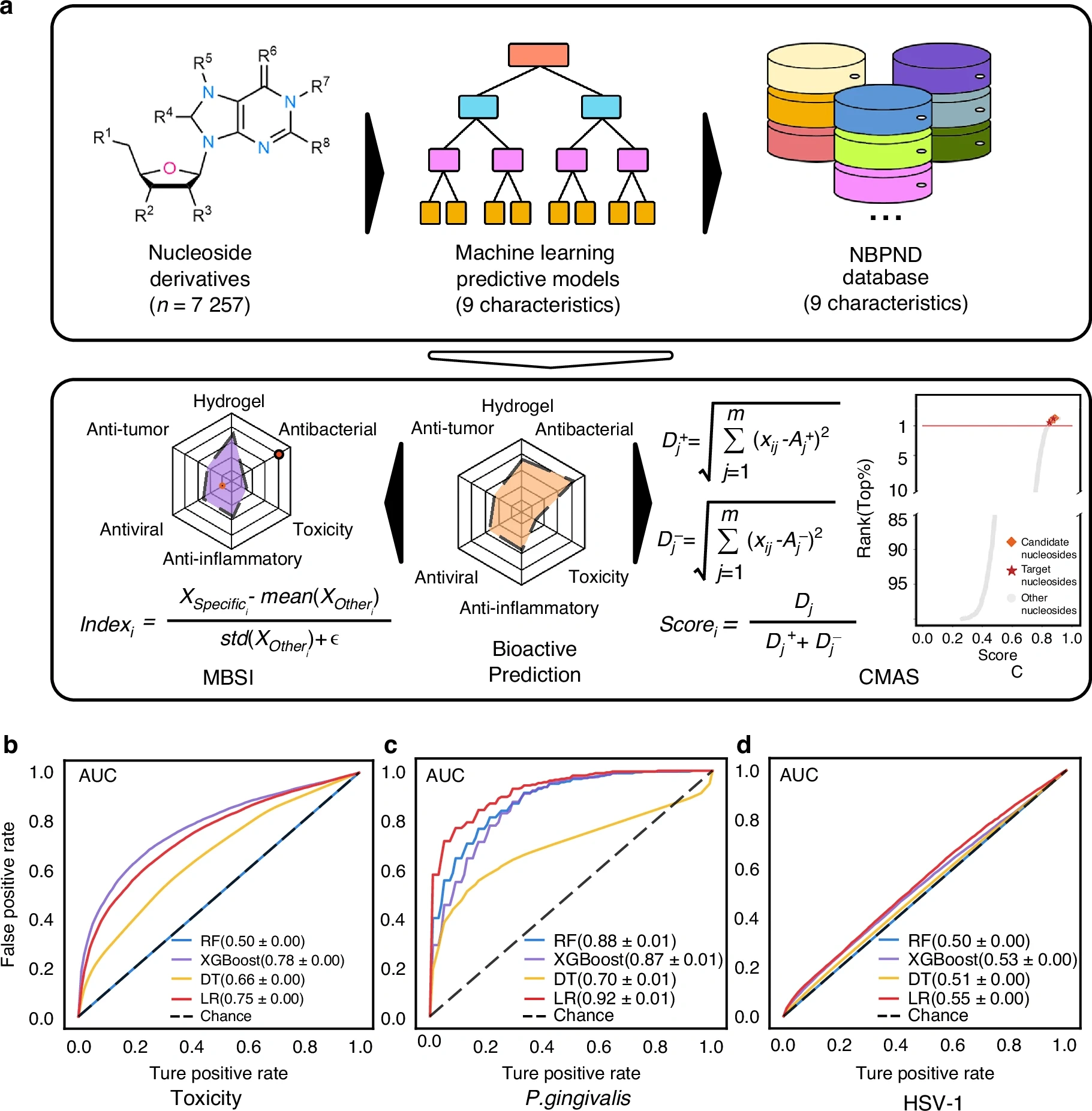
The researchers noted that periodontitis can cause damage to periodontal tissues such as the gums, alveolar bone, and periodontal ligament, requiring treatments that balance antibacterial, anti-inflammatory, and tissue repair functions. Traditional biomaterial development relies on repeated experiments, which are time-consuming and costly. This study introduced an AI-driven predictive model, analyzing nine bioactive datasets to computationally screen 7,257 nucleoside derivatives, with a focus on evaluating their gelation ability, biosafety, and anti-Porphyromonas gingivalis activity.
 |
| Source: "Machine learning-driven discovery of therapeutic nucleoside hydrogels for periodontitis" |
According to the research team, this study introduced two evaluation metrics: the Molecular Bioactivity Specificity Index (MBSI) and the Composite Molecular Attribute Score (CMAS), used to comprehensively assess the gelation ability, biocompatibility, and antibacterial properties of nucleoside derivatives.
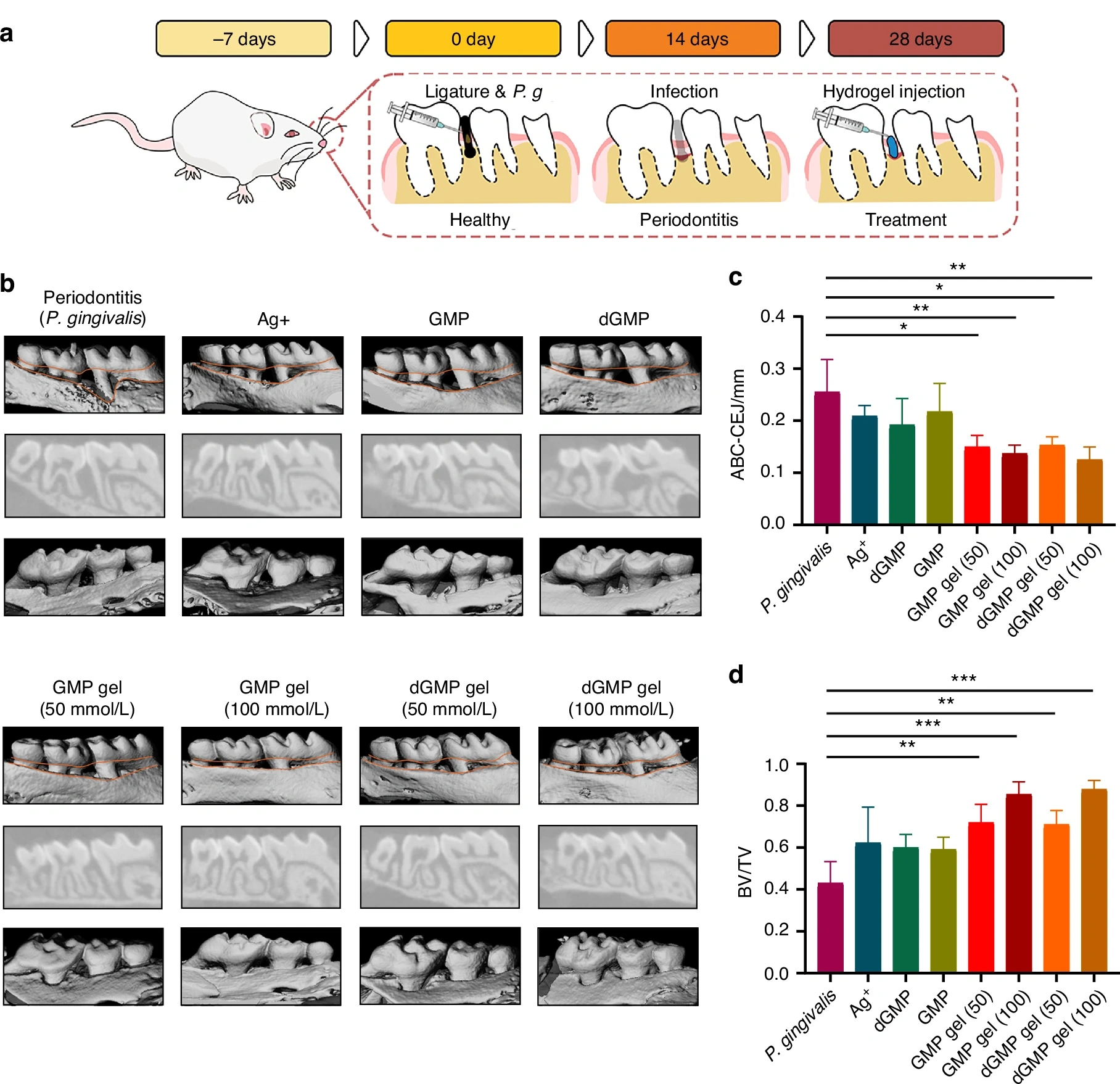
Experimental results showed that the screened GMP and dGMP, in the presence of Ag⁺, formed stable supramolecular hydrogels with self-healing and shear-thinning properties. In a mouse periodontitis model, GMP and dGMP hydrogels inhibited Porphyromonas gingivalis-related inflammation and reduced alveolar bone loss; in a prevention model, their therapeutic effects were comparable to the positive control minocycline.
 |
| Source: "Machine learning-driven discovery of therapeutic nucleoside hydrogels for periodontitis" |
Currently, this computational framework is primarily used in the study to narrow down the candidate molecule range and improve screening efficiency; its actual impact on development timelines and costs still requires further validation. The research team indicated that this method may be extended in the future to areas such as drug delivery, wound healing, and personalized regenerative medicine.
The research team pointed out that the study still has certain limitations: the current results are mainly based on in vitro experiments and animal model validation, and clinical human trials are needed to further confirm the safety and efficacy of the relevant materials.
| About DGN:DentalGoodNews (DGN) is a trusted professional media platform dedicated to the global dental industry. We deliver in-depth coverage of corporate news, policy & regulation, investment & funding, and clinical frontiers — serving dental institutions, device manufacturers, investors, and industry researchers worldwide. Contact us: haodeya@dongxizixun.com |

;)