Peking University School of Stomatology’s Self-Powered Electric Toothbrush Featured in Nature, Improving Plaque and Gingival Inflammation
 |
| Source: "Self-charged toothbrush facilitates tooth healthcare maintenance" |
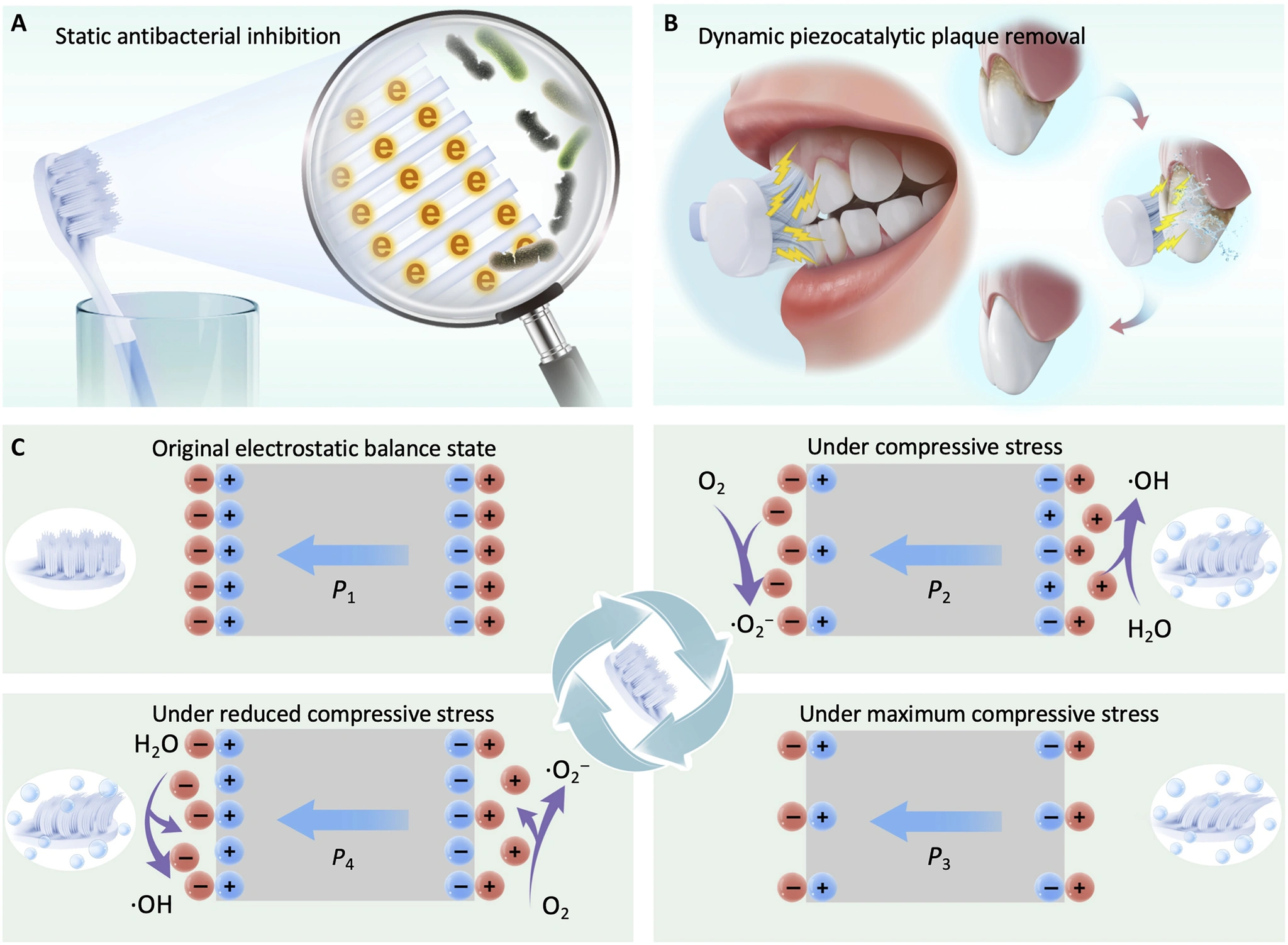
DentalGoodNews|On November 4, 2026, the news section of Nature reported on a self-powered toothbrush developed by a research team at Peking University School and Hospital of Stomatology. The toothbrush uses polyvinylidene fluoride (PVDF) piezoelectric material to make bristles, utilizing the electric charge generated by bristle bending during brushing to further promote the generation of reactive oxygen species, thereby adding antibacterial effects beyond mechanical cleaning.
The research team utilized the piezoelectric properties of PVDF material to fabricate toothbrush bristles. When the bristles deform during brushing, they generate electric charges, which promote the generation of reactive oxygen species (ROS) through piezoelectric catalytic reactions, causing oxidative damage to bacterial cell membranes. The study also utilized the static antibacterial effect generated by the material's surface potential to reduce bacterial adhesion. This design uses the energy from daily brushing motions and requires no external power source.
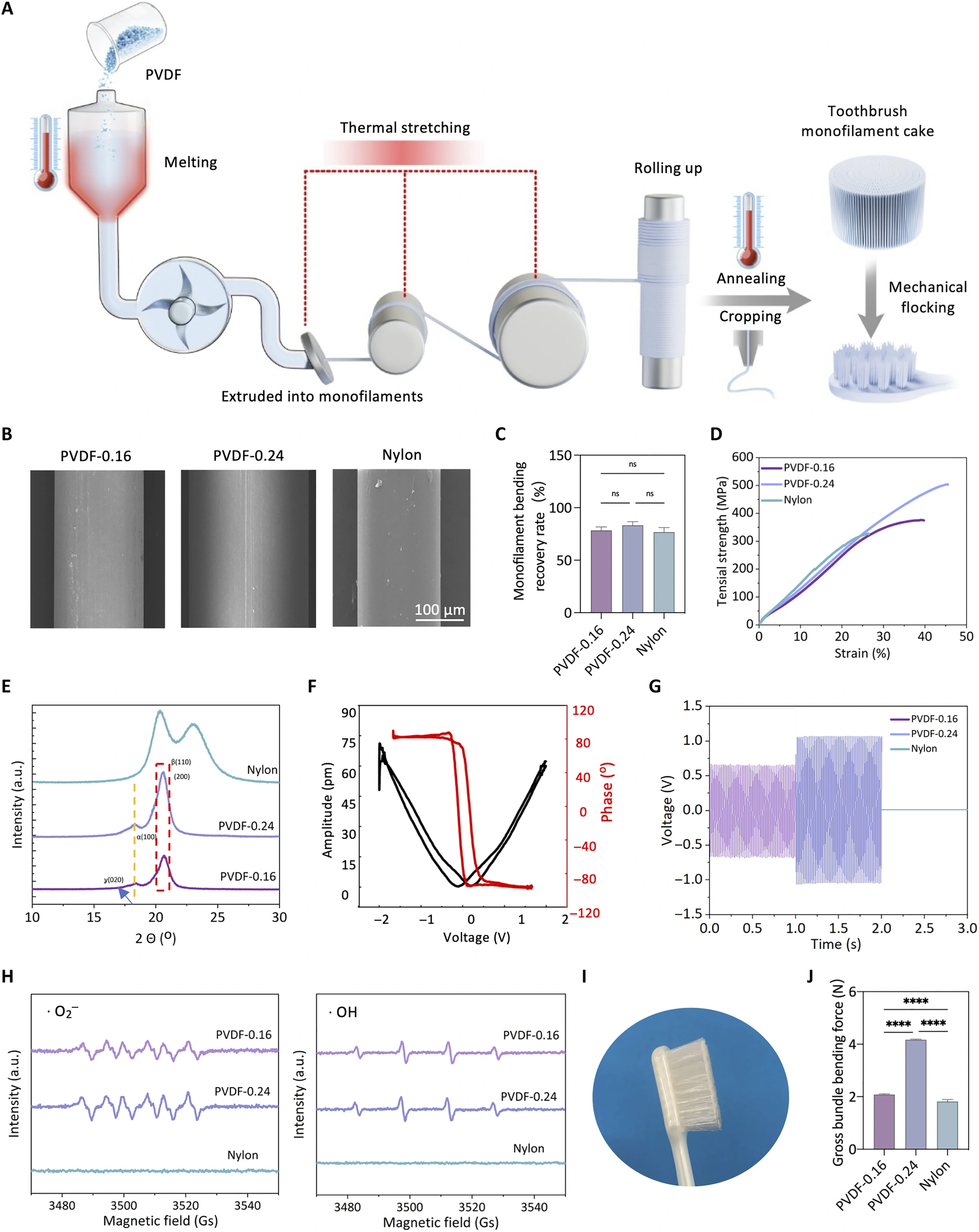 |
| Physicochemical and electrical characterization of PVDF monofilaments |
In in vitro experiments, the research team tested the inhibitory effects of the material on Streptococcus mutans (S. mutans) and Porphyromonas gingivalis (P. gingivalis). The results showed that the piezoelectric PVDF bristles had certain antibacterial effects against the above bacteria. Further mechanistic studies indicated that ROS-induced oxidative damage to bacterial membranes may affect the bacterial ATP-binding cassette (ABC) transport system, thereby interfering with normal bacterial physiological activities.
A total of 135 individuals were screened for clinical evaluation, and 115 adults were ultimately enrolled and randomly assigned to two PVDF bristle groups of different specifications and two nylon bristle control groups for a 3-month clinical evaluation. The results showed that both PVDF bristle groups exhibited significant reductions in plaque, gingival inflammation, and bleeding indices from baseline to month 3, but compared with the nylon toothbrush groups, subjects using the piezoelectric toothbrushes showed more pronounced improvements in plaque, gingival inflammation, and bleeding indices. Nature cited the opinion of clinical scientist Thomas Flemmig from the University of Hong Kong, China, noting that the study mainly reported participants' improvements relative to baseline and compared the average improvement magnitude between the two groups, and that this manner of data presentation makes it difficult to directly compare the results with other toothbrush studies.
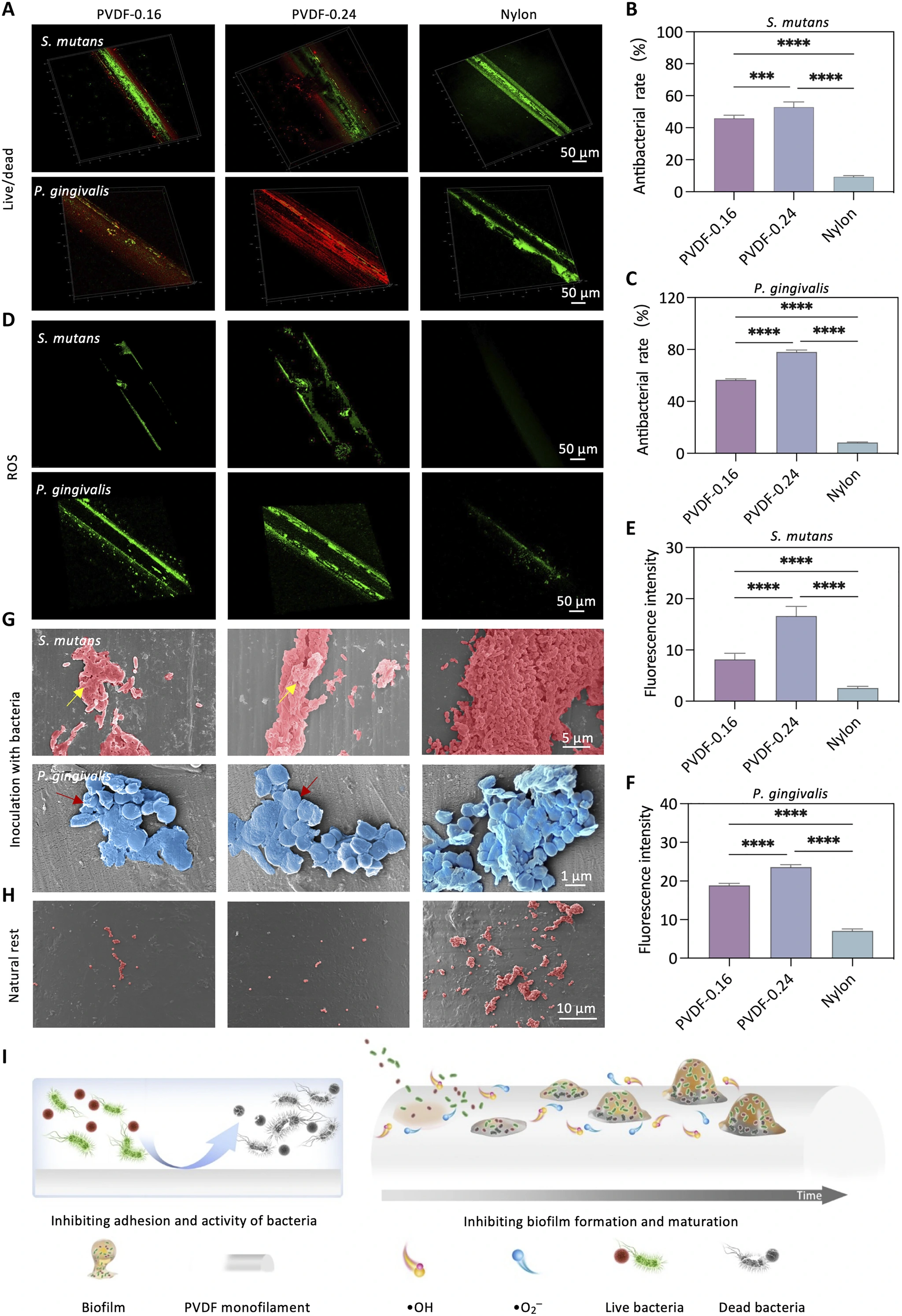 |
| The self-charged toothbrush inhibits the activity of oral pathogenic bacteria through surface potential and piezoelectric effects |
Regarding safety, the research team evaluated bristle durability and effects on tooth surfaces through simulated use experiments, and found no significant increase in tooth surface roughness caused by the PVDF toothbrush; in vitro cell viability experiments also showed low cytotoxicity. The research team stated that these results provide experimental evidence for the preliminary biosafety of the material, but cannot replace long-term human use safety evaluation. Longer-term clinical follow-up is needed in the future, along with comparisons with existing products such as electric toothbrushes, sonic toothbrushes, and antibacterial-coated toothbrushes. Currently, this research remains at the stage of preliminary clinical validation of a novel toothbrush design.
| About DGN:DentalGoodNews (DGN) is a trusted professional media platform dedicated to the global dental industry. We deliver in-depth coverage of corporate news, policy & regulation, investment & funding, and clinical frontiers — serving dental institutions, device manufacturers, investors, and industry researchers worldwide. Contact us: haodeya@dongxizixun.com |

;)