New Guidelines for Orthodontic AI Governance: American Association of Orthodontists Clarifies the Boundaries of “Physician-Led” Rights and Responsibilities
 |
DentalGoodNews|In September 2026 local time, the American Association of Orthodontists (hereinafter referred to as "AAO") position paper "Responsible Integration of Artificial Intelligence in Clinical Care" was officially published in the American Journal of Orthodontics and Dentofacial Orthopedics (hereinafter referred to as "AJODO").
The document had previously been released to AAO members as an internal version on January 14, 2026, and the published version was adjusted before being formally made public. The document emphasizes the "human-in-command" (hereinafter referred to as "HIC") principle: licensed orthodontists are not only the final decision-makers in AI-assisted clinical decision-making, but also the responsible party.
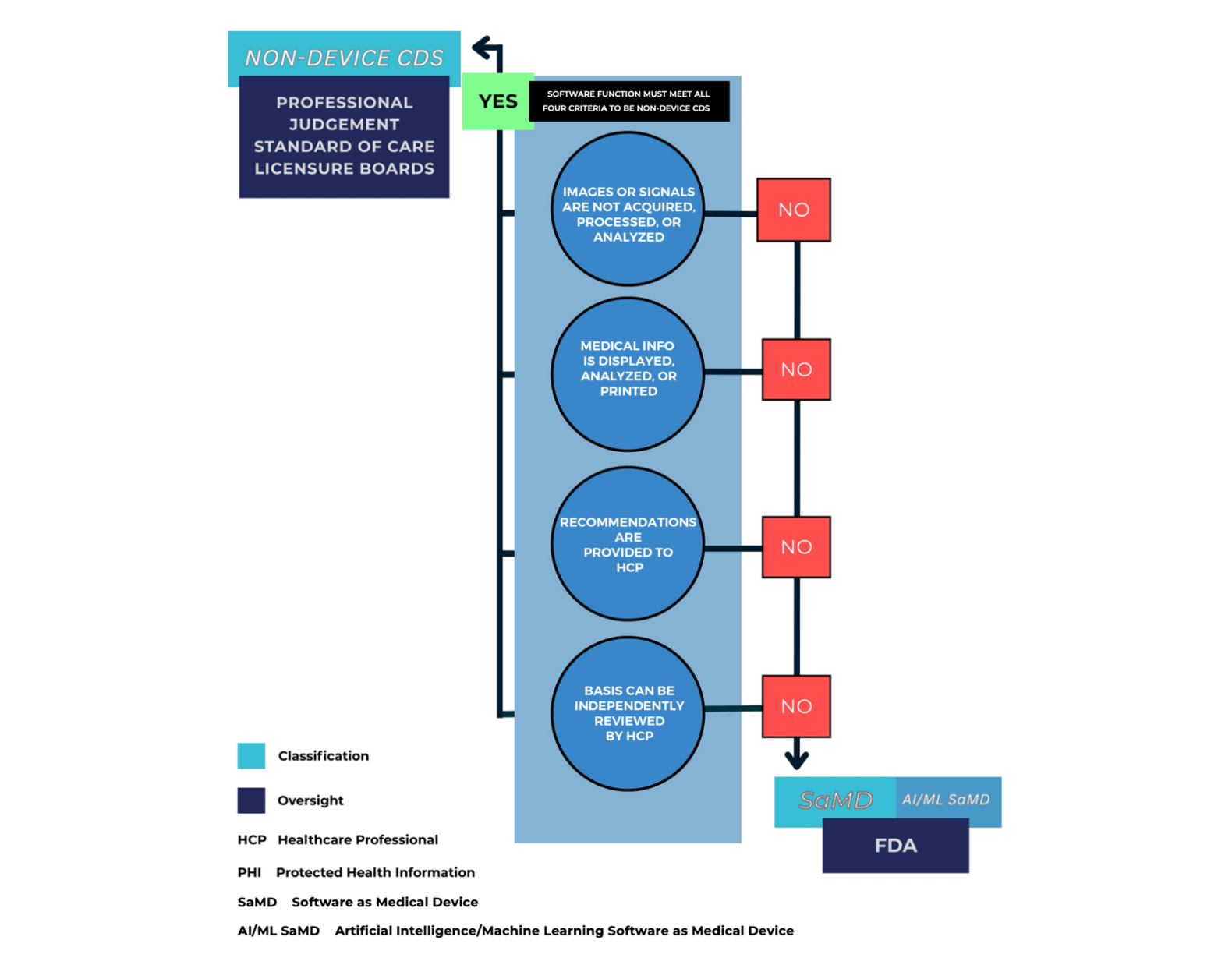
AAO pointed out that the regulatory classification of orthodontic AI software depends on its function rather than its technical implementation. According to the U.S. 21st Century Cures Act, clinical decision support (CDS) software that allows physicians to independently review the basis for recommendations is not classified as Medical Devices; however, functions that directly drive clinical operations and do not provide an independent review pathway may be classified as "Software as a Medical Device" (SaMD).
For example, cephalometric tools that allow physicians to correct points belong to CDS; whereas digital bonding software that automatically designs transfer trays, and imaging analysis systems that use machine learning to quantify alignment progress, may be regarded as SaMD and subject to FDA risk-based regulation because their outputs are directly used in clinical operations or decisions.
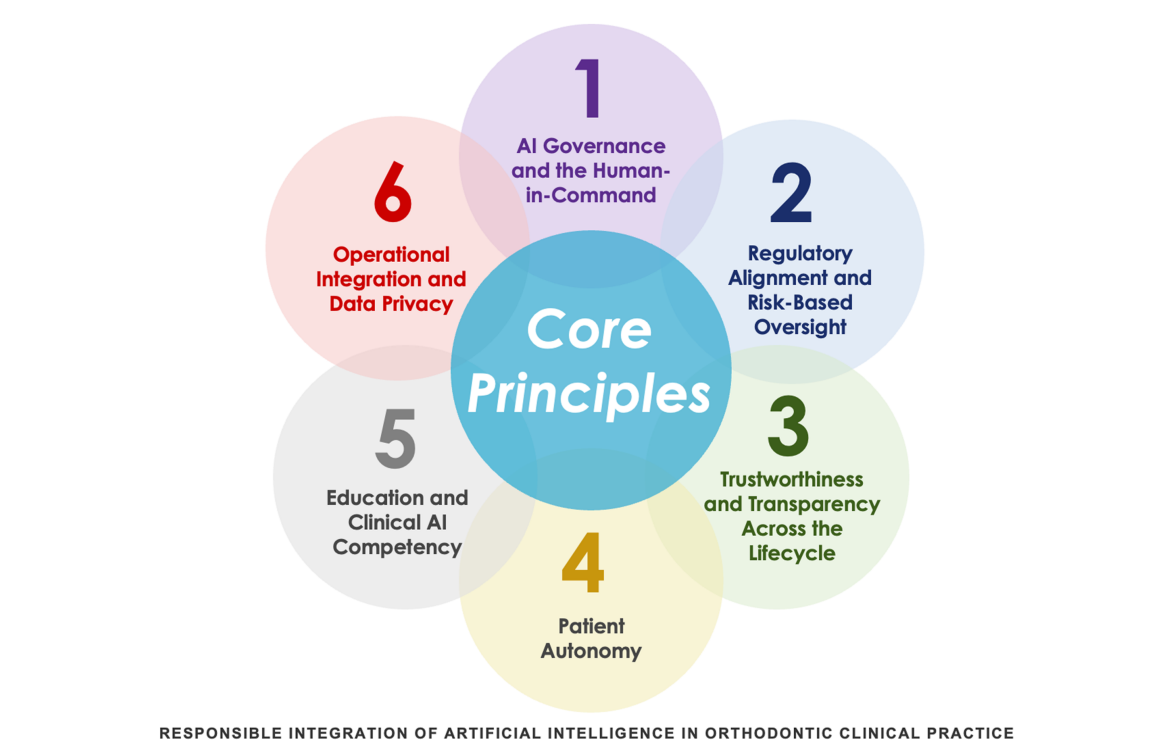 |
To standardize the application of AI in Orthodontics, AAO also proposed six governance principles: AI governance and the HIC model, risk-based regulatory alignment, full lifecycle transparency, patient autonomy, AI education and clinical competency, and operational integration and data privacy. The document mentions that developers need to provide a Predetermined Change Control Plan (PCCP) and implement full lifecycle monitoring to reduce risks brought by data bias and model drift.
AAO emphasized that orthodontic practitioners need to improve AI literacy through systematic training from undergraduate education to continuing education, and master the ability to interpret confidence levels and identify bias; it also recommended that AI systems adopt standards such as HL7 FHIR and DICOM to achieve interoperability, and protect patient data privacy in accordance with frameworks such as HIPAA, HITECH, and ISO 42001. According to previous reports by DGN, the artificial intelligence remote orthodontic monitoring platform DentalMonitoring recently received $100 million in investment, demonstrating capital's attention to Digital Orthodontics AI tools.
| About DGN:DentalGoodNews (DGN) is a trusted professional media platform dedicated to the global dental industry. We deliver in-depth coverage of corporate news, policy & regulation, investment & funding, and clinical frontiers — serving dental institutions, device manufacturers, investors, and industry researchers worldwide. Contact us: haodeya@dongxizixun.com |

;)