New Data: 58% of New Zealand Youth Have Not Visited a Dentist, Only 4% for Children
 |
| Image source: "Children's Oral Health Workers: Voices for Dental for All" |
DentalGoodNews|On October 8, 2026, local time, the New Zealand Public Service Association (PSA) released a report titled "Children's Oral Health Workers: Voices for Dental for All" (hereinafter referred to as the "Report"). The Report points out that the existing system providing free public oral healthcare services to approximately 750,000 New Zealand children is being squeezed by a triple burden of aging equipment, understaffing, and insufficient administrative support.
Respondents to the Report included oral health therapists, dental therapists, dental assistants, health promoters, receptionists, and service desk analysts. Equipment shortages were a repeatedly mentioned issue in the Report. One respondent said their clinic had only 4 sets of filling instruments but had to see 12-15 patients per day. Each set of instruments requires 90 minutes of sterilization after use. Another respondent's clinic had 6 treatment chairs but only 1 X-ray machine, often resulting in long queues during consecutive patient visits.
Staffing gaps were equally prominent. One respondent said their service site had approximately 12 full-time equivalent (FTE) positions for oral health therapists/dental therapists, but should have had about 30. Another respondent said their service site had 33 vacant positions. Yet another respondent mentioned that their early intervention team was originally staffed with 3 people, but now only 2 people were carrying the same workload.
The Report states that this is related to strict recruitment restrictions imposed by Health New Zealand over the past two years. After staff departures, filling positions requires superior approval, and some vacant positions take at least a year to fill. Moreover, the contraction of administrative and digital roles has further increased the burden on frontline staff. The Report states that Health New Zealand made a net reduction of 1,000 data and digital positions in 2025, and related teams have since faced recruitment restrictions. The administrative team for Auckland regional dental services has also been reduced from nearly 30 people to fewer than 10, most of whom are part-time.
In addition, understaffing has directly affected patients. One respondent said that due to understaffing, they had not visited a small rural town in their region for three years. Another respondent said that children referred to hospitals must wait on waiting lists, which continue to grow.
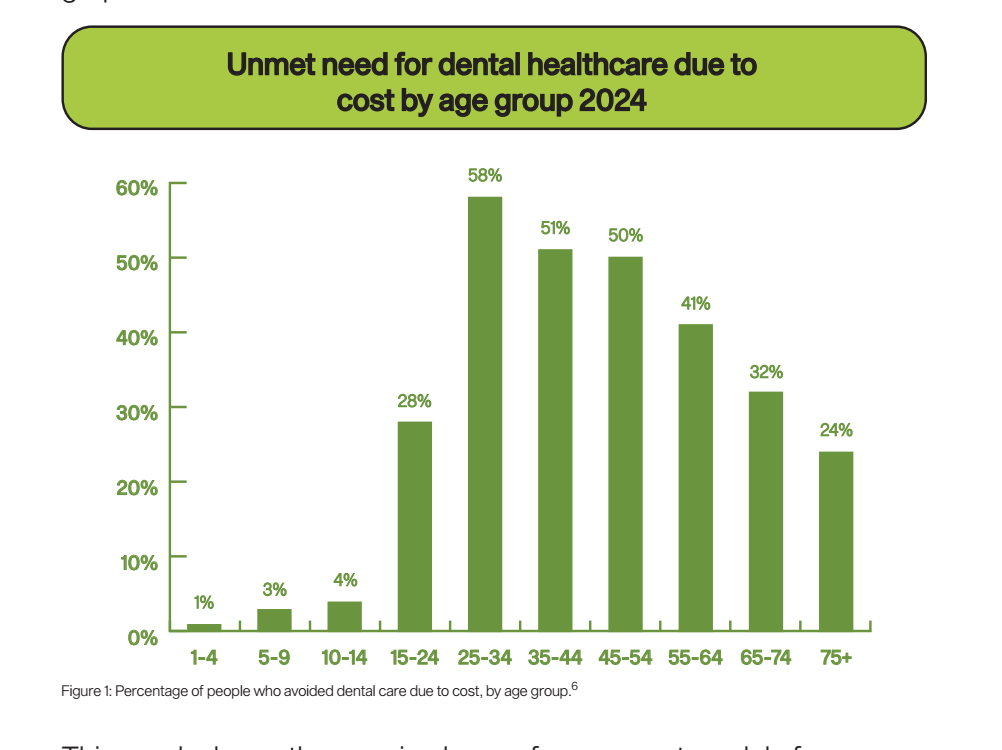
The gap in dental accessibility between children and adults is also reflected in cost burden. The Report cites New Zealand Health Survey data showing that the proportion of people aged 10 to 14 who did not receive dental care in the past 12 months due to cost was 4%, while for those aged 25 to 34 it was 58%. Children can access free public oral healthcare services, while adult oral healthcare mainly relies on private services, with cost being a significant barrier to adult care.
| About DGN:DentalGoodNews (DGN) is a trusted professional media platform dedicated to the global dental industry. We deliver in-depth coverage of corporate news, policy & regulation, investment & funding, and clinical frontiers — serving dental institutions, device manufacturers, investors, and industry researchers worldwide. Contact us: haodeya@dongxizixun.com |

;)