Data speaks: Press conference on the results of VBP for Dental Implants and Orthodontic Brackets
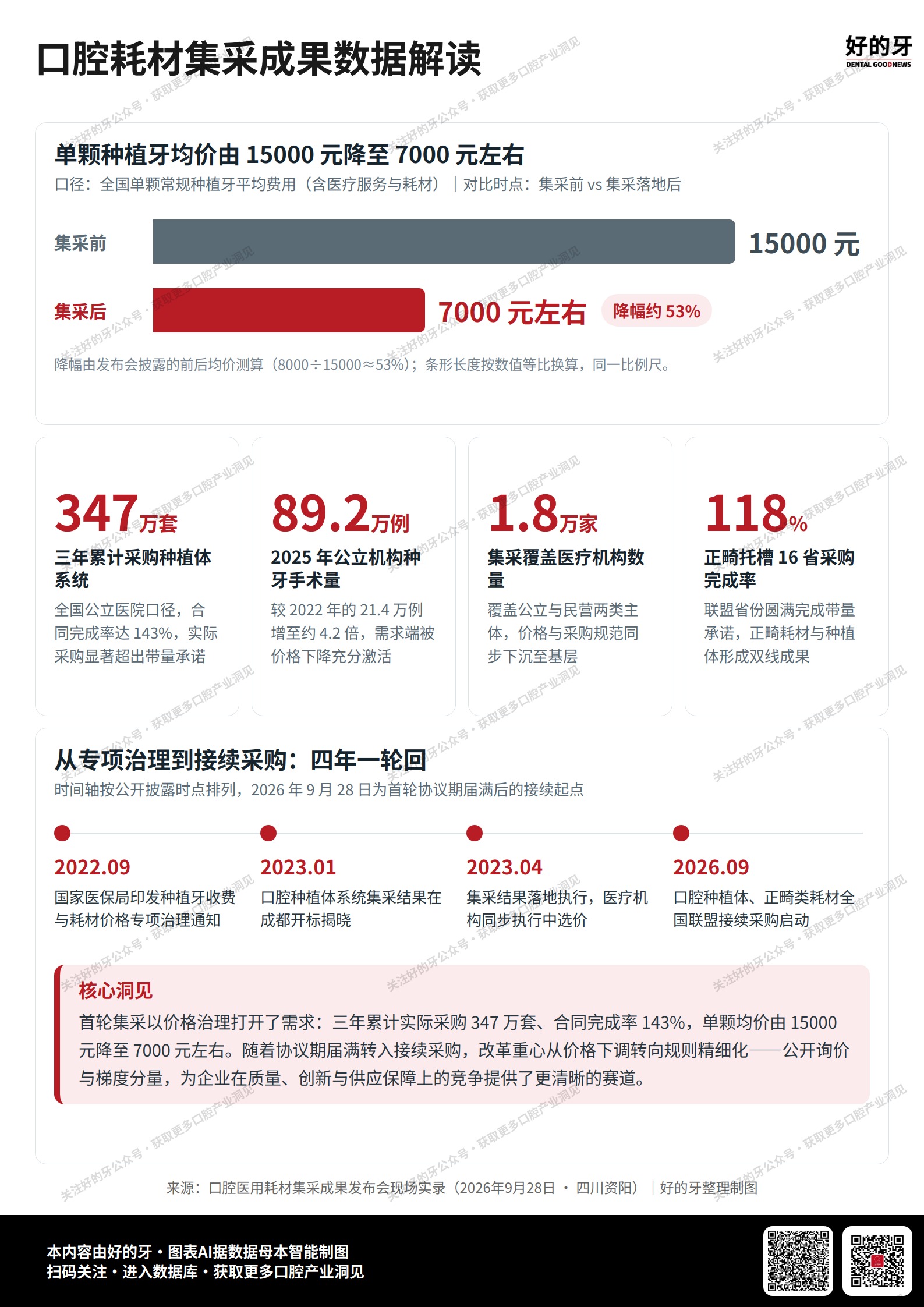
On September 28, 2026, the results release conference for the centralized procurement of dental implants and orthodontic brackets was held in China Dental Valley, Ziyang, Sichuan. According to DGN DataLab: after the implementation of centralized procurement, the average cost of a single dental implant dropped from 15,000 yuan to around 7,000 yuan. Over three years, public hospitals nationwide cumulatively procured 3.47 million sets of implant systems, with a contract completion rate of 143%. Meanwhile, the number of enterprises applying for the follow-up centralized procurement increased from 53 to 101, and the number of product components rose from 391 to 1,008. The following:
I. Demand Side: After Price Decline, Service Volume Underwent a Quantum Shift
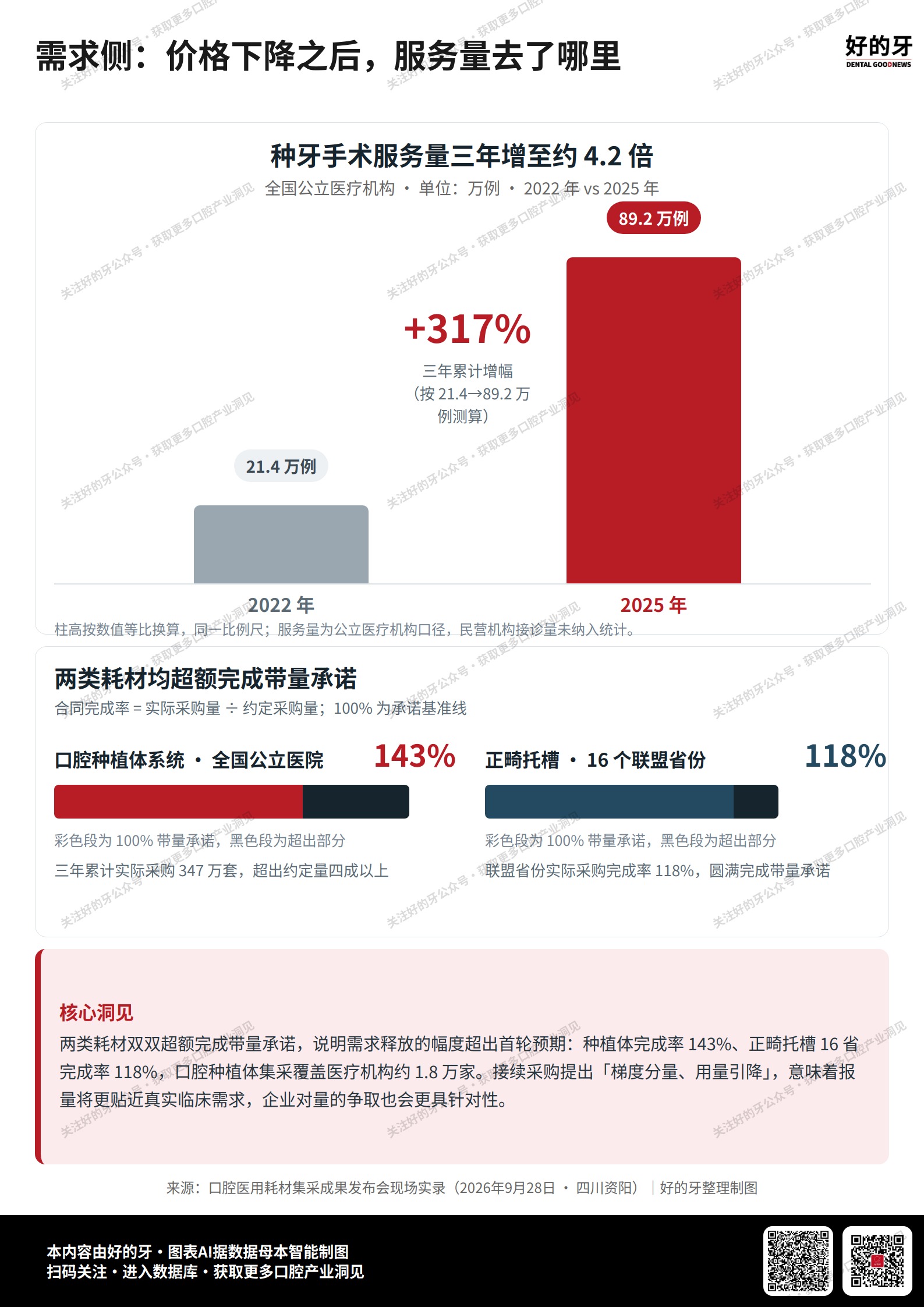
Data shows that the number of dental implant surgery services at public medical institutions nationwide increased from 214,000 cases in 2022 to 892,000 cases in 2025, a cumulative increase of approximately 317% over three years (calculated based on disclosed values). The centralized procurement of dental implants covered approximately 18,000 medical institutions. The transmission path of this change is not complicated: price is often the threshold variable in treatment decisions. Once the threshold is lowered, potential demand that previously remained at the consultation stage converts into actual visits. (This metric only covers public medical institutions; patient volumes at private institutions are not included. This is a cumulative change over a three-year period and does not equate to the growth pace of any single year.)
II. Commitment Side: Both Categories of Consumables Over-Completed, Volume Allocation Becomes a New Variable
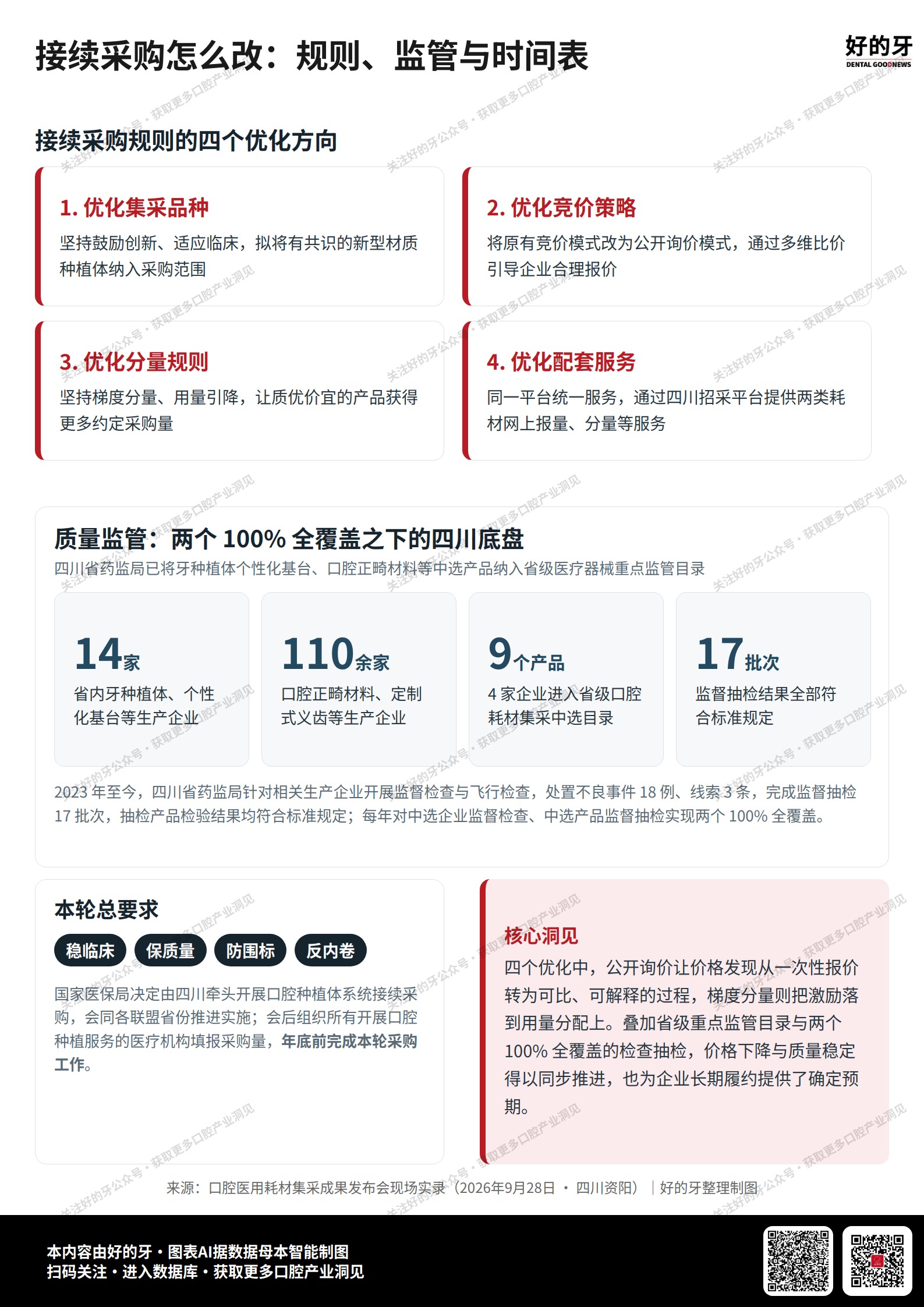
The contract completion rate for implant systems was 143%, and the actual procurement completion rate for orthodontic brackets in 16 alliance provinces was 118%. Both categories of consumables exceeded their volume-based commitments. This result indicates that the magnitude of demand release exceeded the scope covered by the first-round agreed volumes. The "gradient volume allocation, volume-guided price reduction" proposed in this round of follow-up centralized procurement means that reported volumes will be closer to actual clinical use, and the method of volume allocation will more directly affect enterprises' actual revenue structure. It should be noted that procurement volume reporting will be launched after the conference, and this round of procurement work is to be completed before the end of the year.
III. Supply Side: Entity Expansion Outpaces Enterprise Count, Competition Shifts Toward Product Portfolios
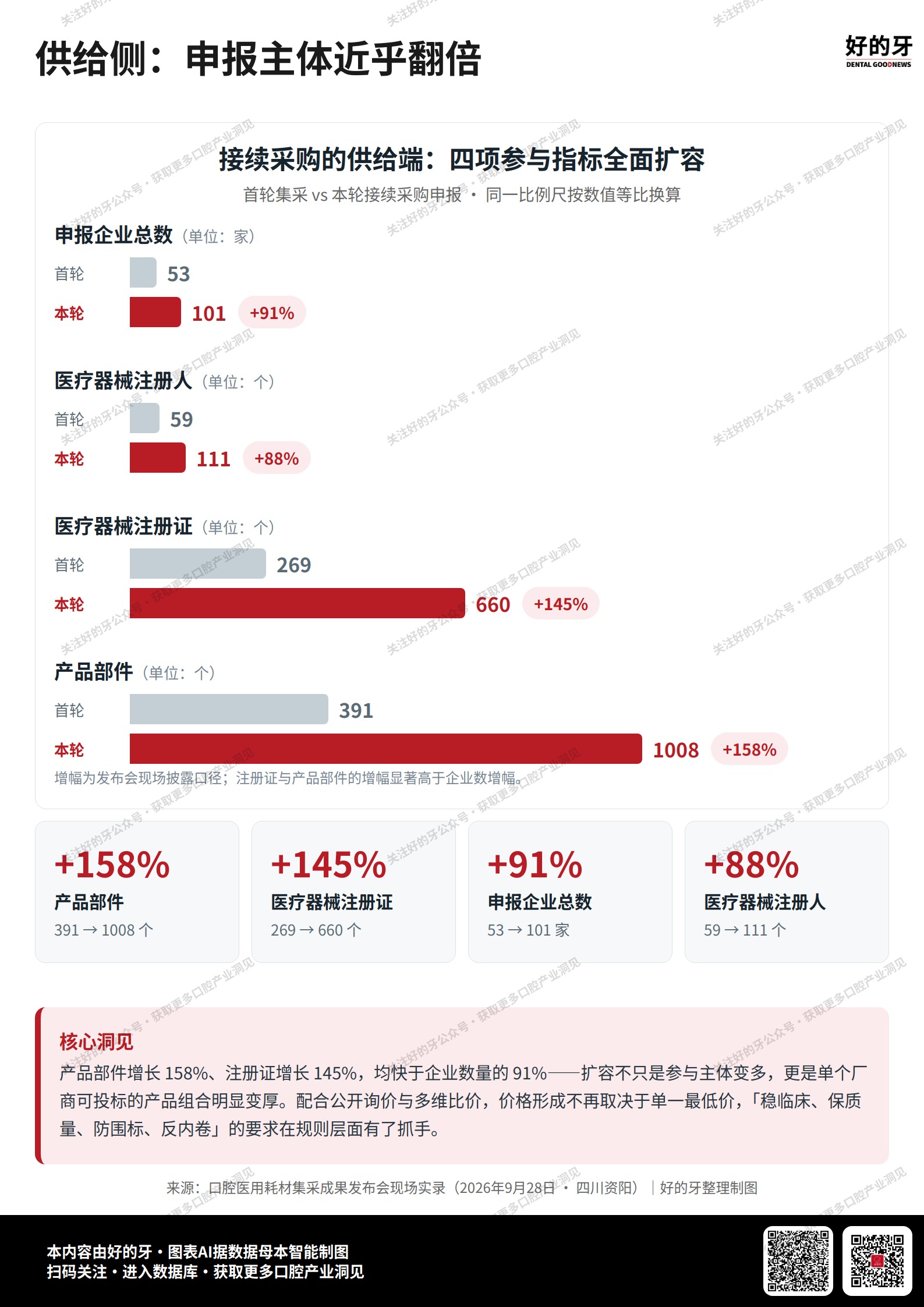
This round of application data shows structural differences: the number of applying enterprises grew by 91%, medical device registration holders grew by 88%, registration certificates grew by 145%, and product components grew by 158%. The growth rates of the latter two exceed that of the enterprise count, indicating that the focus of expansion is not on the number of participating entities, but on the significantly thicker product portfolios that individual manufacturers can bid with. In addition, price comparison rules have tightened: this round of procurement changed from competitive bidding to public inquiry, with prices formed through multi-dimensional comparison. Enterprises must coordinate quotations across more product specifications, and the complexity of quotation strategies has accordingly increased.
IV. Industry Side: Capacity Reserves Run Ahead of Shipments
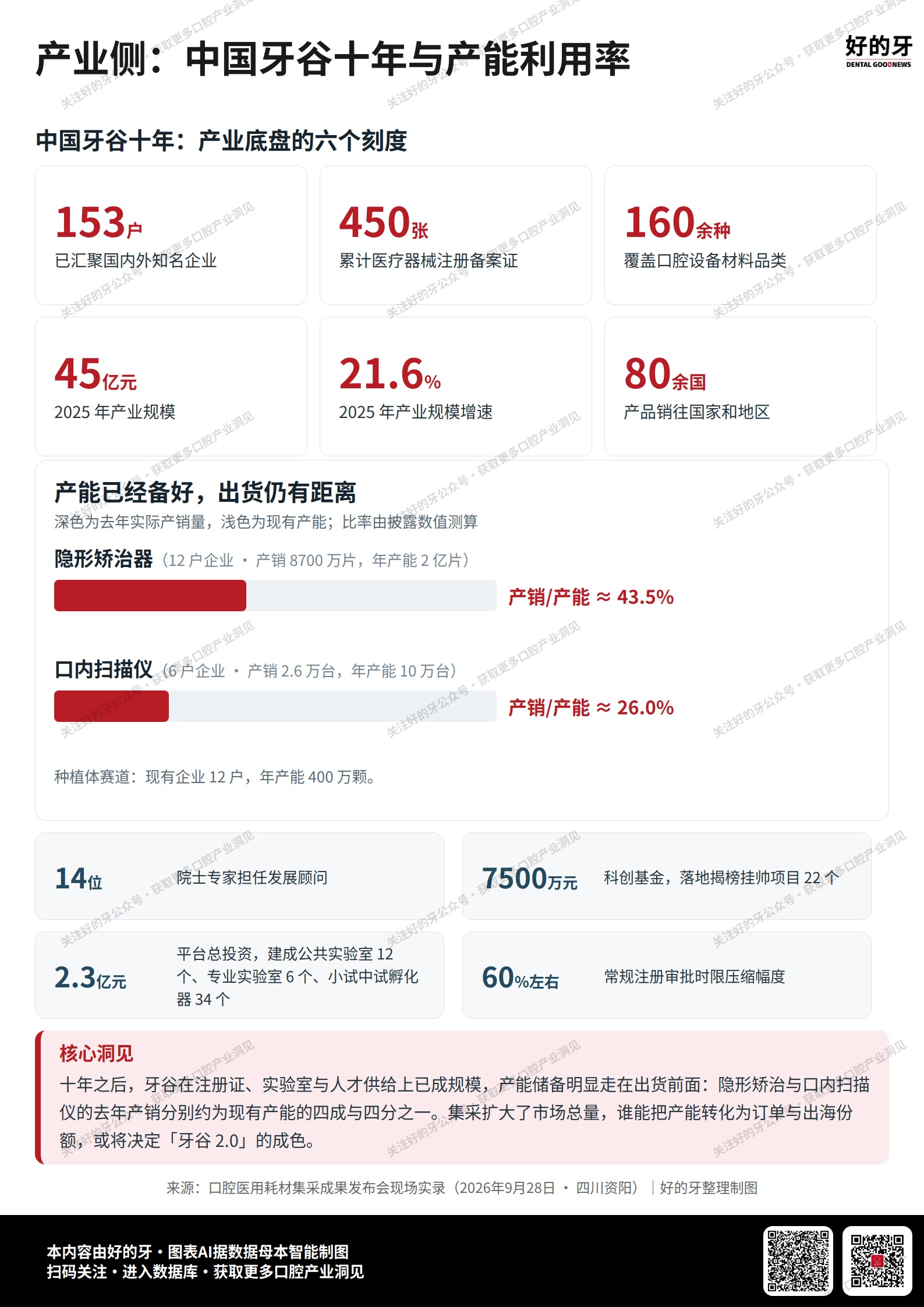
China Dental Valley has gathered 153 enterprises, cumulatively obtained 450 medical device registration and filing certificates, and achieved an industrial scale of 4.5 billion yuan in 2025, a year-on-year increase of 21.6%. By segment: there are 12 clear aligner therapy enterprises, with production and sales of 87 million units and annual capacity of 200 million units; 6 intraoral scanner enterprises, with production and sales of 26,000 units and annual capacity of 100,000 units, with production-to-capacity ratios of approximately 43.5% and 26.0% respectively; and 12 dental implant enterprises, with annual capacity of 4 million units. While centralized procurement expands the total market volume, there is still considerable room for improvement in capacity utilization on the manufacturing side.
Data source: September 28, 2026 Oral Medical Consumables Centralized Procurement Results Release Conference
| About DGN:DentalGoodNews (DGN) is a trusted professional media platform dedicated to the global dental industry. We deliver in-depth coverage of corporate news, policy & regulation, investment & funding, and clinical frontiers — serving dental institutions, device manufacturers, investors, and industry researchers worldwide. Contact us: haodeya@dongxizixun.com |

;)