An “Inverse Visit” by the Invisalign Brand: Letting Young People Ask Questions First
 |
Preface
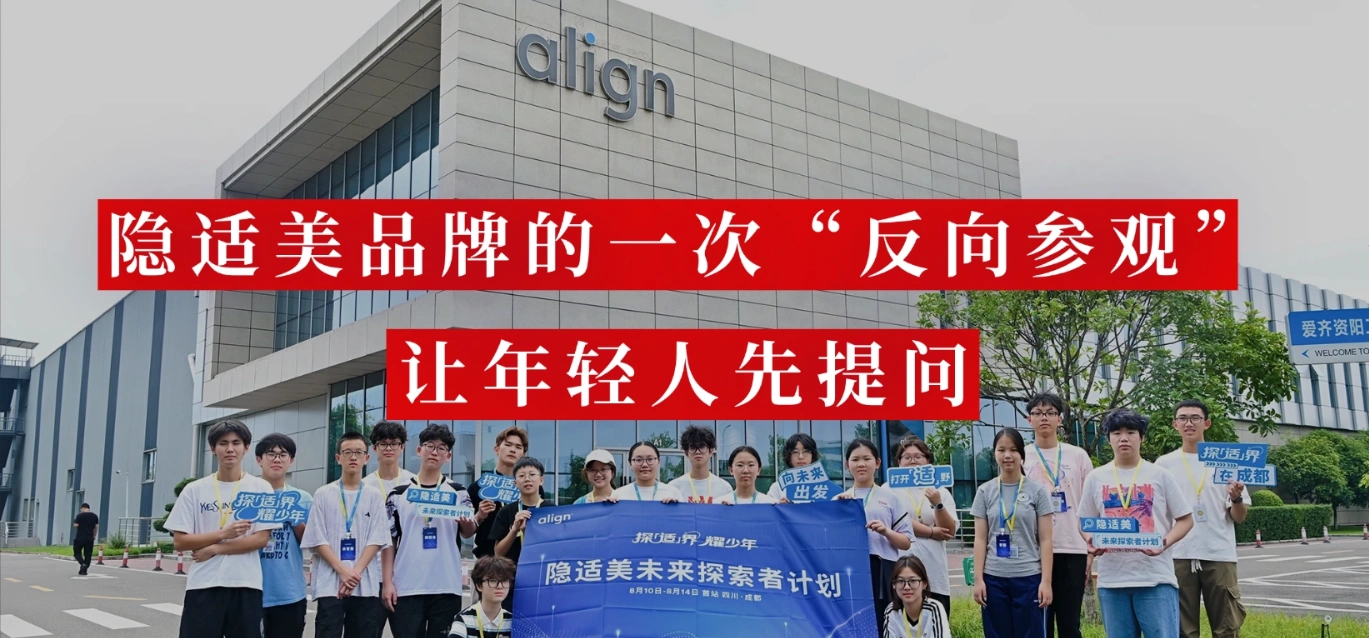
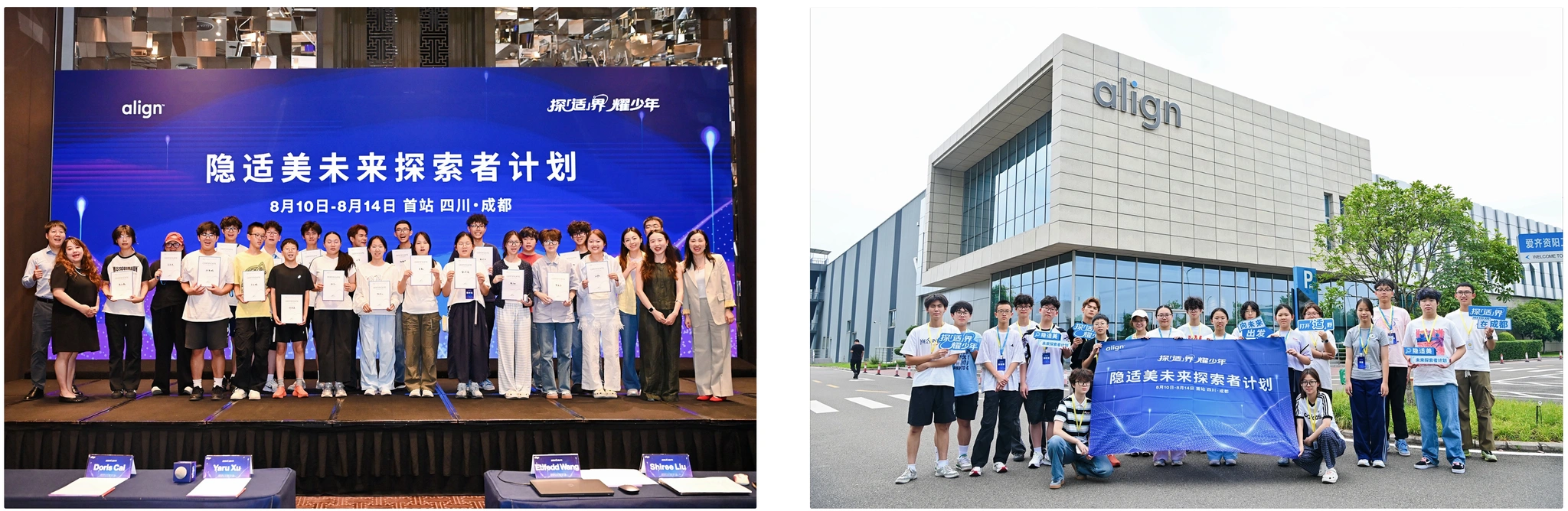
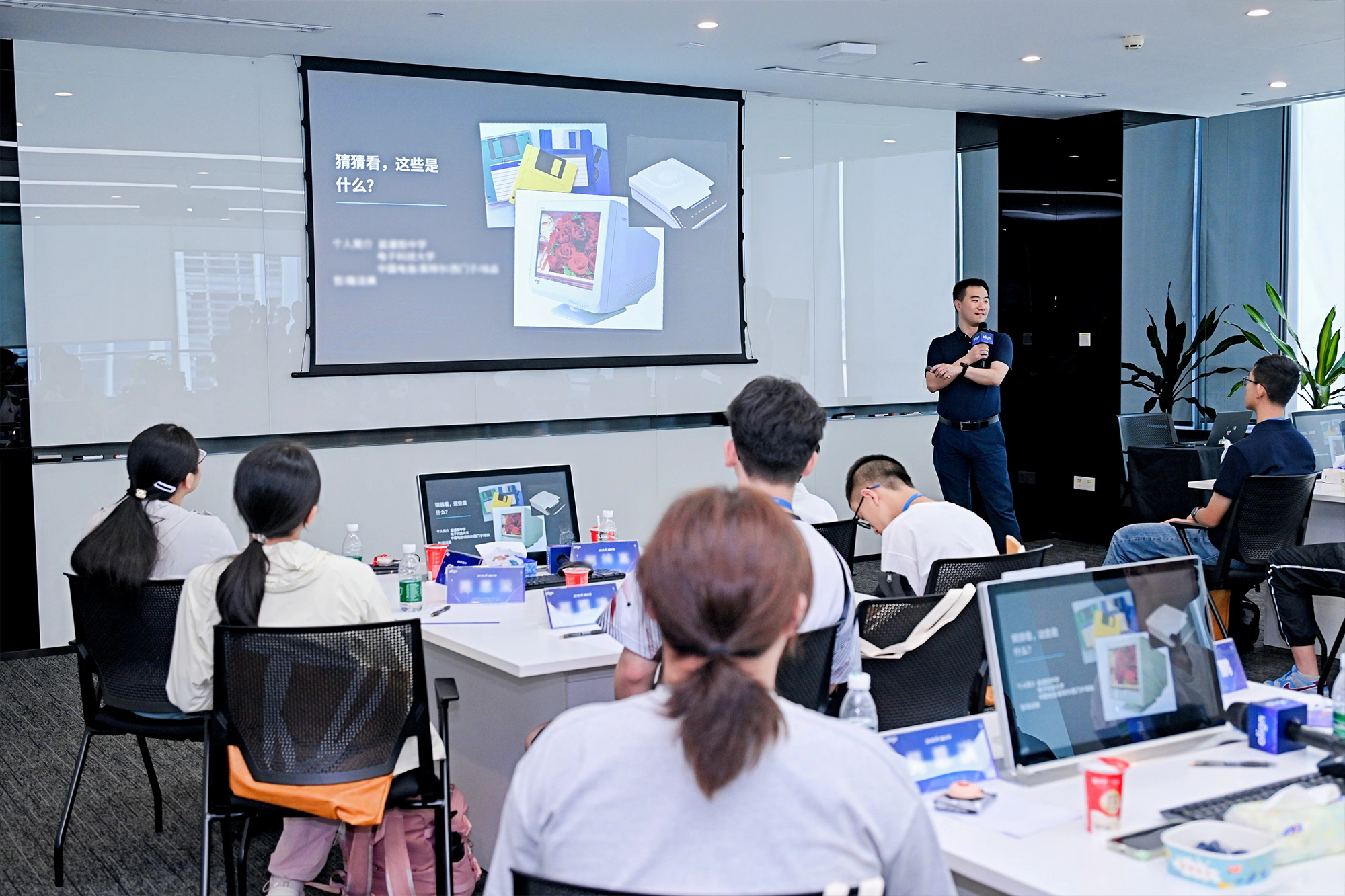
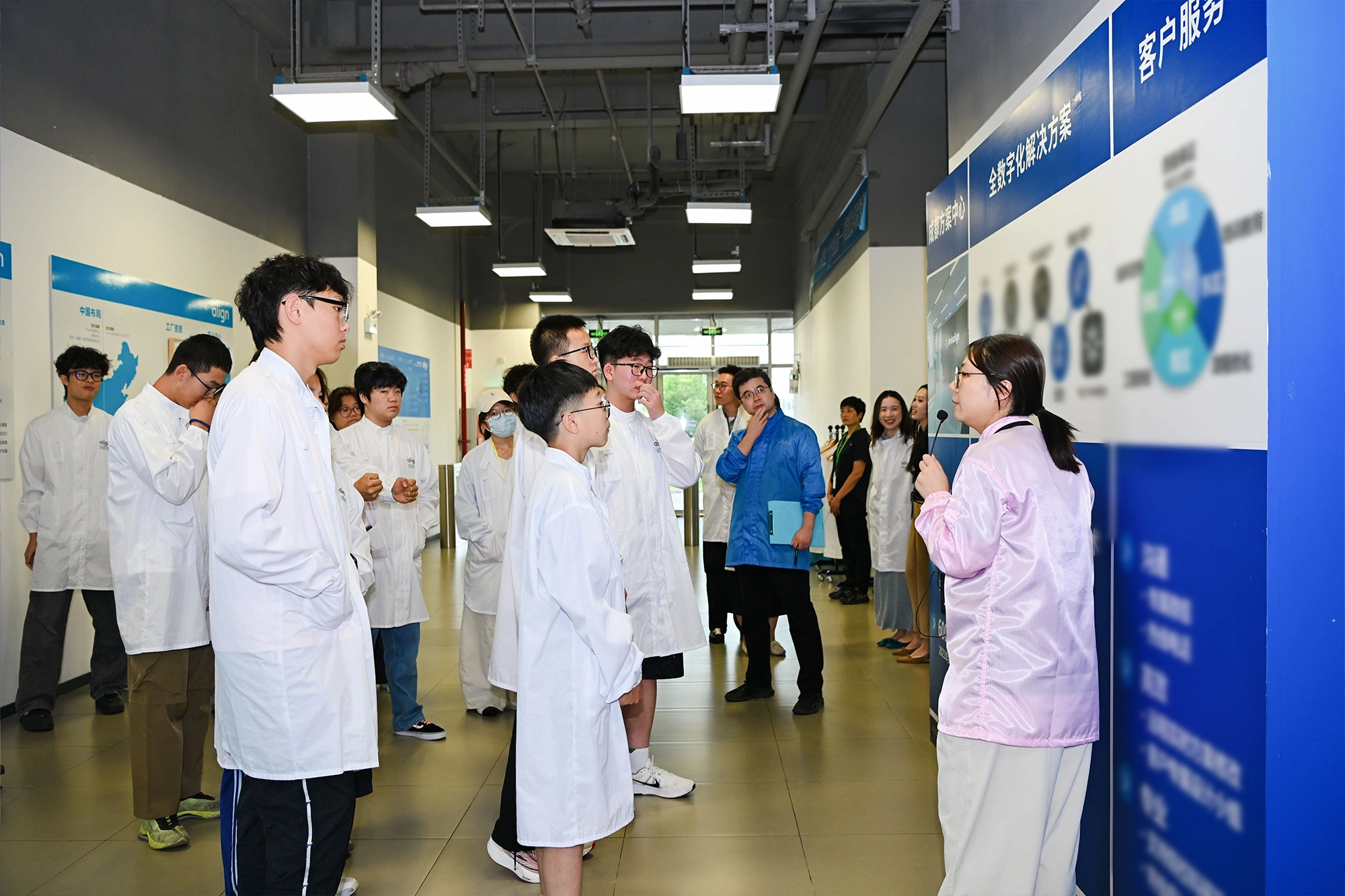
In August, a group of teenage high school students walked into a modern factory in Ziyang, Sichuan. Over several days, they saw how clear aligners are manufactured, sat in a simulated clinic chair, and held conversations at the same table with dentists and engineers—this was Align Technology's just-concluded "2026 Invisalign Future Explorers Program."
 |
| Image source: "2026 Invisalign Future Explorers Program" event |
The organizer brought this group of "digital natives" to a real innovation site, to see how a small, unmet need goes through ideation, scientific scrutiny, algorithms, materials, and biomechanics, and finally becomes everyday health.
Why would a company deeply rooted in invisible orthodontics deliberately lay open the path of "how technology comes to be" for a group of teenagers to see? This may not be a simple site visit, but a dialogue about "understanding": when young people increasingly want to see the process, participate in decision-making, and take responsibility for their own choices, healthcare technology brands also need to approach them in a more open and equal way.
In the past, it was enough to build solid technology and quietly wait for patients to come; that approach was not wrong, but the era that sustained it is passing. Today's young people can look up anything, and are more willing to make their own decisions; what can institutions and doctors do to win back the trust of this group? This is both a brand theme that Invisalign has studied for years, and a question the entire industry cannot avoid.
01 | Why Must This Generation "Understand"?
Many industries share a default assumption: the more advanced the technology, the more users will buy in, so efforts are poured into specifications and precision, and then into amplifying the message. This approach "worked" in the past because the information available for checking was limited, and the doctor's professional judgment was often the patient's most reliable basis.
But this generation of young people has no shortage of choices. Once that premise loosens, the more they cannot explain or understand a black box, the more wary they become. Faced with such wariness, many initially thought the answer was simply to make the specifications sound better; later they realized what young people really want is something else—Who am I? Where am I? Where are we going together?
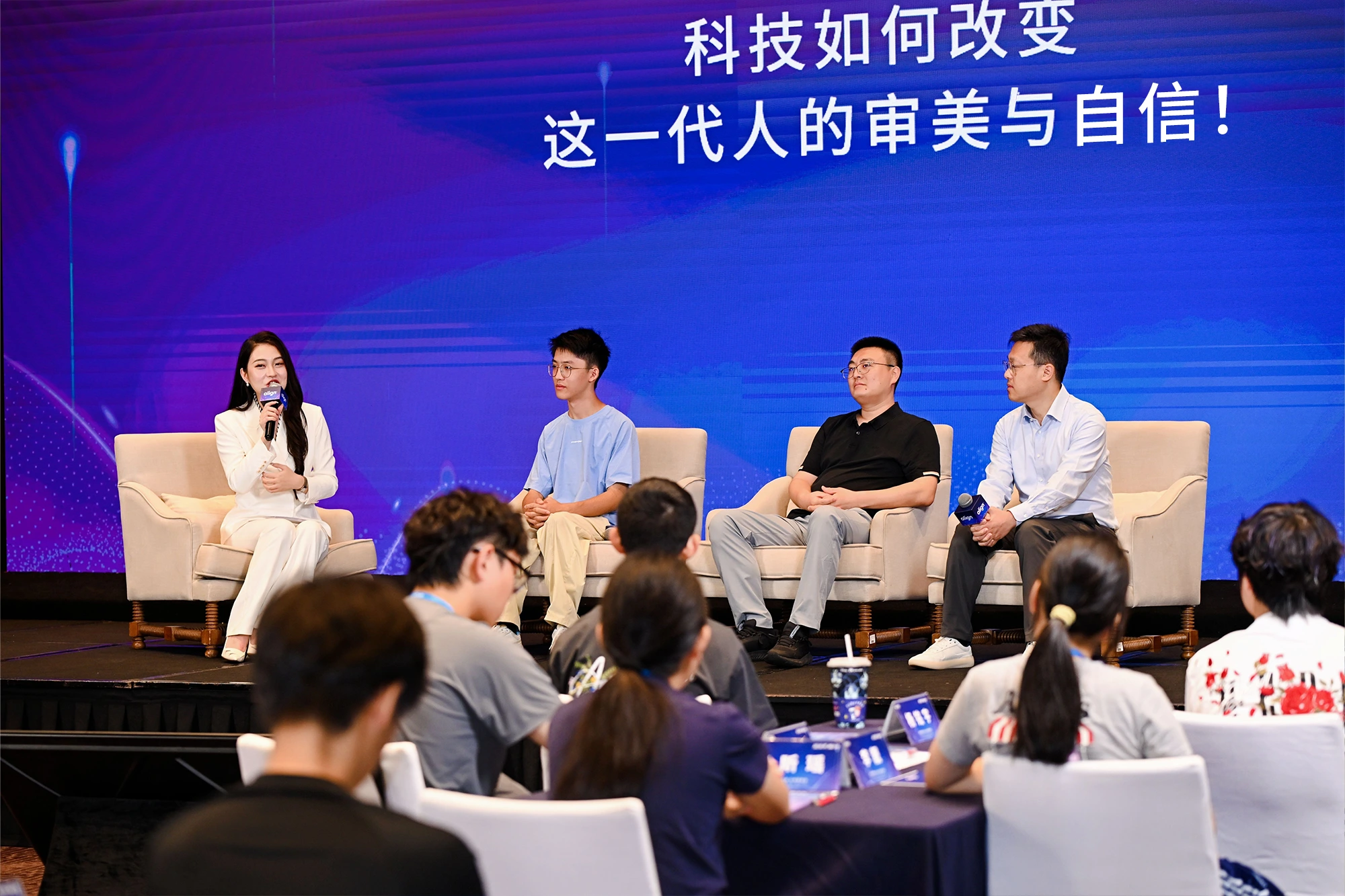
At this roundtable, a youth representative was Zhang Xuyi (@Daniel_Official, hereinafter Daniel)—a young tech content creator who has been making videos for over a decade, was admitted to Communication University of China after high school, and co-founded a multimedia studio in Beijing with several peers.
In his own words, he grew up "in front of front-facing cameras and recommendation algorithms": technology has shifted aesthetics from the "standard answer" of the past to today's "personalized options." Designs like invisible orthodontics that do not disrupt daily social interaction have transformed orthodontics from "a compromise of passive treatment" into "a proactive change integrated into life," putting the power of choice back into the hands of young people themselves.
On this point, industry practitioners see it most clearly.
 |
| Image source: "2026 Invisalign Future Explorers Program" event |
Zhu Wenchao, who studied from West China School of Stomatology all the way to a postdoctoral fellowship and now manages Anyu Dental, feels this deeply. He co-founded the practice with two other young dentists in his early years, and Anyu has served nearly 300,000 patient visits to date. He recalls that a decade ago, adolescent orthodontics almost always involved parents bringing their children in, parents asking questions, parents making decisions, while the child sat silently beside them; now, many children have already read popular science content and watched videos on their own, and walk into the clinic with the confidence that "I can also try and choose."
This may not be an illusion unique to one clinic.
The key to the change is not that children suddenly grew up, but that they "understood." Putting these details together, a coordinate that the industry has overlooked emerges: technology's posture toward users can be placed on a spectrum—at one end is the result black box: just use it, don't ask how it came to be; at the other end is process visibility: letting you see how it grows step by step, and letting you participate in it yourself.
Let us give this end a name: "Process Visibility." This generation's insistence on "understanding" is not stubbornness, nor distrust of doctors—only by understanding can one truly choose. Things that cannot be understood, no matter how good, are hard to genuinely accept; only when they understand will young people recognize treatment as their own matter, rather than something arranged for them.
Thus the old logic has been turned on its head: specifications and credentials still matter, but they no longer automatically translate into trust—in the past, trust came from speaking loudly; today, it comes from making things truly understandable. And this "understanding" cannot stop at a concept; it must have a place to land. True confidence is not just about better outcomes, but about people gradually gaining the confidence to face change through understanding, participation, and choice.
 |
| Image source: "2026 Invisalign Future Explorers Program" event |
02 | One Screen, Doctor and Patient on the Same Side
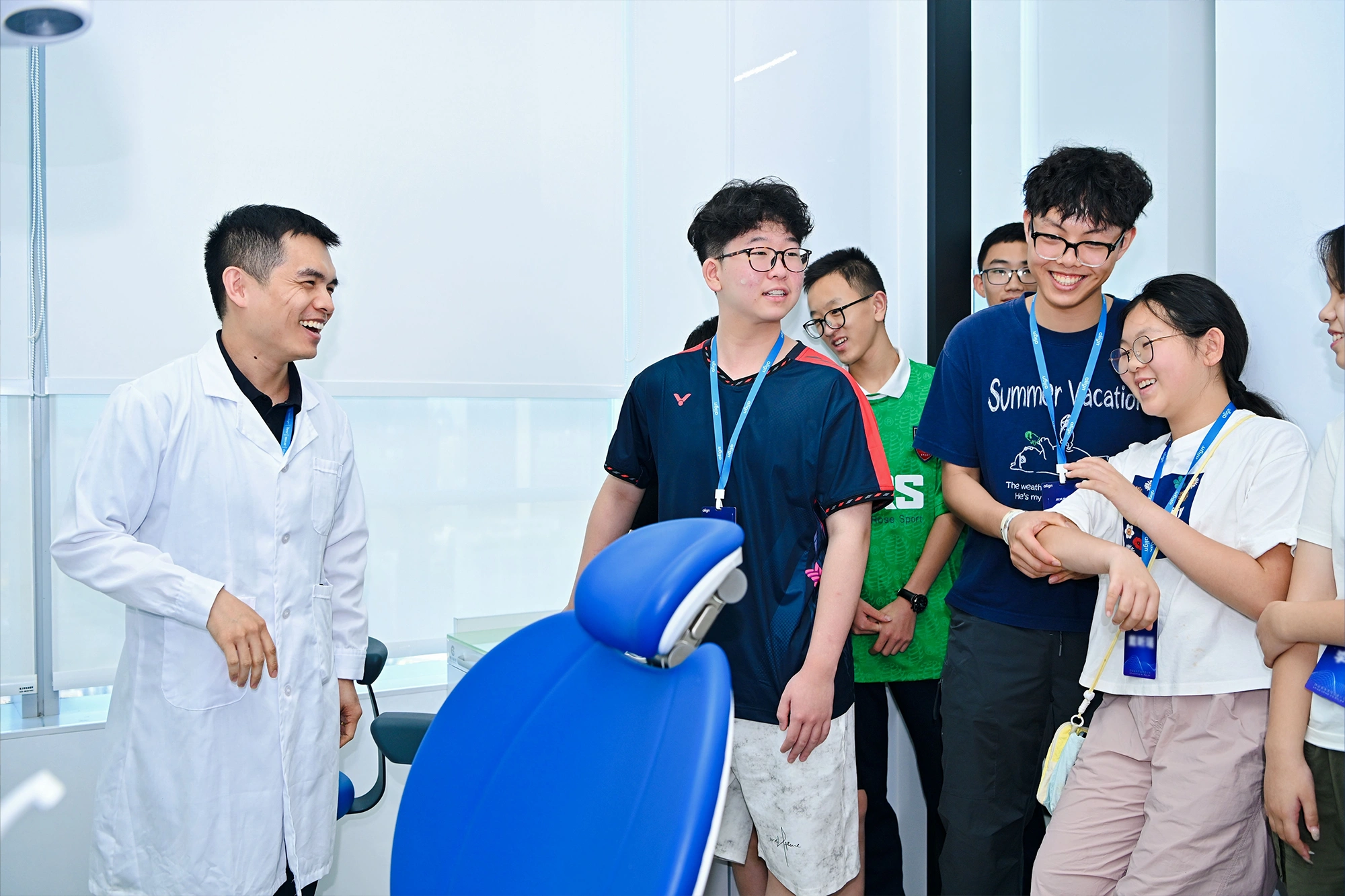
The most direct battlefield for "Process Visibility" is the screen in the clinic. Zhu Wenchao recalls that in the past, the first step in orthodontics was physical tray impression-taking, setting, pouring plaster, then measuring angles with a ruler and determining the plan based on experience; today, an intraoral scanning probe moves through the mouth for a few minutes, and a high-precision 3D model is generated in real time on the screen, with every contour and interproximal relationship of the teeth clearly visible, and the movement trajectory and final outcome can even be previewed before treatment.
The decision-making logic has thus changed: from "patients mainly relying on the doctor's verbal explanation to understand the plan" to "doctor and patient discussing together against the same visual display." This does not mean the doctor steps off the stage, but rather brings doctor and patient to the same side of the same screen.
 |
| Image source: "2026 Invisalign Future Explorers Program" event |
Daniel added a "critical point" from a peer perspective: teenagers are afraid of the dentist mostly because they fear "unknown pain" and "incomprehensible jargon." When intraoral scanning turns abstract parameters into intuitive 3D animations on the screen and allows them to foresee their future appearance, the unknown is broken down into concrete, manageable small matters, and fear naturally diminishes.
Behind this lies another consideration that doctors care about even more. Clear aligners can be removed and inserted by the patient themselves, so treatment outcomes depend heavily on whether the patient is willing to keep wearing them—the industry calls this compliance, and it has always been the hardest aspect to control in orthodontics. But once a young person has understood and chosen for themselves, consistent wear is no longer just a task they are pushed to do, but a decision they want to fulfill with their own hands. Hearing their needs and inviting them to participate is precisely what pulls compliance from "relying on supervision" toward "willing on one's own"—doctors have less to worry about, and young people are happier too.
In terms of treatment delivery, parents, adolescents, and doctors occupy the three ends of payment, usage, and clinical care respectively, and their demands are not naturally aligned, yet they do not form a zero-sum "impossible triangle." The real constraint lies in compliance: as the direct users, if the adolescent side does not buy in, no matter how much the other two sides invest, the treatment outcome is hard to realize. Therefore, the essence of the three-way relationship is not a trade-off of mutual compromise, but a proposition that can only be solved through joint participation.
 |
| Image source: "2026 Invisalign Future Explorers Program" event |
Here lies the point most easily misread. Digitalization is often calculated as an efficiency account—faster, more accurate, more economical. But its truly valuable part is not there. Zhu Wenchao says the intent of technology is not to replace doctors, but to "free up doctors' energy to return to communication, care, and medical judgment"; Gu Pengfei, Senior Director of Commercial Technology for Align Technology in Asia Pacific, adds that over the past five years he has focused on adapting the "Align Digital Workflow" to fit Chinese clinical scenarios. He cites an example: if data from online initial consultations and in-clinic follow-up visits are not interconnected, doctors are forced to ask the same questions repeatedly; what IT needs to do is to connect these gaps.
As a result, doctors are actually better able to "step in": with their hands freed, they can accompany patients in understanding the screen together. Another adolescent participant in the program, Xiao Lei (pseudonym), also said that in unfamiliar areas, "the doctor's plan is more scientific, and I will accept it." Technology does not make decisions for anyone; it allows young people and doctors to each stay in their proper place and speak openly.
More critically, machines can predict "how teeth will move," but cannot explain "why it is designed this way, and what it means for the patient." The latter always requires the doctor to complete it based on professional judgment. And the Invisalign brand's advantage lies precisely in leveraging the data assets accumulated from millions of cases, continuously iterated biomechanical models, and digital treatment experience to take the first half to the extreme. Because only predictive capabilities built on validation from massive real-world cases can simulate tooth movement more accurately and optimize treatment plans. This long-accumulated data and algorithmic moat cannot be replicated in the short term. The more mature the technology, the more it can liberate doctors from tedious calculations and design work, allowing them to devote more energy to diagnosis, communication, and treatment decisions—the areas that truly reflect professional value.
03 | At the End of the Day, What Does Technology Compete On?
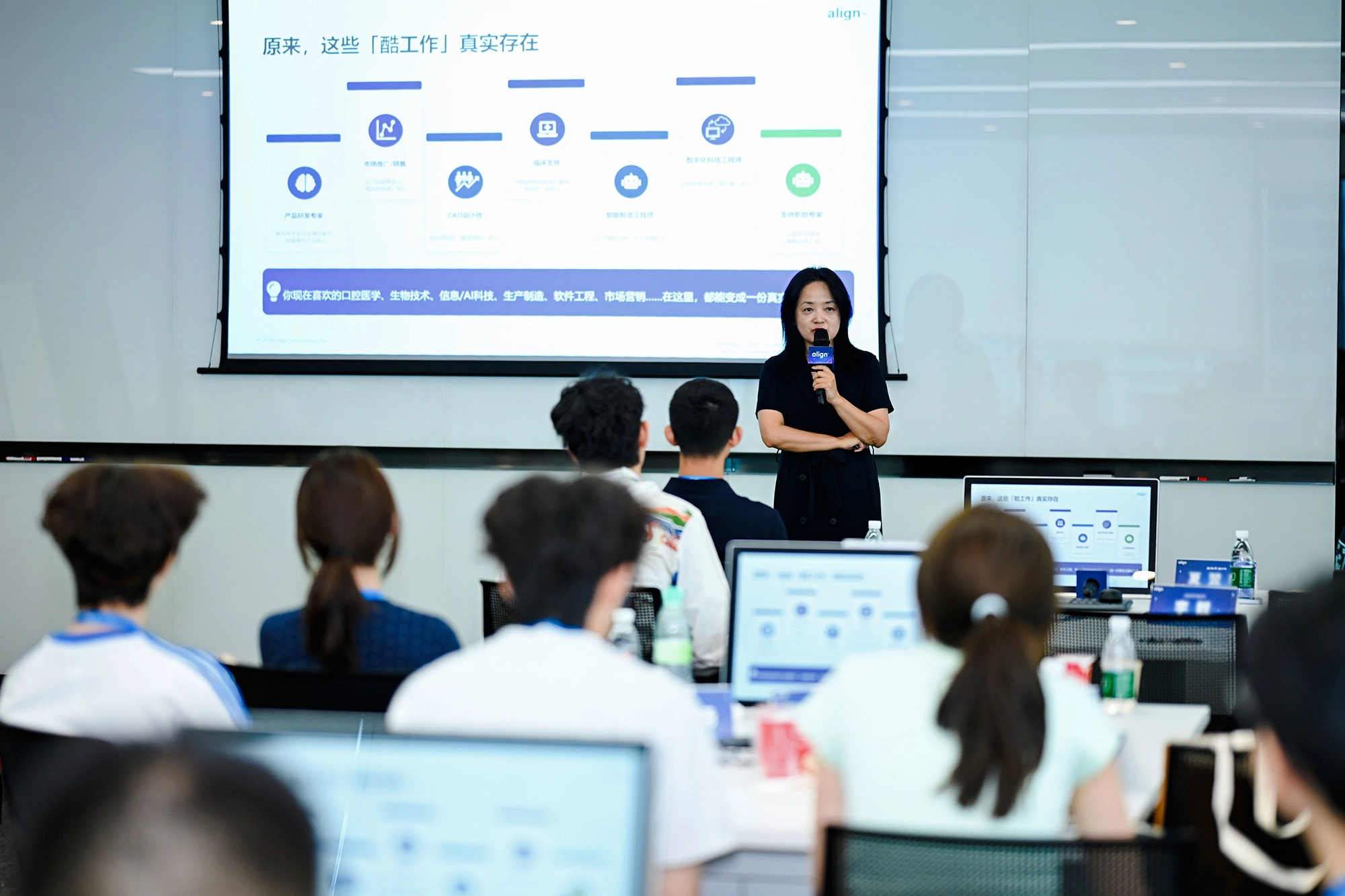
At this stop's roundtable, it was the young people themselves who first laid out the "future." Daniel presented a "future oral tech wish list": first, add a "plain-language translator" to the app, using AI to turn dense medical terms into everyday language, so patients don't go home and scare themselves with online searches; second, don't make it an "electronic homeroom teacher" that nags all day—wear and cleaning reminders should have warmth and humor, using gamification and progress-bar rewards to make people want to stay consistent. These are not wild fantasies, but things he genuinely wants as a contemporary teenager.
These needs are being met on both the clinic and technology ends. As a clinic manager, Zhu Wenchao's greatest hope is to connect the entire workflow: online screening, intraoral scanning equipment, aligner products, the app, and in-clinic follow-up cases should all flow seamlessly across all scenarios; when efficiency improves, doctors can devote their fullest energy to "the greeting and psychological support the moment a patient walks in."
 |
| Image source: "2026 Invisalign Future Explorers Program" event |
The technology end is thinking even further ahead. Gu Pengfei says technology must take "human" needs as its starting point: AI for initial assessment on mobile, real-time correction estimates from uploaded photos, and smart follow-up visits through the app; he also envisions a "smart temperature-sensing, force-controlling aligner" that can connect to wearable devices, sense oral temperature and environment, and self-regulate force application—in simple terms, an aligner that knows when to apply force and when to ease off.
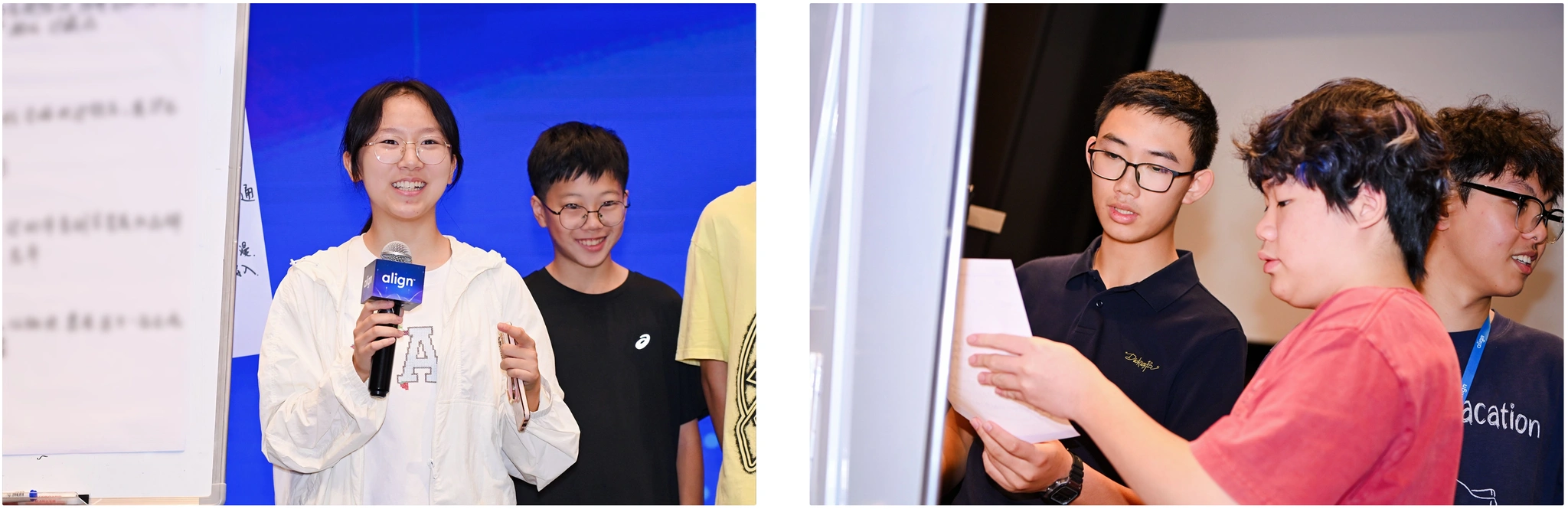
Though these are future visions, what these lists and concepts point to is the same thing: letting cold technology radiate a bit of human warmth. At the end of the day, technology competes not on how dazzling its features are, but on whether it can read people's real needs—making a person feel seen and heard. Young people care about this especially, yet it has never been the exclusive domain of any one generation. This is also the original intention behind the Invisalign brand's "Youth Future Explorers Program": rather than telling young people who they should become or what they should choose, it is better to first approach them, listen to them, and see who they are. Through such exploration and dialogue, the brand hopes to encourage more young people, in the process of understanding and accepting themselves, to gradually form their own aesthetics, judgments, and visions of the future. When a young person begins to seriously understand their own needs, articulate their own judgments, and make choices suited to themselves with professional support, confidence is no longer just an outcome, but an ongoing process.
04 | Sustained Innovation Is the Only Way to Earn a Place in the Next Generation
In fact, this original intention has been upheld by Align Technology and the Invisalign brand since their founding. It was brought into the world in 1997 by two cross-disciplinary innovators who did not come from a dental background: Zia Chishti and Kelsey Wirth. Precisely because they were not constrained by traditional mindsets, one of them conceived the idea of gradually moving teeth into place with a series of transparent aligners—and precisely because of the user perspective of "letting aligner wearers understand and choose for themselves," the subsequent technology was born step by step.
For more than 20 years since, Align Technology has been doing almost the same thing: gradually unfolding what was once "invisible." Intraoral scanning replaced physical impressions, aligner materials iterated through more than 200 formulations over nine years—lighter and more stable—and adolescent treatment options were filled in one by one. By fiscal year 2025, Align Technology, with the Invisalign system, iTero, and exocad as its three core technologies, plus the Align Digital Platform, supported doctors worldwide in serving more than 22 million users.
What is even more telling is the weight of young people: in 2025 alone, approximately 936,000 adolescents and children began Invisalign treatment, a year-over-year increase of 7.8%, setting a record; by the end of fiscal year 2025, cumulative adolescent and child users exceeded 6.5 million. This generation of young people is voting with their own choices, and modern oral healthcare services are undergoing a transformation to adapt to the health decision-making habits of a new generation of consumers. They are no longer bystanders "brought in to see the dentist," but the largest and most opinionated group of participants in this healthcare service—whoever can truly understand their needs and establish equal communication will be the one to hold the next decade.
The secret to sustaining dialogue with generation after generation of young people is understanding them, respecting them, and maintaining the ability to keep exploring and innovating. For the Invisalign brand, innovation is not just continuously iterating technology, but also, amid the shifting needs of different generations, persistently seeking better ways to communicate, clearer technology experiences, and warmer brand expression.
At this point, "Process Visibility, Joint Participation" is no longer just one company's concern—it is a topic facing the entire industry.
Afterword | Innovators Are Forever Young
As more and more young people decide whether to trust a healthcare relationship based on "whether I am seen and whether I can participate," the way the industry interacts with this generation is quietly shifting gears. Daniel's words at the roundtable are fitting to close with—be wary of the anxiety algorithms manufacture that "you must change immediately"; truly healthy change is "taking yourself seriously, not hating who you used to be." An industry that can help this generation achieve this wins not just a transaction, but a relationship that can last a long time.
Different generations may have different upbringings, ways of expression, and value preferences, but the need to be seen, understood, and respected has never changed. What truly connects with young people is never deliberate pandering, but the willingness to listen, to keep evolving, and to engage in dialogue on equal terms.
 |
| Image source: "2026 Invisalign Future Explorers Program" event |
This is also the value the "Invisalign Future Explorers Program" truly hopes to leave behind: letting young people see earlier how technology changes the world, and also see the power of long-termism behind innovation. From the Invisalign brand's nearly three decades of sustained investment in digital innovation, to the massive clinical data and technological accumulation that continuously drive industry progress, the meaning of technology has never been merely more advanced tools—it is also trustworthy professional capability and responsibility.
For growing adolescents, this trust matters just as much. It helps them make choices through understanding, build confidence through choice, and possess the courage to explore the unknown when facing the future. When innovation truly begins to understand people, and when the younger generation learns to believe in themselves, a cross-generational dialogue about technology, growth, and trust can truly take on enduring and far-reaching significance.
Looking back,
Innovation is a form of youth, and youth, in turn, is another form of innovation.
| About DGN:DentalGoodNews (DGN) is a trusted professional media platform dedicated to the global dental industry. We deliver in-depth coverage of corporate news, policy & regulation, investment & funding, and clinical frontiers — serving dental institutions, device manufacturers, investors, and industry researchers worldwide. Contact us: haodeya@dongxizixun.com |

;)