Sleepless Night on the Grassland: When a Group of Dental Professionals Decide Not to “Lie Flat”
 |
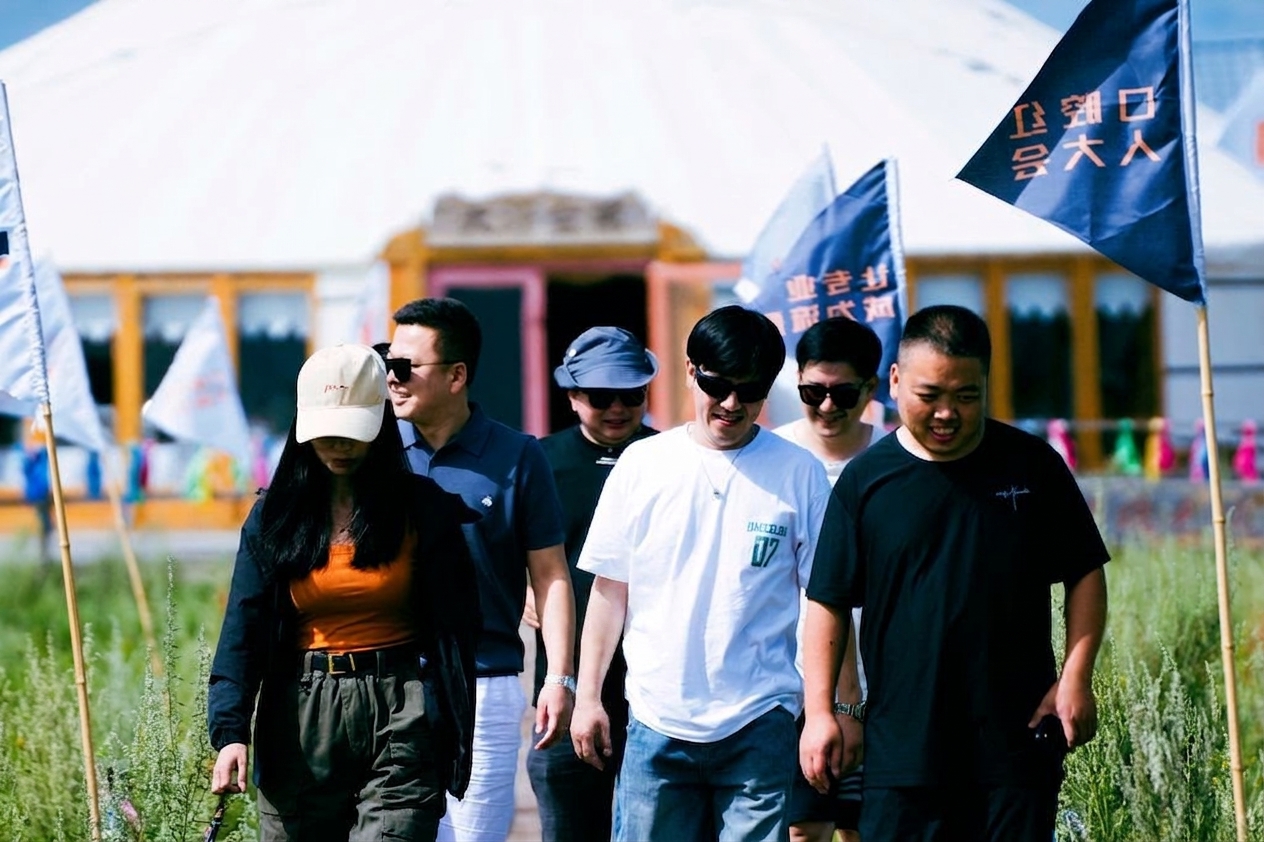
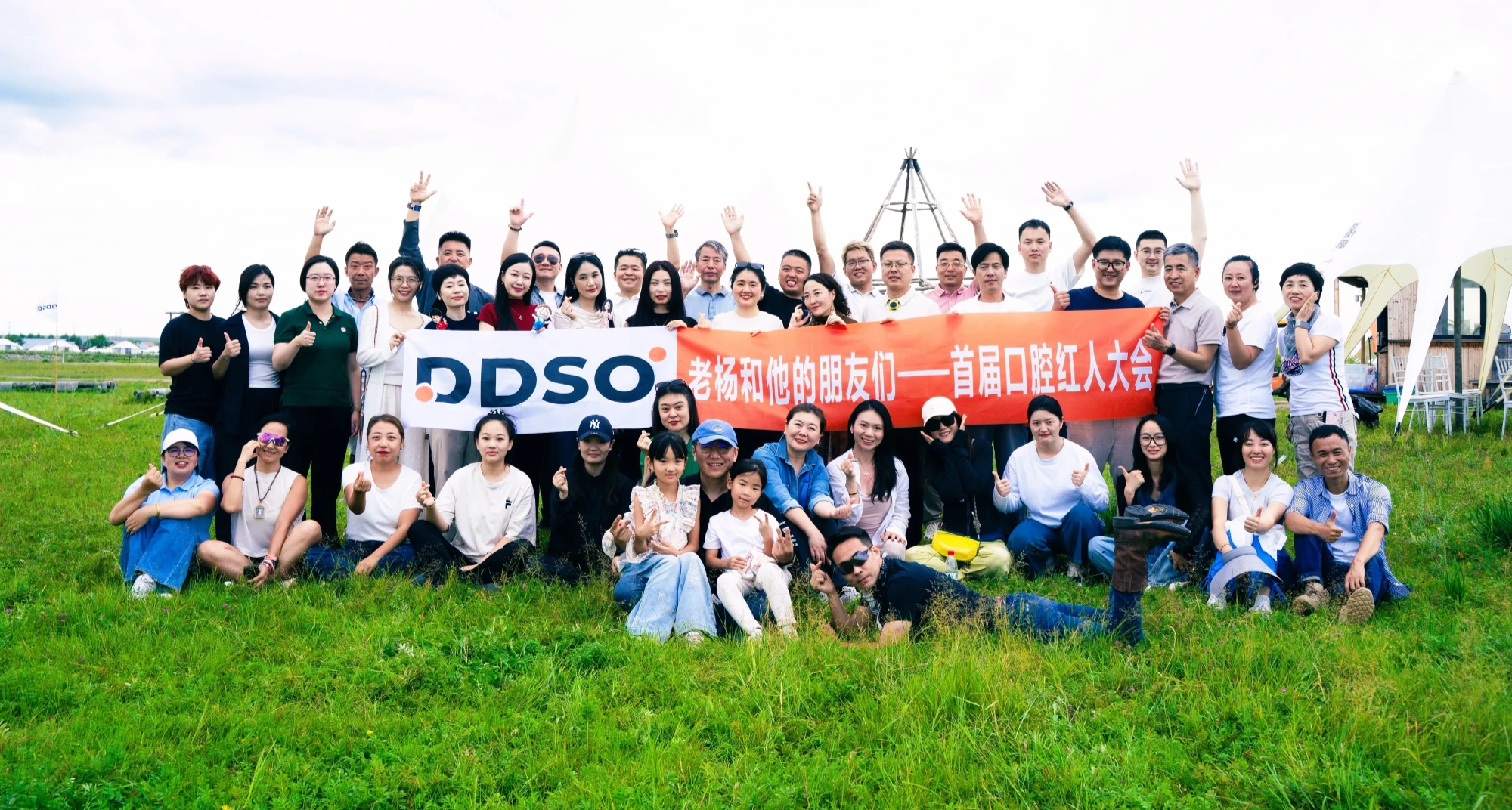
On the night of August 3, 2026, on the grasslands of Hulunbuir, Inner Mongolia, the "First Dental Influencer Conference" opened with an outdoor livestream. This broadcast brought more than twenty dental professionals onto folding chairs across the meadow - clinical directors, chain founders, upstream manufacturers, and operations managers - spending the entire night on a single topic: how clinics should survive, and how to survive longer.
If the entire livestream were fast-forwarded, an unusual image would emerge: the conference initiator, Yang Zhiyu, who has worked in the dental industry for over twenty years, almost never stands at the center. For most of the night, he walked around behind the guests with mosquito repellent, handing the microphone to others again and again. He repeated: "I am not the protagonist of tonight's livestream. My role is to serve."
An organizer who voluntarily steps to the margins became the most fitting metaphor for the First Dental Influencer Conference. While the industry still talks about the ebbing of traffic, VBP price pressure, and clinic closures, this group did not compare who had the more aggressive playbook on the grassland. What they sought to confirm was something more modest and more difficult: Chinese dentistry may be bidding farewell to "hunting" and turning toward "farming."
This statement came from Zhang Qi, founder of Songbai Huaren, who has been deeply involved in the dental supply chain for sixteen years. In his view, what the industry is shedding is not hope, but the inertia left behind by extensive growth.
"Hunting" relies on a single strike; "farming" requires accepting time. The former chases transactions; the latter cultivates relationships. The former rewards speed; the latter tests patience. This metaphor connected the four conversations of the evening: opportunity, profit, trust, and assets. They appear scattered, but all answer the same question - how to make time no longer a cost, but an ally of the clinic.
In his opening remarks, President Hao Deming had already laid the groundwork. He offered five suggestions for grassroots institutions: differentiated positioning, a talent mechanism combining internal and external resources, building brand trust through transparent pricing and standardized treatment, cost control, and payment innovation represented by commercial insurance. None of this sounds new. But the difficulty of running a business often lies not in a lack of new concepts, but in the fact that old truths everyone agrees on never make it into daily practice. The guests' sharing that evening was precisely about giving flesh and blood to these five words.
I. Opportunity: Making Prevention and Aesthetics the "Foundation"
Host Da Shen (founder of SIMPLE New Whitening brand, nearly two decades in teeth whitening) asked the question directly: amid intense competition, should small and mid-sized clinics prioritize high-ticket items, or build a prevention and aesthetics system first?
Five guests almost all rejected this either-or framing. Because it presupposes a premise that may not hold: that high-ticket items are responsible for making money, while prevention projects only drive traffic. But based on their clinic practices, prevention is not an accessory outside of treatment - it functions more like a slowly operating relationship system that does not create explosions but changes the frequency with which patients return to the clinic.
Huo Haidi (founder of Yayabang, holder of a national invention patent for toothbrushing evaluation systems) has served over a thousand clinics. She observed that clinics that truly build prevention may not see sudden revenue growth, but their profits can rise steadily. The reason is not mysterious: prevention brings clients back to the chair four times a year, and during follow-up visits, new treatment needs naturally emerge. She condensed this judgment into one sentence:
Huo Haidi spoke about the closed loop of patient retention, while Feng Zehua (manager of Zehua Dental traffic empowerment account, eleven years in aesthetic veneers) spoke about the certainty of growth. According to his on-site sharing, after VBP procurement, orthodontics and implants face profit pressure, while veneers still maintain relatively high unit prices, can be delivered in two to three visits, and have relatively stable repeat purchase rates; his clinic's referral ratio can reach 1:3. He believes that many clinics undertake veneers not out of proactive planning, but because existing client demand forces the issue: if a clinic cannot accommodate the demand, clients will flow elsewhere.
Li Zhuo (founder of Beichidun Clinic) gathered these scattered experiences into one word - "foundation." In his view, traffic has not truly disappeared; professional capability itself can generate traffic. Clinics need to find their own "mountain peak," and then use foundation-type offerings to carry functional value, emotional value, and asset value. The key here is not to give projects a prettier name, but to make professionalism visible and value perceptible.
What truly gave weight to this logic was a set of on-site data brought back by Lv Min (head of periodontal prevention at Nanjing Youya Dental, thirteen years of frontline prevention operations management in China and Japan). According to her sharing, competition in Japan's dental industry is approximately four to six times more intense than in China, and top prevention clinics can achieve client retention rates of up to 95%; in China, the average six-month repeat visit rate two years ago was approximately 5%, while some better-performing clinics now reach 60%, with a target of 80%. These figures were shared by guests on-site and require further verification for applicability, but they at least point to the same operational issue: when acquiring new traffic becomes expensive, retention is no longer just a service metric but part of the profit structure.
Treatment brings patients through the door; prevention preserves the relationship for the clinic. Whether the era of indiscriminate flooding has truly ended is hard to say; but the fragility of a business model that relies solely on continuously purchasing new traffic is becoming increasingly evident.
 |
| Oral Influencer Conference Live |
Yang Zhiyu added only one sentence in this round: prevention is the fundamental duty of dental professionals. When healthcare returns to its essence, it should naturally protect every tooth.
The question happened to stop right there. The logic is not complicated - so why do nearly 90% of clinics still fail to build it? Da Shen's second question came closer to real operations than the first. The answers from the guests, pieced together, formed a concrete "map of bottlenecks."
Huo Haidi believes the difficulty lies in people and management: the director has resolve, but the team may not be willing to leave its comfort zone, requiring simultaneous adjustment of performance metrics, incentives, and organizational culture. Feng Zehua believes the resistance first comes from operators' cognition. In the past, some clinics worried that veneers would damage teeth; today, client acceptance has shifted, and his clinic's male-to-female client ratio has changed from 9:1 to 7:3. To do veneers well, technique, aesthetics, and emotional value are all indispensable.
Zhang Qi defined prevention as a "top leader's project": the soft side is resolve, consensus, altruism, and scientific performance metrics; the hard side is visualized detection and professional home-care tools. Li Zhuo reminded operators that they must personally engage, not merely ask the team to change. Lv Min broke prevention down into nine modules: product selection, internal referral, pricing, promotion, performance, organization, space, management, and process. Many people think what they lack is a set of processes, but processes may be precisely the easiest part to replicate. Only when all nine elements land simultaneously does an ability emerge that others cannot quickly copy.
This sentence is almost the footnote to this conversation. Prevention and aesthetics cannot be treated merely as temporary life-saving traffic products; they must pass through team alignment, process sedimentation, and patient education before they can become profit products. The hardest part of farming is not planting, but being willing to tend the land before any harvest is visible.
II. Profit: Two Ways of Living, One Bottom Line
If the previous session discussed growth, the second session's host, Ma Yixiao (founder of Mengya Xiang and Fuma Ye), turned the topic toward a harder word: profit.
The two directors on stage represented two nearly opposite operational paths.
Ding Aying (founder of Pu'er Dental, four locations in Beijing and Shanghai, twenty-two years of continuous growth since opening) is closer to the "intuition school." She repeatedly said she "doesn't understand management" and "knows nothing," but the principles she insists on are not vague: love the profession, don't treat the clinic merely as a business; embrace change and pivot when necessary; streamline staff and have one person handle multiple roles; don't easily cut prices, hold the bottom line with materials and service; choose the right partners, delegate professional work to professionals, and focus on clinical practice herself.
These principles are not sophisticated, nor do they resemble a management model that can be quickly replicated. But when Beijing, Shanghai, Guangzhou, and Shenzhen are called the industry's "disaster zones" by many practitioners, she still maintains growth, relying on a group of old patients who have accompanied her for twenty years and a team willing to walk the long road together. Business sometimes fails not because methods are not advanced enough, but because one method is replaced by the next before it has had time to prove itself across time.
Gong Xuegeng (founder of Shenyang Qunkang Dental) is a distinct representative of the "system school." He maps his "Three All Philosophy" - whole-mouth health, whole-family health, and whole-lifecycle oral health - onto three north-star metrics: full-mouth plan development rate, recall rate, and referral rate. Without metrics, philosophy easily stays on the wall; without organizational support, metrics are just numbers.
To make the philosophy take root, he transformed the experience across three dimensions, each equipped with verifiable measures. Seeing teeth better: using "microscope patient usage coverage rate" to constrain doctors - no microscope, no corresponding commission. Seeing teeth faster: shortening delivery time through digitalization, compressing crown delivery to half a day or less, to accommodate high-net-worth clients who "lack time rather than money." Making teeth more comfortable: supervising the pain-free experience through a two-channel feedback mechanism of in-room questionnaires and front-desk verification - if the patient reports pain, the pain-free fee is waived.
His full-mouth development does not pursue presenting the entire treatment plan to patients at once; instead, he first solves the patient's most pressing concern, then gradually builds a long-term relationship through family membership cards. The value of a system lies not in making operators look more professional, but in reducing outcome drift caused by different people, different times, and different emotions.
One believes "when people are right, things work out"; the other insists "goals are engraved on steel plates." On the surface they are polar opposites, but at the foundation they do not conflict: intuition requires long-term experience to calibrate, and systems require the right people to execute. Both ultimately land on the same bottom line - only when a clinic earns reasonable profit can long-termism avoid becoming a phrase that demands sacrifice from others.
 |
| Oral Influencer Conference Live |
The follow-up questions from several enablers offstage made this consensus more concrete. Wei Haiyuan (founder of Chuanzhang Technology) summarized Gong Xuegeng's capabilities in three points: strong goal orientation, organizational execution with dedicated personnel tracking data, and skill at integrating external resources; he also analyzed his growth capability from organizational management and data operations perspectives. Hou Li (founder of Liyan Run Consulting, fifteen years in refined dental communication) and Yin Weina (dental data operations consultant, twelve years on the dental frontline) continued to press: how does execution penetrate from the operator to the frontline? The answer ultimately circled back to that unremarkable statement - choose the right people and lead by example.
Plans can be revised according to circumstances, but goals must be clear enough. What is truly dangerous is not changing the path, but forgetting, amid every change, where you are trying to go.
III. Trust: The Compound Interest of Slow Variables
The third session was hosted by Dong Ya (CEO of Yiya Health, national lead of Malo DPA Dentist Partner Alliance). Her question: Has the underlying logic of growth truly changed?
The answers from five guests across different paths were not complicated: traffic brings people to the door; trust determines whether they are willing to return. Traffic can be purchased; trust can only be accumulated. It is slow, difficult to measure, and hard to prove within a single quarter; but precisely because of this, it is difficult for competitors to replicate quickly.
Zeng Shu (periodontal prevention physician, fourteen years crossing into elderly care) provided a concrete sample. She insists on posting short videos daily, only about how to brush teeth correctly. After her new clinic opened, according to her on-site sharing, approximately 70% of revenue came from clients brought in by short videos. She brought the attitude of "treating the elderly as parents" from nursing homes into dental service, repeatedly emphasizing one goal:
"At 80, have 20 of your own teeth."
A clinic whose original service radius was only about three kilometers thus attracted clients from farther away. She calls this relationship a "two-way journey." Distance did not disappear; it is just that when trust is concrete enough, people are willing to travel a little farther for it.
Li Xiaoyun (founder of Jincheng Nanmu Dental brand, achieving one million in performance within six months of entering new media) added another sequence: the first batch of traffic for a new clinic is often not strangers, but reactivated existing clients. When Xinjiang white apricots ripened, she selected a group of old clients to send them samples, with no purchase conditions attached. It was not a carefully calculated promotion, but it returned deeper trust and referrals. Commerce does not lose its logic because of warmth; sometimes, warmth itself is the logic of long-term relationships.
What they did was "light work," while Lu Yang (GM of Yiya Health, over a decade in private chain operations) handled the "heavy work" of external traffic. His actions were very concrete: blanket outreach within a three-to-five-kilometer radius of the clinic, connecting institutions, communities, and schools; then using parent-child activities to bring doctor-patient communication forward, explaining the value of dental cleaning and proper brushing before clients even enter the clinic. Traffic and trust are not two separate stages; they occur simultaneously at the first point of contact.
Li Lang (GM of Zuga Medical China) observed the implant track from the upstream. In his view, this market is "both competitive and not": after VBP, unit prices fell and profits came under pressure - that is the "competitive" side; the market still has room for penetration growth - that constitutes the "not competitive" side. Based on this judgment, institutions may need to shift from one-time transactions to long-term trust building and re-understand the ongoing management of client relationships.
Liang Yanming (founder of Hunan Zhonglian Medical, expert in early orthodontic treatment for children) translated trust into in-room actions. Clinics do not lack pediatric traffic; what they lack is the ability to build trust in early orthodontic intervention. Her approach: take dental X-rays for children who visit, then educate parents sequentially on tooth replacement stages, tooth count, size and morphology, replacement sequence, and growth and development cycles. Demand is not manufactured out of thin air by scripts; it is seen by parents as information gradually becomes transparent.
She believes the current competitive focus in early orthodontics is not just price, but also how professional information is accurately conveyed. Whoever can eliminate information asymmetry earlier is more likely to gain a temporary advantage. But information gaps will not exist forever. What truly remains is whether, after information has been popularized, the clinic still has the capability worthy of being entrusted.
This phrase is easily spoken as a slogan. Placed back into these concrete practices, it shows its weight: talking about brushing day after day, sending a box of apricots to old clients, moving education into community activities, using X-rays to explain growth cycles. Trust is not grand; it is simply many small actions that were never interrupted across time.
 |
| Oral Influencer Conference Live |
IV. Assets: Making Friends with Time
The fourth session's question pointed further: how do you turn a clinic into an asset that can be passed down? The five guests invited by host Wang Yuchao (founder of Baoya Aiya, dental insurance expert) offered five different moats.
Gao Feng (founder of Blue Hedgehog Pediatric Dental Chain, founder of the F6 dental operations management system) broke future competitiveness into three layers: service, differentiation, and brand. A brand is not just a logo, but the value system a clinic accumulates over a long period of operation, including vision, mission, and values. Its difficulty lies in the fact that investment happens today, but returns may only be visible much later.
Zhang Youmei (founder of Haileimei Dental Art Science Museum) chose public-interest education as her differentiation path. She hopes to build social responsibility and local recognition through the science museum, and in the future expand educational scenarios through AR technology, shifting education from one-time dissemination to long-term operation. Health knowledge told again and again ultimately sediments not just reach, but also the relational asset between the clinic and the community.
Zhang Guanghua (Weiya Dental Care, student of the Peking University Dental Inheritance and Innovation Program) offered a framework for understanding competitiveness by stage: the startup stage requires investment and breakthroughs, the growth stage requires system building, and the succession stage requires lengthening the time horizon. If the same yardstick is used across different stages, operators may mistake short-term growth for long-term capability, or misjudge necessary investment as inefficiency.
He proposed three things to focus on going forward: premiumization, differentiation, and long-termism. Premiumization is not writing a higher price, but finding clients willing to pay for corresponding value and worthy of long-term service; differentiation can come from pediatric dentistry, insurance, education, or talent; for small and mid-sized clinics, long-termism is not an abstract virtue but whether time can continuously convert into trust and efficiency.
Guo Ying (founder of Kunshan Hengli Dental Chain, vice chairman and secretary-general of the Kunshan Young Entrepreneurs Association) pulled the perspective back to the local level. Local brands that can go far are not isolated businesses but gradually become embedded in community life. Traffic may dry up, promotions may fail, and price advantages may be matched; but whether trust deepens and systems run more smoothly determines whether time is helping the clinic or exposing its problems.
Chen Si (head of Tuopu Dental Education and Training Center, MBA in Healthcare Management from Oxford University) approached from talent. He observed that as the industry changes, young doctors are paying increasing attention to overseas experience and personal brand building, and continuous learning has become a long-term investment spanning the entire career cycle.
Wang Yuchao proposed a partnership approach of "making heavy assets light": integrating people, money, hearts, and resources. For example, rent can be negotiated as equity cooperation, and marketing partners can work without base salary, sharing according to results. Whether these approaches apply to all clinics still depends on rights and responsibility design and specific conditions; but they suggest a possibility: assets are not just fixed equipment and floor space, but also the people and relationships that can be organized.
Service, education, systems, local relationships, talent, and resource collaboration - the paths differ, but all point to the same goal: turning a business into an asset. A business is completed in a single transaction; an asset must pass through time. The difference between the two is not how much is earned today, but whether people will still be willing to return tomorrow, and whether someone will still be able to take over.
 |
| Oral Influencer Conference Live |
Closing: Four Great Mountains, and One Person Who Refuses to Lie Flat
Near midnight, the question returned to the industry's most realistic "four great mountains": the capital game, the involution game, difficulty acquiring customers, and low profits. Yang Zhiyu responded to each, still placing himself in the position of a servant.
On capital, he believes capital itself has "no attributes" - neither good nor bad. Operators need to first clarify their own positioning: use it if needed, abandon it if not; do not casually label capital, and do not attribute all industry problems to capital.
On involution, he spoke more heavily. He hopes the industry will shift competition from price to value, using the positive actions of a group of people to lift the downward-spinning vortex back up. Price is the most visible number, but not necessarily the most important number in business. Low prices can be replicated quickly, but trust, efficiency, and professional capability cannot be bought overnight.
On customer acquisition, he opposed treating it as a vague problem. Clinics need to first calculate exactly how many clients they need, then do the things that can be leveraged without spending money. There is no mysterious answer here; it only requires operators to return from imagination about traffic to real service capability.
At this point, Zhang Guanghua picked up the thread and gave a more direct answer on behalf of many small and mid-sized clinics:
As for low profits, Yang Zhiyu said: "If you feel your profits are low, you can message me privately, and I'm willing to talk with you." He explained that he has "a scale in his heart, knowing what reasonable profit should be." This statement did not provide a standard answer, but it preserved the possibility of a face-to-face discussion. Profit is never a standalone report; it is intertwined with positioning, cost, organization, patient value, and the operating cycle.
Someone asked him, after all he had been through, why he continued to push himself. His answer was frank:
Yang Zhiyu previously served as Director and CEO of Malo Clinic, and now serves as Assistant to the Chairman of Meinian Onehealth, overseeing market strategy and brand building for Meiwei Dental Medical Group. He has experienced nearly the entire upstream, midstream, and downstream of the dental industry. After walking the full industry chain, he says what he ultimately wants to build is a platform - one that carries more people's hopes, allowing a group of dental professionals to go further, last longer, and stand stronger.
The lights on the grassland will eventually go out, and the livestream will end. But the questions the industry truly needs to answer will not disappear when the crowd disperses. The so-called "refusal to lie flat" is not necessarily a passionate posture; it is more like a bit of vigilance operators retain for the future: if you stop tending the land today, the land will not automatically yield a harvest a few years from now.
 |
| Oral Influencer Conference Live |
Editor's Note
The value of this grassland livestream may not lie in any single technique. It rarely brought clinical directors, chain founders, upstream manufacturers, and operations managers into the same circle of folding chairs, laying out "how to survive and how to survive better" for open discussion.
Their paths were not consistent, and there was even tension between them. Some believe in intuition, others rely on systems; some seek repeat purchases through prevention, others hold profits with aesthetic projects; some look outward for traffic, others just want to take care of the patients already through the door. Divergence is not a flaw. If an industry is left with only one answer, it often means it has stopped thinking.
What tied the whole evening together was still "from hunting to farming." Hunting chases a single transaction; farming manages the full lifecycle. Hunting rewards the instant strike; farming accepts slow returns. Whether "all treatment is prevention" or "traffic has a price, trust is priceless," both point to the same thing: letting time participate in the business.
But time never naturally stands on anyone's side. It can turn trust into an asset, and it can also gradually magnify management gaps, service shortfalls, and mispositioning. Long-termism is not waiting long enough; it is maintaining a set of actions that can withstand repetition through the long wait.
For clinics still pressed under the "four great mountains," this night offered no miracle. What it left behind were a few simple actions: serve existing patients well, bring prevention into the system, make professionalism visible, and give trust the chance to accumulate. Then leave the rest to time.
 |
| Oral Influencer Conference Live |
| About DGN:DentalGoodNews (DGN) is a trusted professional media platform dedicated to the global dental industry. We deliver in-depth coverage of corporate news, policy & regulation, investment & funding, and clinical frontiers — serving dental institutions, device manufacturers, investors, and industry researchers worldwide. Contact us: haodeya@dongxizixun.com |

;)