New Report | New Registrations of Oral Institutions in Southern Jiangsu Drop Over 30% from Peak, Entering a New Quality Control Period in 2026
 |
Preface
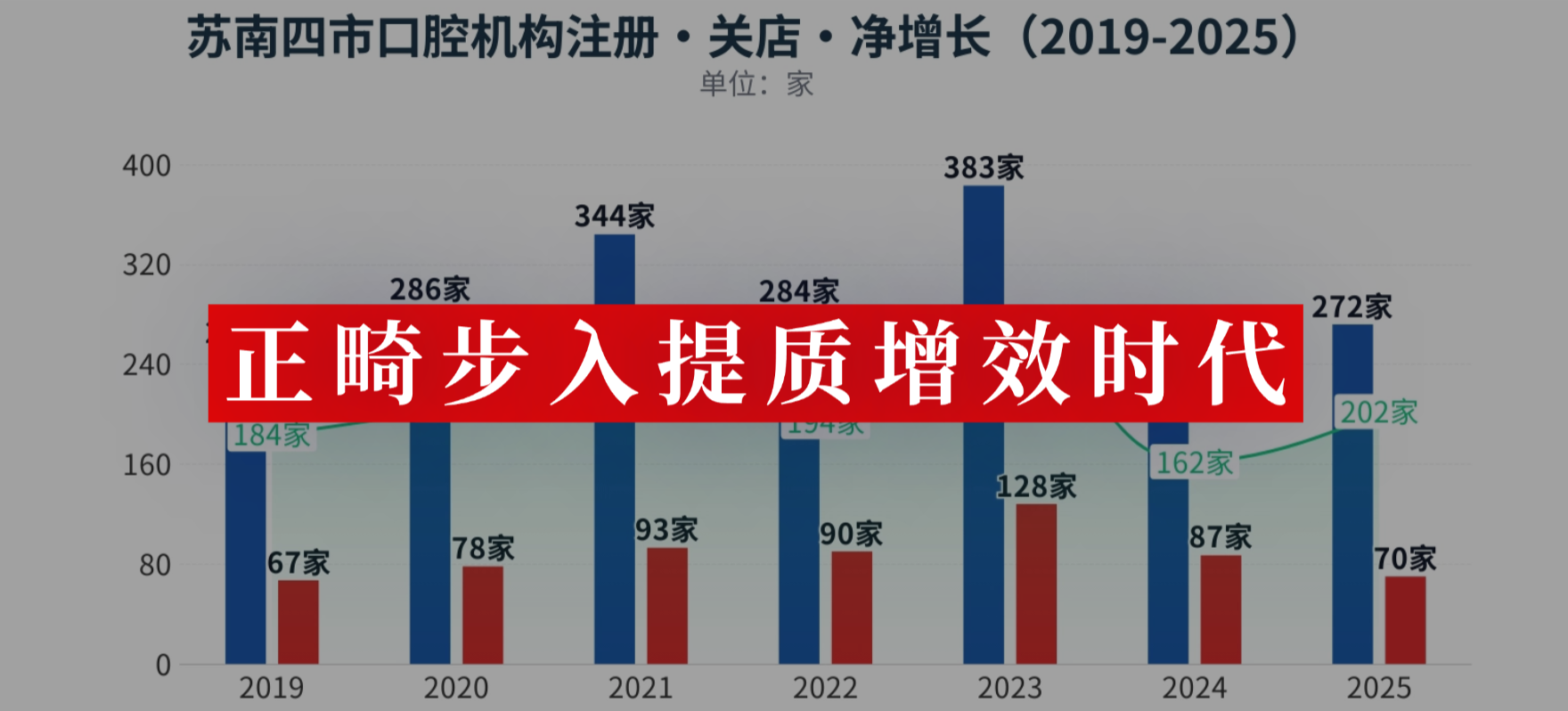
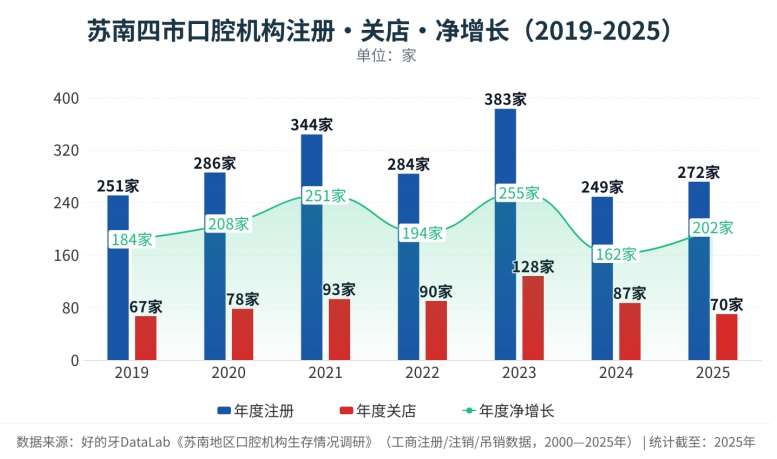
The pace of expansion in private dental practices has slowed. The annual number of newly registered dental institutions in Suzhou, Wuxi, Changzhou, and Nantong climbed from 57 in 2014 to a historical peak of 383 in 2023, yet in 2024, the figure fell by more than 30% from that peak. As the market shifts from rapid growth to a stock competition where new openings and closures coexist, the key factor determining whether institutions can navigate this phase is no longer just the speed of network expansion, but the depth of clinical quality and quality control systems.
The "White Paper on Orthodontic Clinical Insights and Quality Control System (2026)", co-produced by DENTALGOODNEWS (Leading Dental Industry Media, DGN) and Jiangsu Yuhui Medical Technology Group (hereinafter referred to as the Yuhui Group), uses the treatment archives from the Group's five hospital districts from 2023 to 2025 as primary samples, laying this "invisible system" bare under the lens of data. What this system truly seeks to answer is whether the judgments once scattered across the personal experience of senior clinicians can be encapsulated into a set of replicable, verifiable "Skills".
The following:
 |
In Stock Competition, "Clinic Opening Race" Gives Way to "Quality Control as Foundation"
The Sunan region has become an important sample for observing this shift. The combined permanent population of Suzhou, Wuxi, Changzhou, and Nantong is approximately 33.712 million. Residents' willingness to spend on oral health and their purchasing power are both at relatively high levels, providing solid demand-side support.
More notably, the demand structure itself is evolving: DGN DataLab's tracking of 1,132 topics from five national orthodontic academic conferences between 2021 and 2025 shows that academic attention to early orthodontic intervention in children has rebounded in a U-shaped curve, rising from 3.6% in 2023 to 12.1% in 2025; the share of adult treatment topics rose from 1.6% in 2021 to 7.2% in 2025.
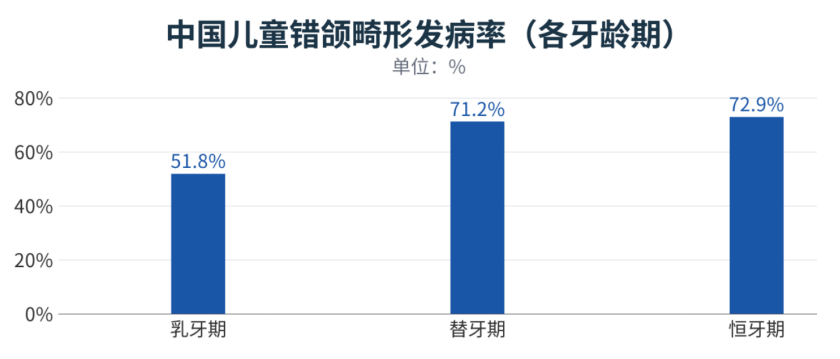
In contrast, there remains an unmet intervention gap in early childhood orthodontics—the incidence of malocclusion during the mixed dentition period in China reaches 71.2%, and 72.9% during the permanent dentition period, yet the early intervention rate is only 0.95%, still lagging behind the levels of 8.59% in the United States and 25.70% in Sweden. This supply-demand gap has also been written into the white paper's foreword—Ms. Chen Wenjing, the first chair of the Jiangsu Provincial Orthodontic Professional Committee, noted that while standardized orthodontic development continues to advance in China, pain points such as "supply-demand imbalance in early childhood orthodontics and information asymmetry between doctors and patients" remain prominent.
 |
| Source: "Clinical Insights and Quality Control System White Paper on Orthodontics (2026)" |
But demand thickness does not naturally equate to market stability: the annual number of newly registered dental institutions in the four cities hit a stage high of 344 in 2021, reached a record 383 in 2023, yet fell by more than 30% from the peak in 2024, with new openings and closures beginning to coexist. Amid this rise and fall, the competitive focus is gradually shifting toward clinical quality, brand trust, and quality control capability.
This judgment is also corroborated by observations at the industry level—Mr. Chen Xuefeng, Executive Director of the Chinese Stomatological Association and Chair of the Private Dental Practice Branch, pointed out in the white paper's foreword that as industry dividends fade, "the core of competition is no longer a contest of aligner products, but the construction of a replicable, traceable standardized clinical delivery system."
 |
| Source: "Clinical Insights and Quality Control System White Paper on Orthodontics (2026)" |
Following this line of reasoning, the white paper categorizes the current diagnostic and treatment risks in the orthodontic market of Sunan and the nation at large into five types, noting that they intertwine during the transition period, posing real health threats to patients while also subjecting institutions that adhere to standardized practices to the pressure of "bad money driving out good."
Rooted in Changshu, the Yuhui Group is based in Sunan and expands northward into Suzhong, covering Changshu, Zhangjiagang, Nantong, Haimen, and Hai'an, forming a five-district layout that connects Sunan and Suzhong: the Orthodontics Department of the Changshu district has been rated as a Changshu Municipal Key Clinical Specialty for two consecutive cycles, and the Group is also a "Construction Unit for Standardized Diagnosis and Treatment of Early Childhood Orthodontics" designated by the National Health Commission (2023), and one of the 10 nationwide members of Angelalign's "China Champion Smile Support Team". These qualifications and system-building efforts serve as an important foundation for addressing industry risks.
Ten Nodes: Turning the Treatment Process into a "Traceable Chain"
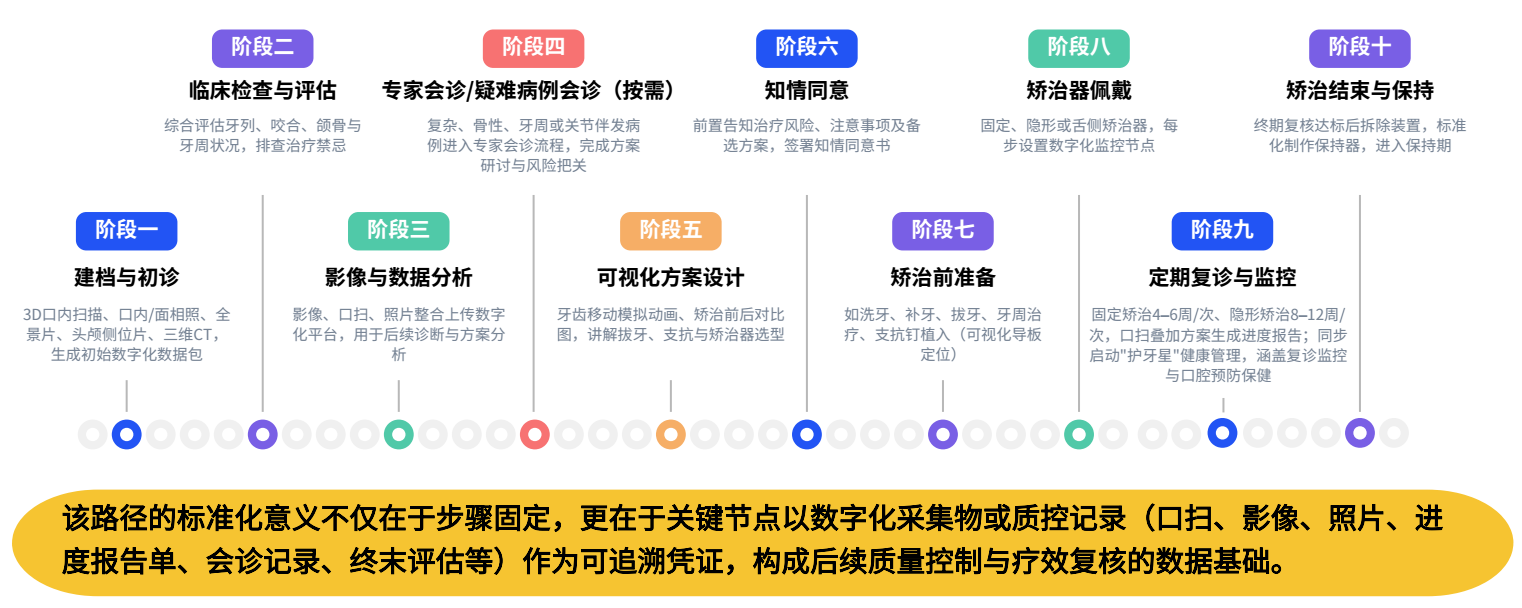
The first layer of the system is to define "how treatment should be advanced." Drawing on evidence-based consensus and clinical workflows across all hospital districts, the white paper summarizes the entire orthodontic process into ten standard nodes, including record creation and initial consultation, clinical examination and assessment, imaging and data analysis, visualized treatment planning, informed consent, pre-treatment preparation, aligner delivery, regular follow-up visits and monitoring, and treatment completion and retention. At key nodes, digital acquisition or quality control confirmation actions are set—the significance lies not in fixed steps, but in ensuring that every step leaves traceable evidence such as intraoral scans, imaging, photographs, progress reports, and consultation records, providing a basis for subsequent quality review.
 |
| Source: "Clinical Insights and Quality Control System White Paper on Orthodontics (2026)" |
The white paper further points out that the introduction of digital equipment is essentially a systematic intervention in the orthodontic "error chain"—in traditional workflows, impression deformation, model transfer loss, and millimeter-level deviations from manual bonding accumulate layer by layer, whereas intraoral scanning enables full-arch digital acquisition, CBCT provides three-dimensional bone volume and root positions, and 3D-printed guides translate design coordinates into physical guidance, targeting the acquisition, planning, and execution stages respectively. The unified deployment of iTero across all hospital districts allows cases from the five districts to be retrieved and reviewed in the same data format, further advancing quality control from reliance on personal experience to a traceable infrastructure.
Behind these nodes lie multiple expert consensuses and standard systems. Among the expert consensuses cited in the white paper, the value of combined periodontal-orthodontic treatment is quantified: the two-year recurrence rate for the combined treatment group is 15%, lower than the 33% for the periodontal-treatment-only group. The continued expansion of consensuses and group standards is driving the "industry benchmark" of orthodontics from accumulated experience toward institutionalized reference.
This evolution from experience to institutionalization has also been confirmed at the academic level—Mr. Zhao Zhihe, Director of the Faculty Committee of West China School of Stomatology, Sichuan University, and Chief Expert of the Orthodontics Department, noted in the white paper's foreword that in recent years, private dental practices have "increasingly valued academic development, adhered to medical standards, and benchmarked against public hospital treatment systems and national-level expert consensuses," and that industry development has become "increasingly rational and professional."
Infection Control and Retainers: Quality Control Landing on Quantifiable Indicators
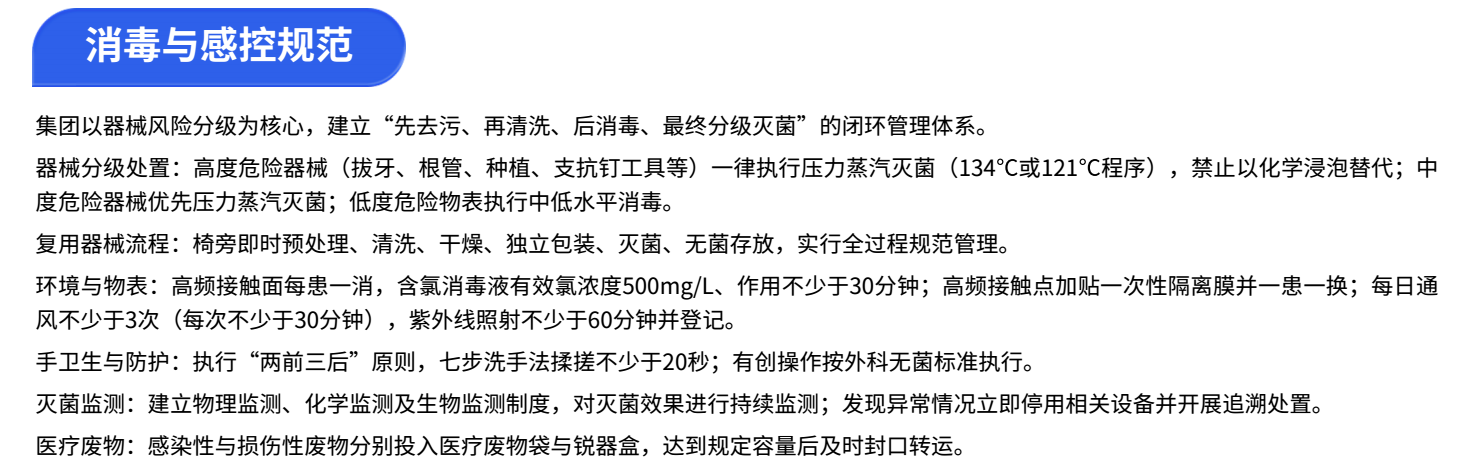
If the process defines "what should be done," the implementation details address "how to ensure strict control." On the infection control front, the closed-loop infection control system established by the Yuhui Group covers instrument graded sterilization and environmental disinfection—high-touch surfaces are disinfected after each patient, with chlorine-containing disinfectant at an effective chlorine concentration of 500 mg/L applied for no less than 30 minutes, and ultraviolet irradiation for no less than 60 minutes daily with records kept. Reusable instruments are managed through the full process of chairside pre-treatment, cleaning, drying, individual packaging, sterilization, and sterile storage, with sterilization effectiveness monitored through physical, chemical, and biological triple checks, and any anomaly triggers suspension and traceability handling.
 |  Source: "Clinical Insights and Quality Control System White Paper on Orthodontics (2026)" |
Retainer management, to a certain extent, may better reflect the level of detail in orthodontic quality control execution.
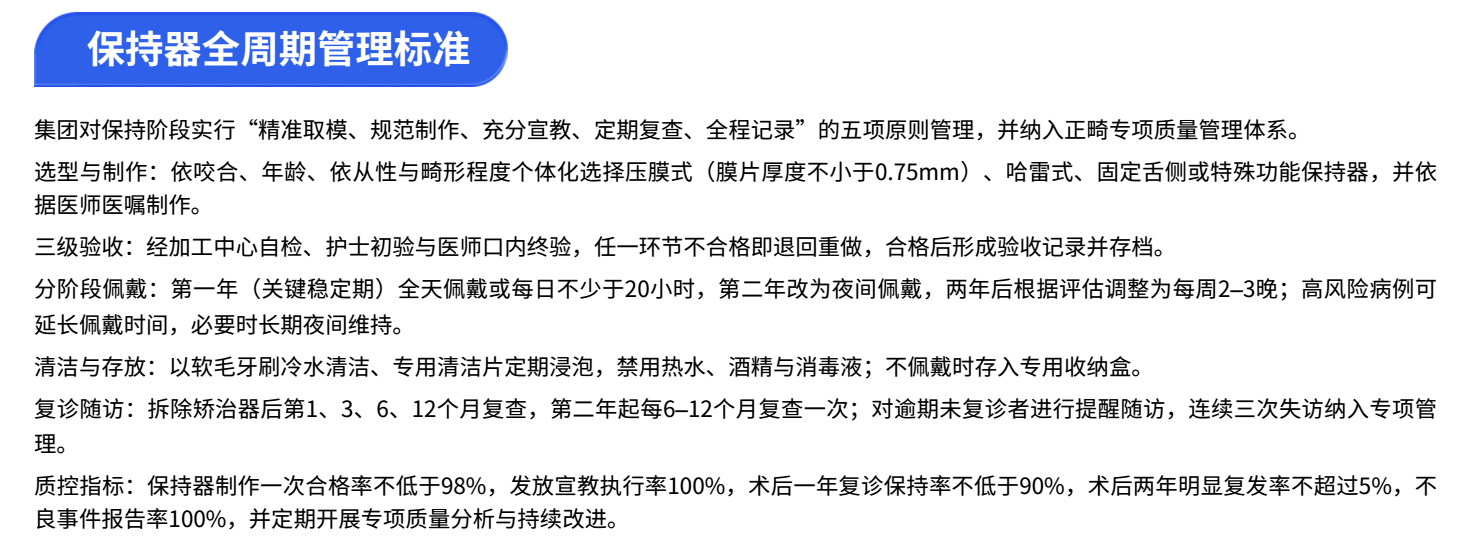
According to the white paper's research findings, the Yuhui Group implements a three-level acceptance process for the retention phase, involving self-inspection at the processing center, initial verification by nurses, and final intraoral verification by clinicians, with any failed item returned for rework. Tied to this is a set of quality control indicators: the first-pass qualification rate for retainer fabrication shall be no less than 98%, the delivery and education execution rate shall be 100%, the one-year post-treatment follow-up retention rate shall be no less than 90%, the two-year significant relapse rate shall not exceed 5%, and the adverse event reporting rate shall be 100%.
When vague verbal commitments like "relapse" and "qualification" are translated into assessable percentages, and quality objectives are converted into quantifiable indicators, institutions can further strengthen treatment process management and continuous improvement.
Behind 305 Questionnaires: Full-Cycle Management Responding to Patient Concerns
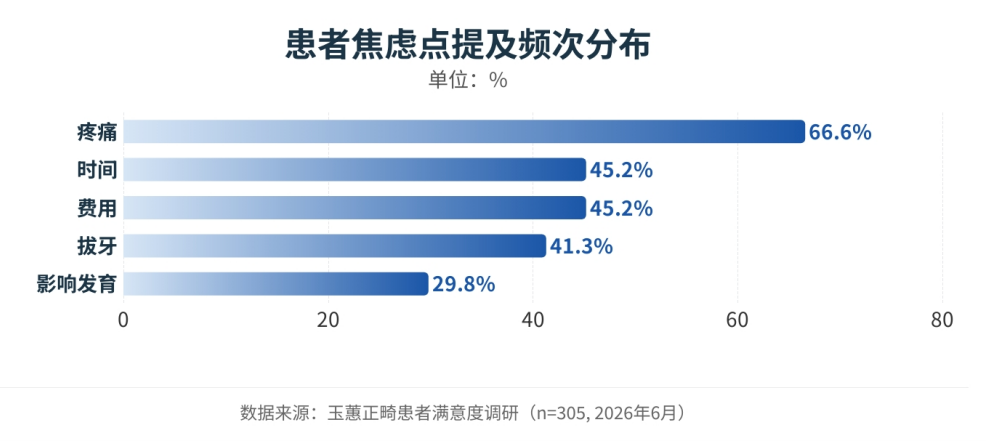
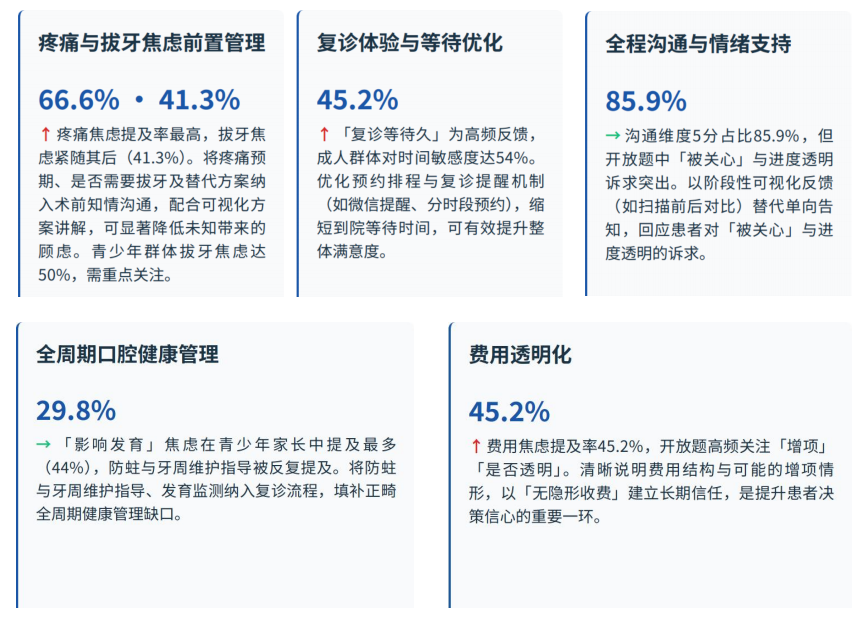
Quality control ultimately must land on patient experience. Based on 305 valid satisfaction questionnaires collected from the five hospital districts in June 2026, the white paper shows that "effectiveness" is the core decision-making factor with a top-choice rate of 51%, while 66.6% of patients listed pain as an important concern, and 45.2% simultaneously focused on time and cost. With effectiveness first and pain and cost following closely, what patients truly want is not just "straight teeth," but also "fewer disruptions during the process and no surprises on the bill."
 |
| Source: "Clinical Insights and Quality Control System White Paper on Orthodontics (2026)" |
These demands must ultimately be fulfilled through clinical data and real cases. Archives from the five hospital districts from 2023 to 2025 show that children and adolescents are the primary patient groups, with children accounting for 57.2% in Haimen and adolescents accounting for 58.2% in Hai'an.
According to white paper data, the Group has completed over 52,800 orthodontic cases, with over 100 difficult cases selected into globally authoritative case libraries; from early intervention during the mixed dentition period, adult orthodontic-restorative combined treatment, early correction of crossbite, to adult severe crowding with extractions and skeletal Class II Invisalign® compensation, five typical cases cover the two main threads of early screening and early treatment, and multidisciplinary collaboration.
 |
| Source: "Clinical Insights and Quality Control System White Paper on Orthodontics (2026)" |
Publishing a quality control system in a white paper and presenting it to the market is itself a public commitment by the Yuhui Group—transparently disclosing treatment data and standardized execution is precisely its way of directly responding to industry pain points.
However, what determines how far this system can go has never been the equipment itself. In digital orthodontics, the surface competition is over equipment, but the real contest lies in system integration capability—as the industry shifts from incremental expansion to stock competition, simply purchasing better machines can no longer build a moat. What is truly difficult to replicate is the organizational capability that fuses equipment standardization, clinician capability matrixing, and clinical pathway patenting into one.
This layer of capability has left verifiable traces on the Yuhui Group. The team has written invisible orthodontics strategies, orthodontic pain management, and aligner biomechanics into three SCI papers, allowing recurring clinical issues to settle into evidence that withstands peer review; the "Zhengya Star" indirect bonding guide, protected as a utility model patent, has transformed bracket positioning from freehand experience into repeatable coordinates; the "Huya Star" full-cycle health management and the "Oral Case Communication and Collaboration System" have converted the most variance-prone operational steps into retrievable assets... Every step that relies on individual judgment and is prone to deviation has been systematically consolidated—personal experience thus becomes knowledge that can be cited, challenged, and iterated, encapsulated into an "Orthodontic Quality Control Skills" package.
Afterword
As a single-institution quality control practice sample, its value lies not in representing the industry average, but in presenting, through a complete and continuous set of primary archives, how a quality control system can be deconstructed, replicated, and verified, offering a comparable practical reference for similar institutions. It is precisely for this reason that the white paper maintains a cautious stance: the return cycle of digital investment, the friction of standardization implementation, and the speed of patent technology diffusion will still determine whether this model can gain a foothold on a larger scale. What it presents is an evolving sample, not a finalized success story.
At the end of the volume, founder Fang Yuzhu leaves a restrained yet resolute judgment—"Yuhui's standards do not require universal acceptance, but they must be reckoned with." For a white paper that lays its system bare for all to see, this is both a source of confidence and an open proposition that still awaits the test of time.
 |
| About DGN:DentalGoodNews (DGN) is a trusted professional media platform dedicated to the global dental industry. We deliver in-depth coverage of corporate news, policy & regulation, investment & funding, and clinical frontiers — serving dental institutions, device manufacturers, investors, and industry researchers worldwide. Contact us: haodeya@dongxizixun.com |

;)