Mai’s Insight|The revenue window for dental microscopic technology has officially opened.

Editor's Note
On February 28, 2025, the National Healthcare Security Administration (NHSA) issued the "Guidelines for Establishing Medical Service Price Items in Dentistry (Trial)", consolidating over 600 dental price items into 114, formally embedding the separation of technology and consumables into the institutional framework. In January 2026, the supporting "Guidelines for Establishing Medical Service Price Items for Surgical and Treatment Assistance Operations (Trial)" was implemented, explicitly listing the "Intraoperative Microscopic Imaging Assistance Fee" as an independent billing item. These two documents, linked sequentially, mark the transition of microscopic assistance operations from a doctor's implicit technical investment to a formally recognized public charging channel.
On May 21, 2026, the "White Paper on Microscopic Technology Applications in Private Dentistry (2026)" was first released at the 18th Private Dental Annual Conference—a primary research report jointly produced by DENTALGOODNEWS (Leading Dental Industry Media, DGN) and Zumax Medical Co., Ltd. (Zumax Medical), covering 561 surveyed institutions over approximately six months. Mai Zijian, founder of DGN, presented an analysis of the report at the launch event. Since 2020, he has been tracking the growth data of oral healthcare service institutions, persistently seeking the answer to one question: Who is truly converting, and why?
The survey data reveals a structural contradiction: 67.6% of surveyed institutions are aware of the policy changes regarding the separation of technology and consumables, but among institutions that are "very clear" about the policy, 46.3% meet the target for monthly paid case growth, compared to only 13.2% among those who have merely "heard of it"—a gap of approximately 33 percentage points. Knowing and implementing are two different things. From policy windows and penetration space to investment payback, the application of microscopic technology in private institutions is opening new avenues of thought.
The DGN editorial team has compiled the following based on the live transcript:
Let me start with a case I found interesting.
During the creation of this white paper, colleagues discovered a photo—a dental institution prominently featuring microscopic dentistry as its core selling point, directly on its storefront sign. This institution is located in a county-level city in a third or fourth-tier city, with a permanent population of around 900,000. Its local pillar industries are agriculture, textiles, and food processing—not an emerging city or a high-consumption area. Yet, they recently purchased six units of equipment and are recruiting new doctors.
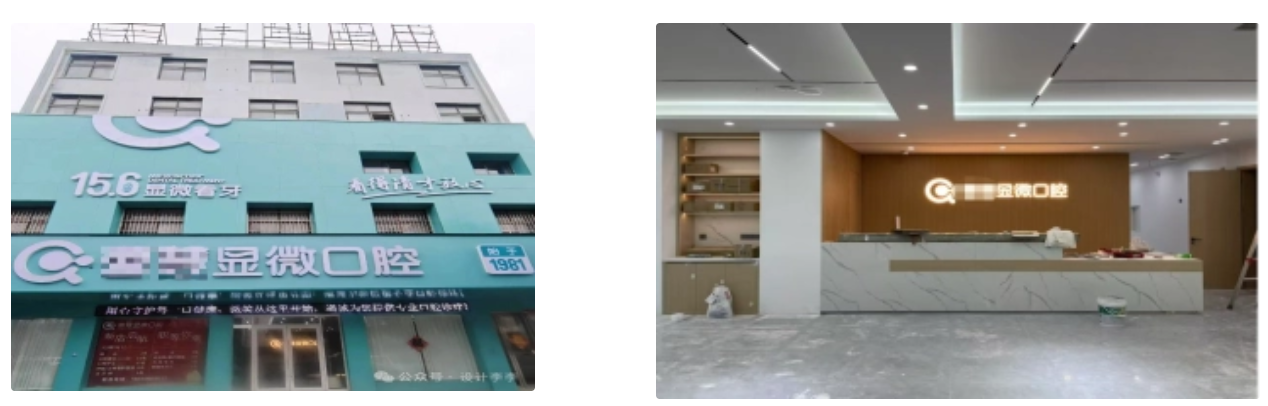 |
At this point, we wanted to understand: In such an environment, why is it still growing?
With this question, let's look at the white paper.
 |
What the data says about everyone's feelings
Earlier this year, we released an industry pressure report at the South China International Dental Exhibition. The core data point is this: In the past year, 69.2% of people were busier, but only 20% earned correspondingly more money; most were merely maintaining stability.
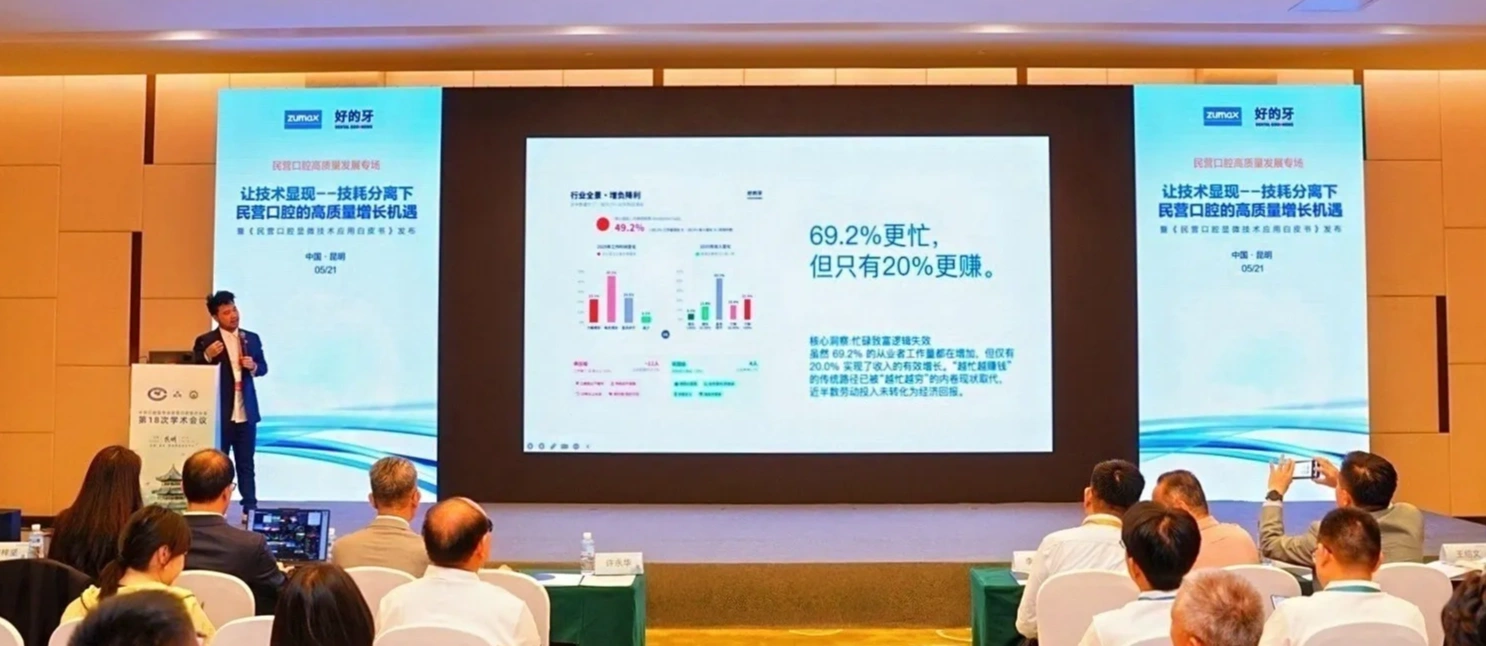 |
| Mai Zijian, Co-founder of Hao Dental |
More tasks, longer working hours, but income hasn't kept pace. The industry currently lacks an effective path for converting technical value. Many institutions have historically relied on consumables to support pricing.
The structural background of this issue is the transformation of supply-demand relationships and the change in information dissemination forms.
Previously, it was about opening the door and waiting for patients; now, it's about attracting patients. When everyone is competing on price, group purchases, and distance, your challenge isn't just the competitor next door; it's the patient's mental question: "What's the difference between this one and that one?" This is a fundamental environmental shift, not a short-term fluctuation.
Since 2020, we have been using a unified source and methodology to continuously track the growth data of Chinese dental institutions. We publish our exclusive data monthly, serving as a credible industry data reference. The conclusion is: The growth rate of new institutions peaked in 2023 and has since declined. However, the net increase in numbers continues to grow. So, we continue to investigate industry changes with this question, persistently sharing growth cases with practitioners.
Why 2026 Specifically?
Last year, the NHSA's reform document on consolidating medical service price items sparked significant discussion in the industry. Related articles tracked and published by the DGN WeChat public account, specifically for Guangdong Province, garnered over 70,000 reads per article—essentially covering most dental practitioners in the region.
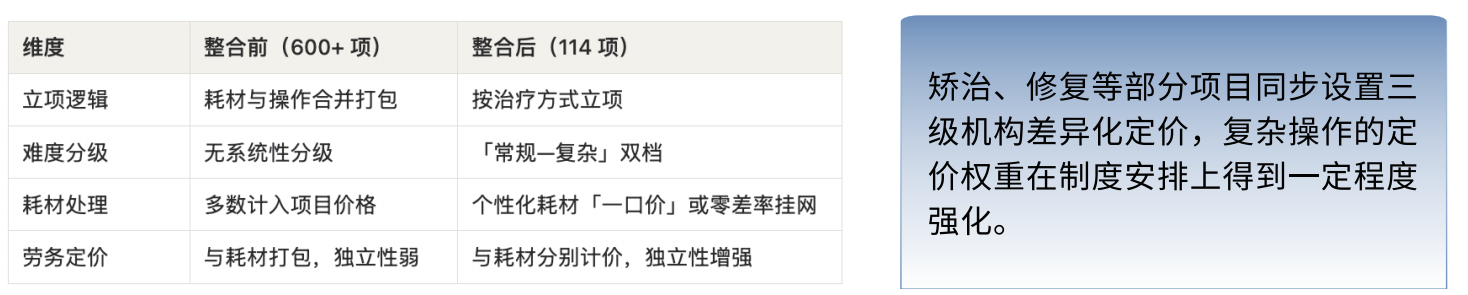 |
| Source: Private Dental Microscopy Technology Application White Paper (2026) |
But more direct than that is the price item first implemented in Guangdong and Hunan this year: the "Intraoperative Microscopic Imaging Assistance Fee". The "Price Item Schedule for Surgical Treatment Assistance Operations" released by Guangdong Province in April 2026 clearly defines the compliant charging method and applicable scenarios for using "intraoperative microscopic imaging assistance".
I asked the audience a question: Before today, how many people knew about the existence of this Item No. 9? Only four or five people raised their hands.
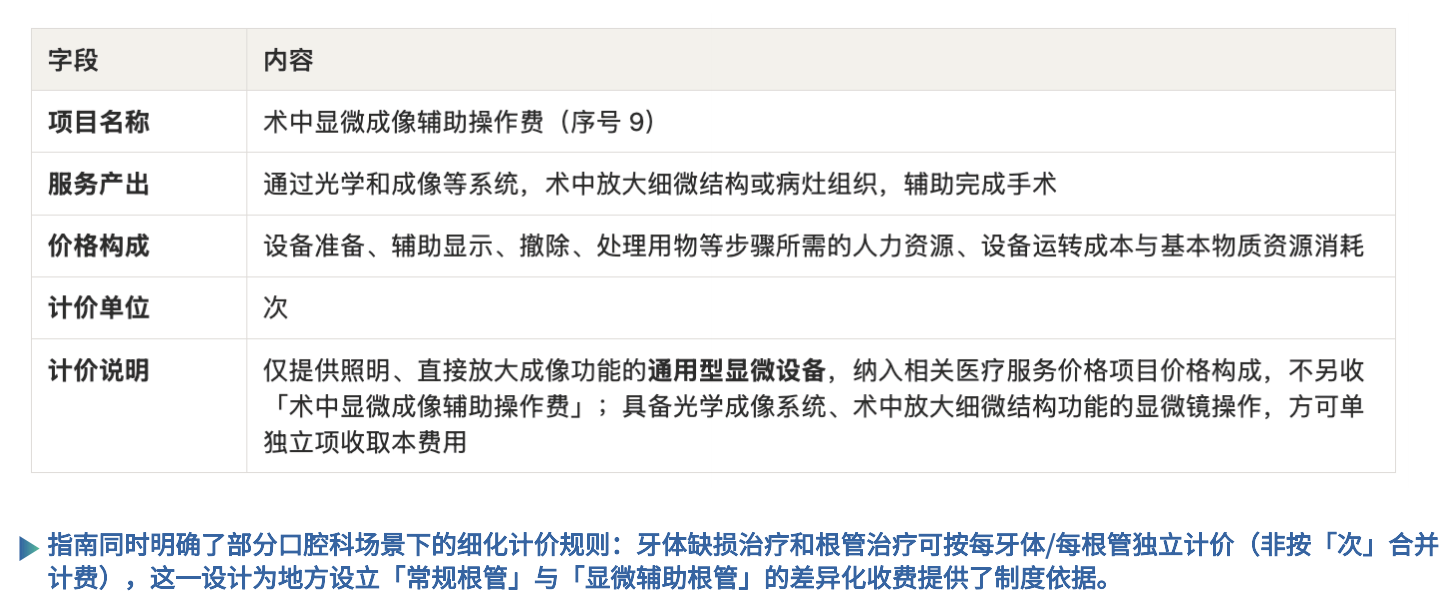 |
| Source: Private Dental Microscopy Technology Application White Paper (2026) |
The policy has been implemented, but very few know about it.
Currently, Guangdong and Hunan provinces have implemented it, with other provinces following suit gradually—likely following the same logic as the province-by-province rollout of the price consolidation reform.
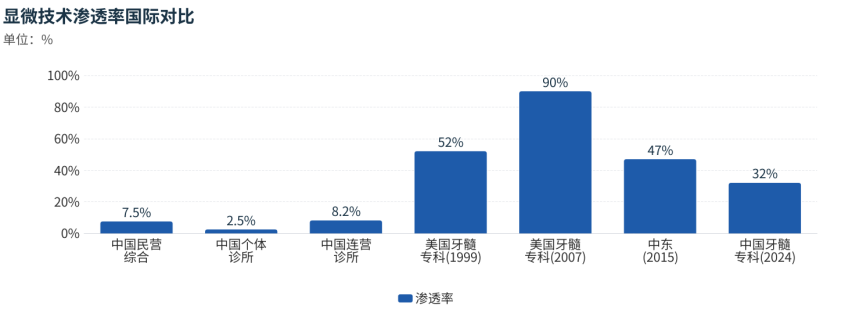
Through 561 valid questionnaires and in-depth interviews with 10 institutions, we have compiled the current penetration rate of microscopic technology in China's private dental market:
- Individual institutions (within 4 dental chairs): Approximately 2.5%
- Private comprehensive institutions: Approximately 7.5%
- Chain institutions: Approximately 8%
- Public hospital system: Higher
Comparing this with data from the US (90% in 2007) and some Middle Eastern countries (47% in 2015)—their penetration rates were already far higher than our current level.
 |
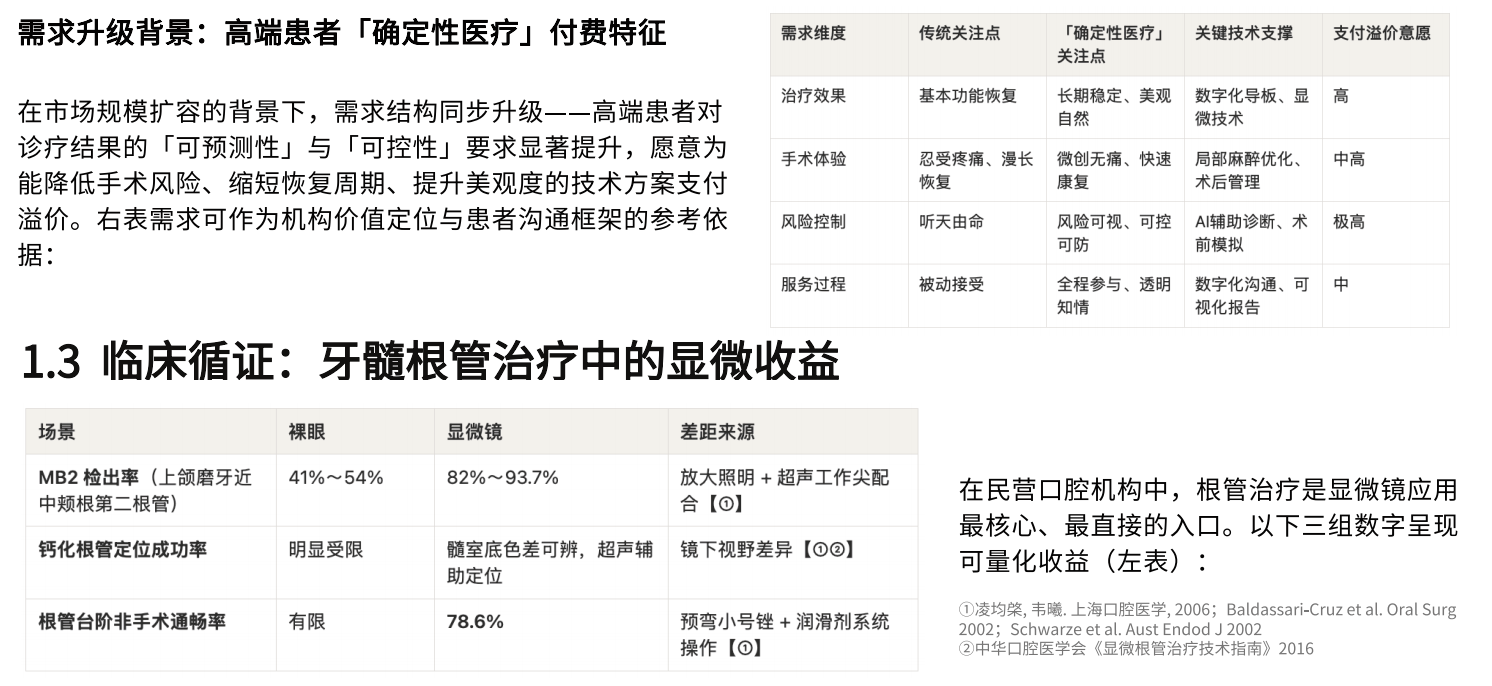
The European Society of Endodontology (ESE) 2023 S3-level clinical practice guidelines list the dental operating microscope (DOM) as a recommended instrument. The American Association of Endodontists (AAE) position statement explicitly states: "The DOM is an indispensable and important piece of equipment in modern endodontics, helping the specialty establish the highest standards of excellent care"; "High magnification (especially the DOM) can improve the outcome of endodontic treatment and should be the standard of care for all dentists performing endodontic procedures."
Domestically, the Chinese Stomatological Association (CSA) has provided clear guidance on the application of microscopic technology in microscope-assisted tooth preparation and endodontic diagnosis and treatment. In 2016, the Society of Cariology and Endodontology of Chinese Stomatological Association formulated the "Technical Guidelines for Microscope-assisted Root Canal Treatment", explicitly recommending the routine application of microscope-assisted root canal treatment in the management of pulp and periapical diseases. Mature training systems exist for clinical techniques; Dr. Sun Yu, who will speak later, is very experienced in this area.
In terms of professional equipment, over the past two decades, China's dental operating microscope (DOM) sector has undergone four identifiable evolutionary steps: dominance of imported complete machines, the first domestic breakthrough, the digital inflection point, and multi-department expansion. "Affordability" has largely ceased to be a substantive barrier to installation decisions.
 |
| Source: Private Dental Microscopy Technology Application White Paper (2026) |
This is the basis for our description of a "low-lying area" or even a "blue ocean": Policy supports the presentation of technical value, clinical academic pathways are mature and verifiable, domestic equipment technology is well-developed, yet market penetration is extremely low. The simultaneous existence of these four conditions is not normal; it's an unprecedented opportunity in history. The real problem facing principals, however, still occurs after the equipment is installed.
Three Paths: How Microscopic Technology Becomes an Institutional Brand
Recognizing this as an opportunity, the next step is how to proceed.
From our research, we have summarized three feasible paths to transform microscopic technology into visible brand assets for an institution. Notably, among institutions that have already deployed microscopic technology, most still only use it as a tool to reduce medical risks; very few truly leverage it to build a technology brand. This gap represents the position for pioneers.
Visualized Communication. The fastest-growing dental equipment in recent years—Intraoral Scanning (IOS) and Cone Beam Computed Tomography (CBCT)—share the underlying logic of visualized communication. The microscope can also serve as a visualization tool: a clear surgical field, verifiable case records, allowing patients to "see" what is happening, building trust much faster than verbal explanations.
Personal Technology Branding. It's difficult for patients to judge a doctor's technical skill. They can't understand treatment plans and may not grasp terms like "calcified canal, microscope-assisted root canal treatment"—these words hold little meaning for them. But a professional device placed in the consultation room is the most intuitive symbol of technical capability, forming an immediate perception without requiring extensive explanation.
Word-of-Mouth Conversion. Consistently accumulate cases using microscopic technology. Let clinical outcomes speak for themselves, and long-term reputation will naturally develop. This is a slow variable, but also the most difficult moat to imitate.
How to Calculate the Investment
Many principals will ask at this point: How does the math work out?
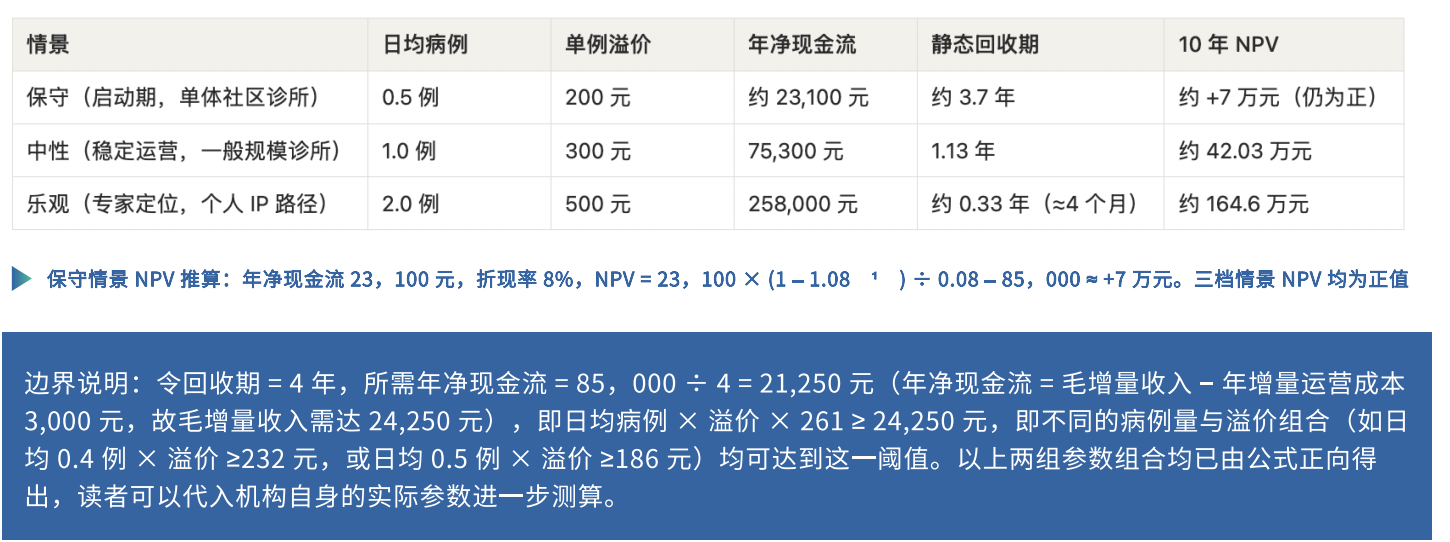
Zumax Medical provided a financial data calculation table, considering factors including: expected microscope purchase price, installation training and initial consumable costs, estimated average daily case volume, technical premium range, working hours and depreciation coefficients, and equipment lifespan. Based on this table and combined with survey data, I ran some specific numbers.
Here is the most conservative reference data: An average of 0.5 microscope-assisted root canal cases per day, with a premium of 200 RMB, generates over 20,000 RMB in additional annual cash flow.
 |
| Source: Private Dental Microscopy Technology Application White Paper (2026) |
According to the survey results, we found that the actual premium range varies among dental institutions of different sizes: Small and medium-sized institutions (typically 1-3 chairs, single-location) often adopt relatively conservative pricing strategies in practice, with some institutions' technical premium concentrated in the 20%–40% range; outpatient department-level institutions (5 to 15 dental chairs) command higher premiums, with more pronounced advantages in their technical systems.
Furthermore, I'd like to add a reference point from an investment perspective. Warren Buffett's average annualized return is approximately 20%, which is already a very high standard in financial markets. According to the financial calculation formula provided by the Zumax team, the static return rate on the sustained incremental cash flow generated by microscopic technology under a compliant charging framework can exceed this figure—this holds up from an investment logic standpoint.
Most of the institutions we interviewed set their psychological payback expectation at two years. Respondents from inland cities like Anhui and Shaanxi were more resolute in this expectation, with a very clear attitude—use technology to create differentiation, accept the investment cost, no ambiguity. Conversely, in mega-cities like Shanghai, there was greater sensitivity to overall investment, directly related to the intensity of local competition and cost structures.
 |
Five Hidden Benefits: Value Beyond the Books
Beyond the book returns, our interviews with 10 institutions identified five often-overlooked hidden benefits that many institution owners fail to factor in.
Brand Differentiation. In homogeneous competition, a microscope is a visible brand boundary. Patients have a clear distinguishing point when choosing, and referral language becomes more specific.
Reduced Medical Risk. A clearer surgical field and more complete case records form a moat for doctors to protect themselves. Doctor-patient disputes are increasingly common on content platforms—"I did it carefully, but you don't understand"—this information gap can be significantly compressed through visual records.
Improved Clinical Efficiency. Once proficiency is gained, the microscope is not a burden but a tool. Doctors familiar with this solution will see changes in procedure time and follow-up visit rates.
Talent Attraction. Young doctors need platforms and equipment to grow. A professional device can retain those who want to improve, serving as a foundational asset for institutional workforce stability.
Ecological Value. Accumulating microscopic cases, participating in industry academic activities, and building specialist influence. These are channels for the institution to move upward, not just current returns, but an investment in future ecological positioning.
Where are the Obstacles: Three Real Barriers
Since conditions are ripe, why is the penetration rate still so low?
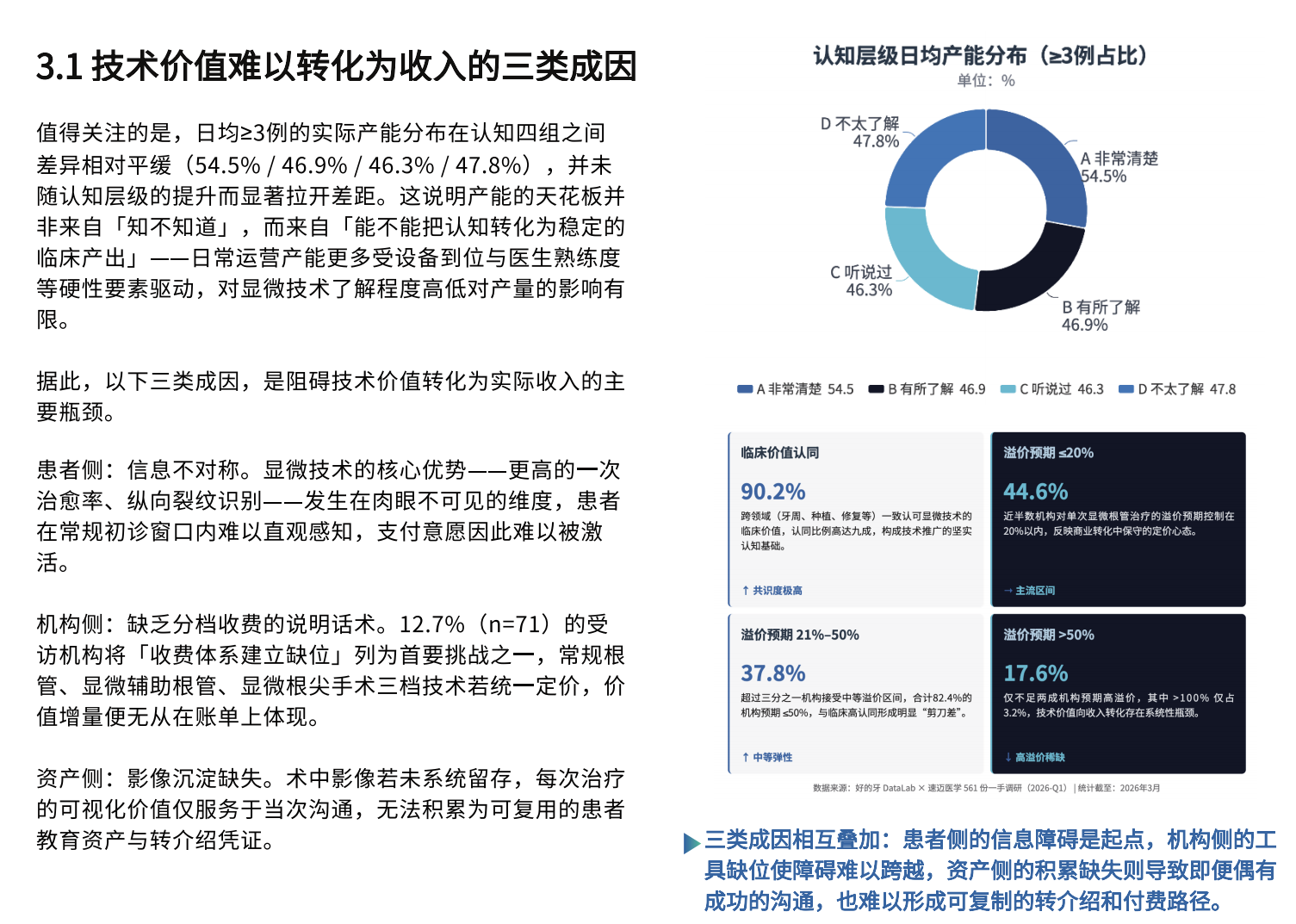
Our research identifies three core obstacles.
The Doctor's Learning Curve. 53.8% of surveyed institution owners mentioned that their biggest concern after investing in equipment is how to help doctors grow quickly. This worry is real, but it can be addressed structurally.
Equipment Cost. Only 9.4% of surveyed institutions listed equipment cost as their primary challenge—a figure far lower than most people's assumptions. However, concurrently, 82.4% of surveyed institutions still control their premium expectations within 50%, indicating that most operators have relatively conservative expectations regarding return on investment and have not yet systematically incorporated premium income and payback periods into their decision-making framework.
Unestablished Fee System. 10.7% of institutions that already have the equipment have not yet separately billed for microscope-assisted root canal treatment, instead including it as part of standard delivery—the technology exists, but its value has not been priced.
These three obstacles combine to form a scissors gap: Industry and technology are advancing, but doctors' perception of actual income has not kept pace.
 |
| Source: Private Dental Microscopy Technology Application White Paper (2026) |
What Can Be Achieved in 18 Months?
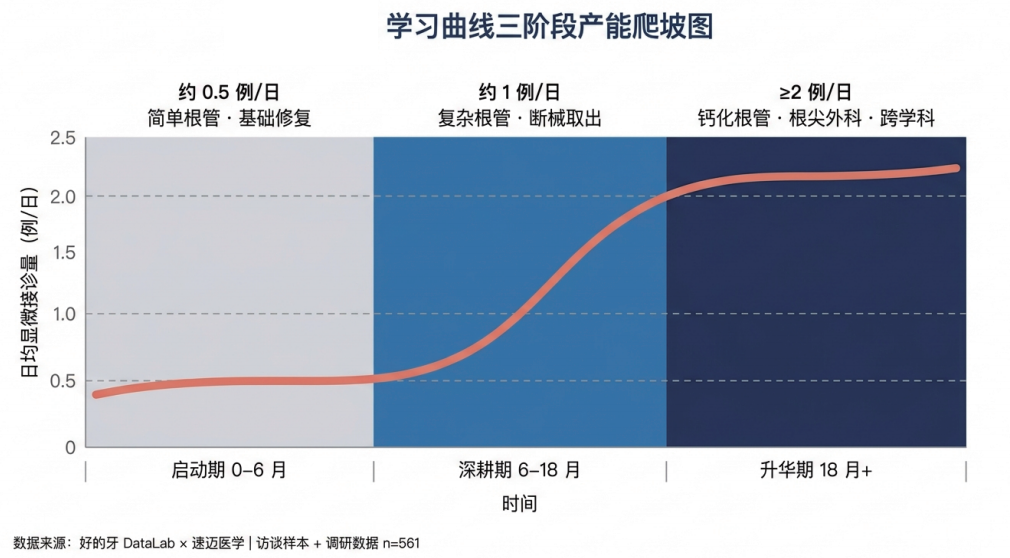
Regarding the learning curve issue, there is a relatively specific reference point. Combining Zumax Medical's relevant learning planning materials and our research, through a scientific learning plan and systematic empowerment, sustainable improvement in technical capability can be achieved within 18 months.
 |
| Source: Private Dental Microscopy Technology Application White Paper (2026) |
18 months is not an arbitrarily set timeframe. Research by psychologist Anders Ericsson from Florida State University found that "deliberate practice" is the golden path to mastering any skill, with core elements including clear goals, immediate feedback, sufficient repetition, and the ability to self-correct. Medical education research also confirms that experimental groups using "scaffolded case-based learning" demonstrate significantly better clinical reasoning abilities than traditional lecture groups. The 18-month timeframe is supported by training science, not empirical estimation.
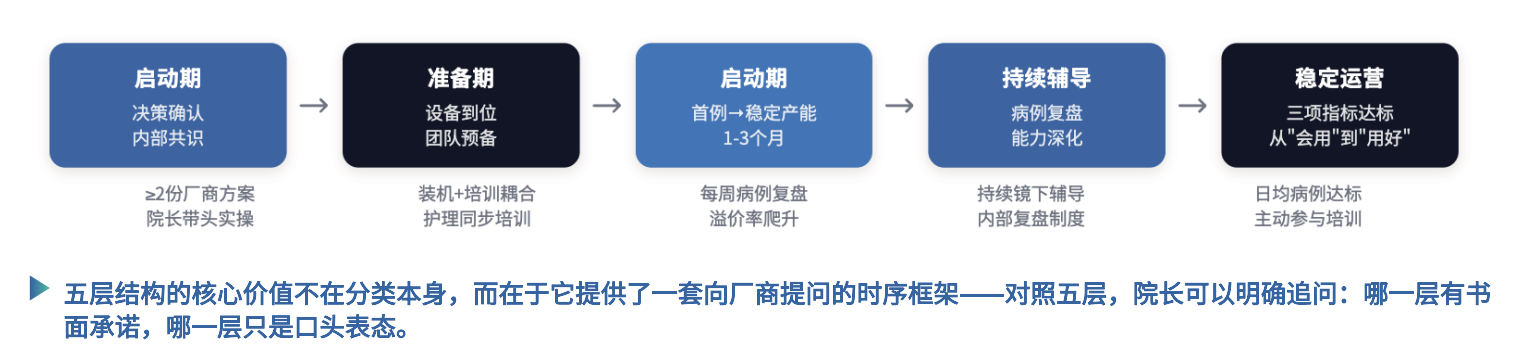
The implementation process can be divided into five stages: Selection Period, Preparation Period, Launch Period, Continuous Coaching, and Institutional Ecosystem Building. The most critical is the Preparation Period—how the team collaborates and how the patient reception process aligns after the equipment is in place. This directly determines whether the technology can truly transform from equipment into institutional capability.
 |
| Source: Private Dental Microscopy Technology Application White Paper (2026) |
Buying Equipment is the Start of Transformation, Not the End
Finally, let me mention an easily underestimated judgment: Buying a microscope is not just purchasing a piece of equipment; it's initiating an institutional transformation.
Last week, I met a clinician in Jiangsu who said he had been exposed to microscopes for ten years. Yet, during our meeting, he was still asking: "Is this thing 4K?" The Zumax colleague told him that the entire current lineup is standard with 4K.
Ten years, and the information hadn't synchronized.
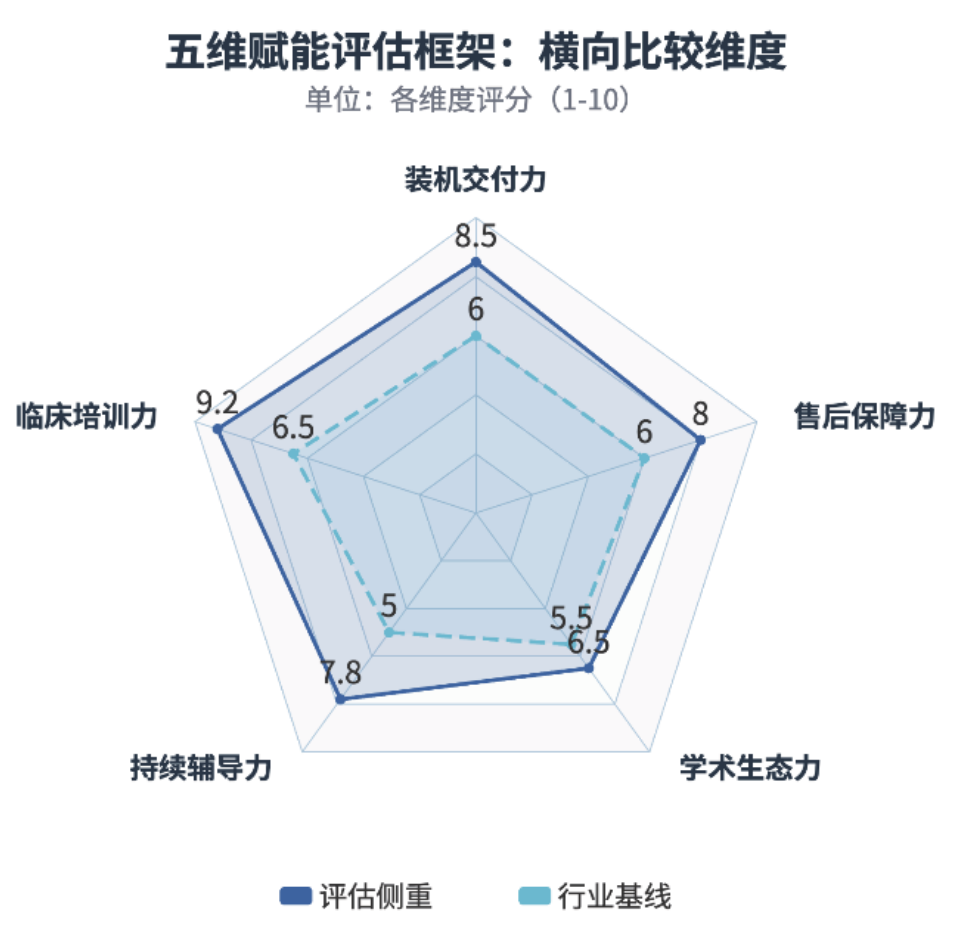
This isn't the doctor's fault; it illustrates that simultaneously treating patients, managing a business, and tracking technological and product iterations demands too much information bandwidth. When choosing a manufacturer, you are not selecting parameters, but the capacity for sustained support. The 6 to 18 months after installation are the critical period determining whether the transformation succeeds.
We recommend evaluating partner manufacturers from five dimensions: Installation and Delivery Capability, Clinical Support, Continuous Coaching, Academic Ecosystem, and After-Sales Service. Among these, Continuous Coaching is the most easily overlooked. The installation day is the most impressive, but whether the manufacturer follows up six months after the equipment is in place determines whether the device is ultimately put to real use.
 |
| Source: Private Dental Microscopy Technology Application White Paper (2026) |
First-Mover Advantage Belongs to Those Who See Ahead
I started with that third/fourth-tier county institution; let me end with it.
A county-level city with around 900,000 people, not particularly economically developed. What this institution did right wasn't complicated: It chose a technology, put it on its storefront sign, and consistently worked on it. It's still buying equipment and hiring doctors.
Policies are gradually being implemented, clinical pathways are relatively mature, domestic equipment has caught up, but market penetration remains low. I hope today's sharing can offer an additional perspective, helping you establish a unique institutional ecological niche in this era where technical value is beginning to manifest—achieving quality growth and development.
| About DGN:DentalGoodNews (DGN) is a trusted professional media platform dedicated to the global dental industry. We deliver in-depth coverage of corporate news, policy & regulation, investment & funding, and clinical frontiers — serving dental institutions, device manufacturers, investors, and industry researchers worldwide. Contact us: haodeya@dongxizixun.com |

;)